

A new method allows scientists to reconstruct carbon dioxide levels and photosynthesis from fossilized tooth enamel.
A surprising new line of evidence is providing fresh insights into Earth’s ancient climate. Fossilized dinosaur teeth reveal that the atmosphere during the Mesozoic era (between 252 and 66 million years ago) contained much higher levels of carbon dioxide than today. This conclusion comes from a study led by researchers at the Universities of Göttingen, Mainz, and Bochum, who examined oxygen isotopes preserved in tooth enamel. Their approach relies on a newly developed technique that offers exciting opportunities for studying Earth’s climate history.
The analysis also showed that global photosynthesis, the process by which plants convert sunlight into energy, was occurring at about twice the rate seen today. According to the researchers, this surge in plant activity likely played a role in shaping the highly dynamic climate that existed during the time of the dinosaurs. The team’s findings were published in the journal PNAS.
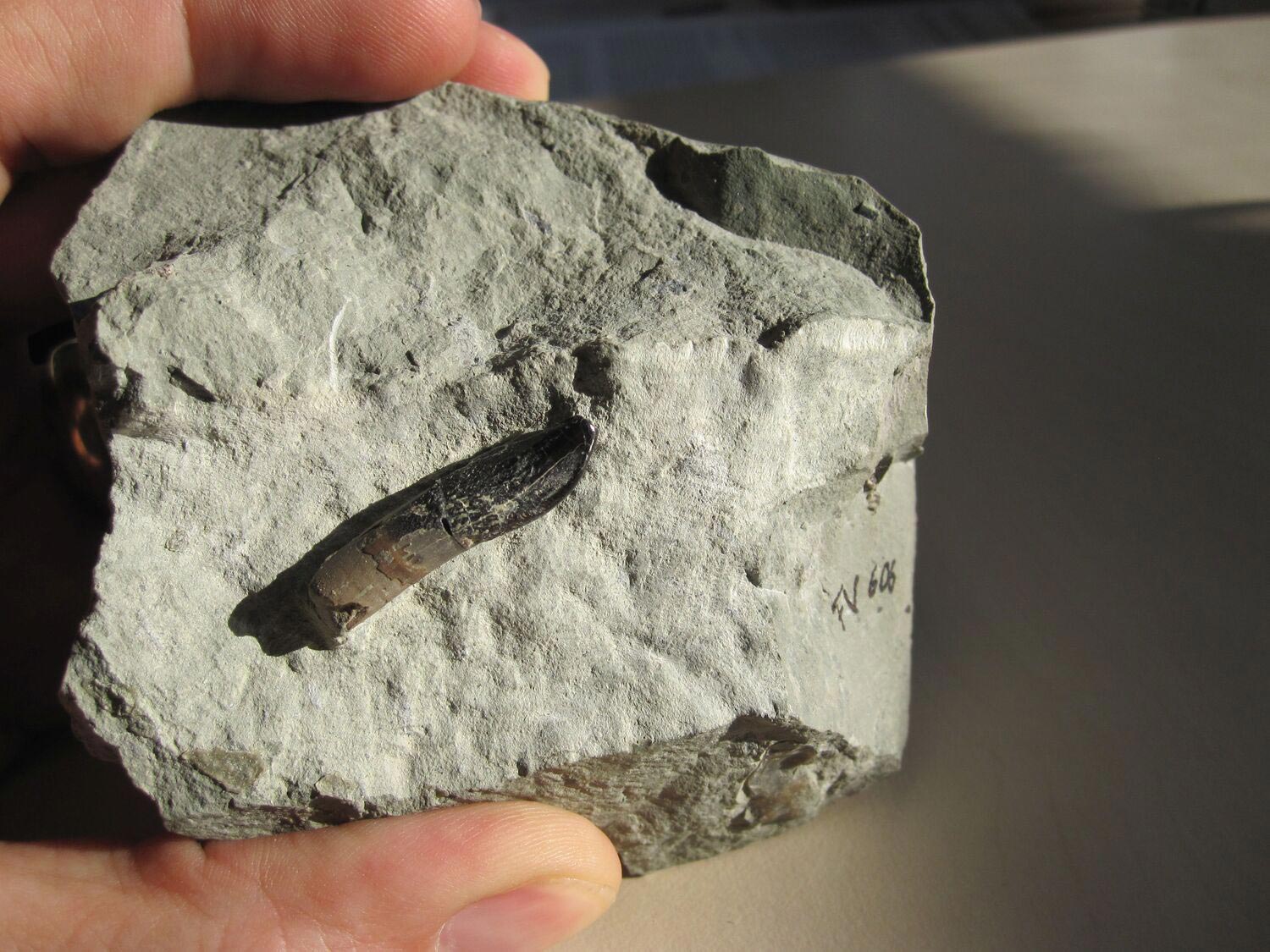
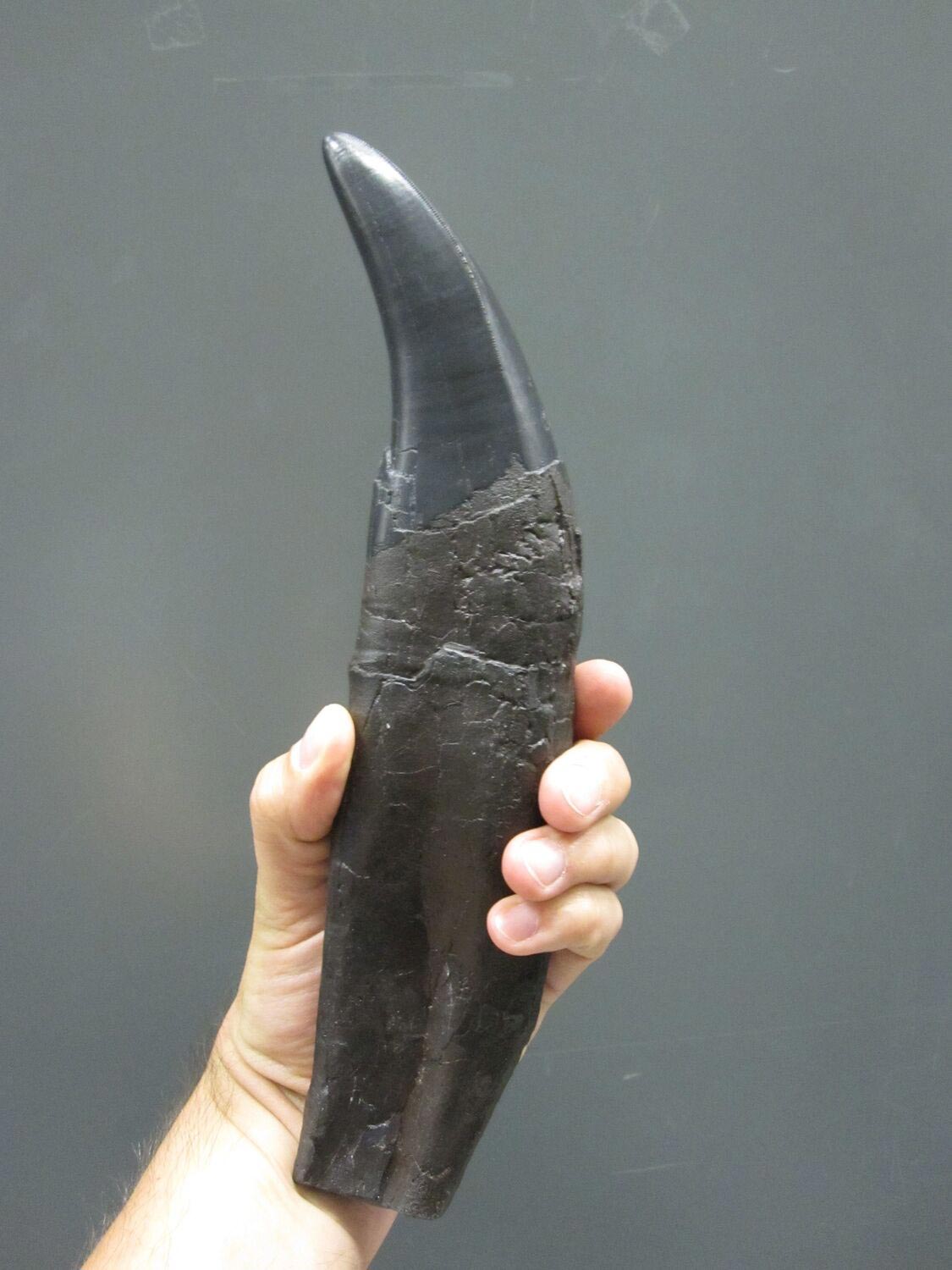
To reach these results, the scientists studied dinosaur teeth unearthed in North America, Africa, and Europe from both the late Jurassic and late Cretaceous periods. Tooth enamel, one of the hardest and most resilient biological substances, preserves oxygen isotope signatures that record what dinosaurs inhaled as they breathed. Because the ratio of oxygen isotopes is influenced by atmospheric carbon dioxide and plant photosynthesis, these traces provide a valuable window into both climate conditions and vegetation during the age of the dinosaurs.
Evidence of High CO₂ and Climate Spikes
In the late Jurassic period, around 150 million years ago, the air contained around four times as much carbon dioxide as it did before industrialization – that is, before humans started emitting large quantities of greenhouse gases into the atmosphere.
And in the late Cretaceous period, around 73 to 66 million years ago, the level was three times as high as today. Individual teeth from two dinosaurs – Tyrannosaurus rex and another known as Kaatedocus siberi which is related to Diplodocus – contained a strikingly unusual composition of oxygen isotopes.
Thomas Tütken
This points to CO₂ spikes that could be linked to major events such as volcanic eruptions – for example, the massive eruptions of the Deccan Traps in what is now India, which happened at the end of the Cretaceous period. The fact that plants on land and in water around the world were carrying out more photosynthesis at that time was probably associated with CO₂ levels and higher average annual temperatures.
A Breakthrough for Paleoclimatology
This study marks a milestone for paleoclimatology: until now, carbonates in the soil and “marine proxies” were the main tools used to reconstruct the climate of the past. Marine proxies are indicators, such as fossils or chemical signatures in sediments, that help scientists understand environmental conditions in the sea in the past. However, these methods are subject to uncertainty. By analyzing oxygen isotopes in tooth fossils, the researchers have now developed the first method that focuses on vertebrates on land.
“Our method gives us a completely new view of the Earth’s past,” explains lead author Dr Dingsu Feng at the University of Göttingen’s Department of Geochemistry. “It opens up the possibility of using fossilized tooth enamel to investigate the composition of the early Earth’s atmosphere and the productivity of plants at that time. This is crucial for understanding long-term climate dynamics.” Dinosaurs could be the new climate scientists, according to Feng: “Long ago their teeth recorded the climate for a period of over 150 million years – finally we are getting the message.”
Reference: “Mesozoic atmospheric CO2 concentrations reconstructed from dinosaur tooth enamel” by Dingsu Feng, Thomas Tütken, Eva Maria Griebeler, Daniel Herwartz and Andreas Pack, 4 August 2025, Proceedings of the National Academy of Sciences.
DOI: 10.1073/pnas.2504324122
The study was funded by the German Research Foundation (DFG) and by the VeWA consortium as part of the LOEWE programme of the Hessisches Ministerium für Wissenschaft und Forschung, Kunst und Kultur.
Never miss a breakthrough: Join the SciTechDaily newsletter.
Follow us on Google and Google News.
2 Comments
Awesomely information.
“…, the air contained around four times as much carbon dioxide as it did before industrialization – that is, before humans started emitting LARGE quantities of greenhouse gases into the atmosphere.”
It should be noted that human emissions are relatively constant every month, and only amount to about 4% of the annual total CO2 flux of all sources. The biology-driven (bacterial decomposition), annual ramp-up phase starts in the Fall in the Northern Hemisphere, and while it continues through the Summer, probably at an accelerated rate because of the higher temperatures, there is a net decrease in atmospheric CO2 as soon as there is robust photosynthesis on land and in the oceans. However, because the Summer draw-down is shorter than the ramp-up phase, there is a net gain of about 2-3 PPMv each year. This is not unexpected when a system is not static. The increasing warmth and CO2 is resulting in increasing natural CO2 emissions. The sinks (primarily the oceans and seasonal vegetation) cannot tell the difference between natural and anthropogenic CO2. They will draw from all the sources, probably in proportion to the relative abundance of the emissions from all the sources.
That means that one should not expect that a significant decline in the rate of atmospheric CO2 increase would occur if anthropogenic sources were suddenly stopped. Probably the best we could expect would be about a 4% decline.