
Close Menu
    Facebook X (Twitter) Instagram
    SciTechDaily
    • Biology
    • Chemistry
    • Earth
    • Health
    • Physics
    • Science
    • Space
    • Technology
    Facebook X (Twitter) Pinterest YouTube RSS
    SciTechDaily
    Home»Health»Do Shingles Viral Infections Increase a Person’s Risk of Dementia?
    Health

    Do Shingles Viral Infections Increase a Person’s Risk of Dementia?

    By American Academy of NeurologyJuly 18, 2022No Comments3 Mins Read
    Facebook Twitter Pinterest Telegram LinkedIn WhatsApp Email Reddit
    Share
    Facebook Twitter LinkedIn Pinterest Telegram Email Reddit
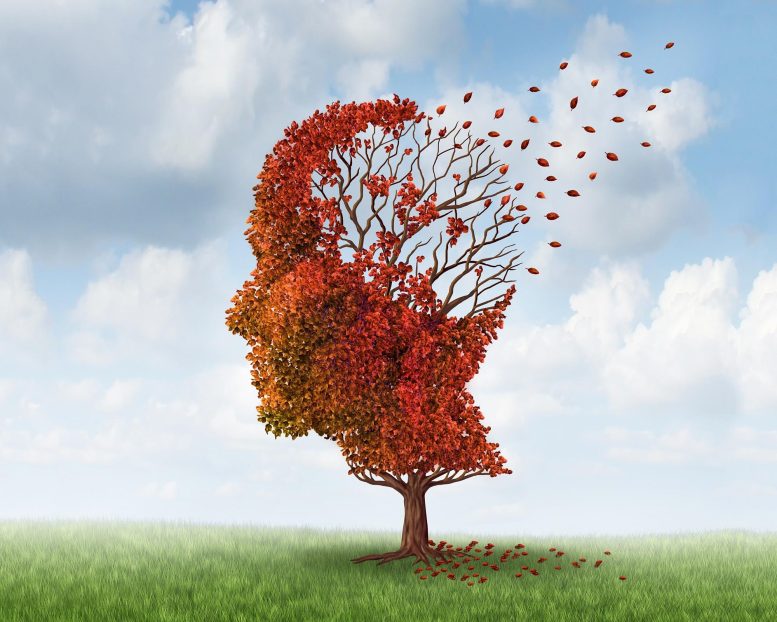
    Dementia Declining Brain Cognition
    Shingles is not associated with an increased risk of dementia, according to a new study published in the journal Neurology.

    Scientists have speculated that shingles could increase the risk of dementia. However, new research has found that shingles is not associated with an increased risk of dementia.

    Shingles is a viral infection caused by the reactivation of the chickenpox virus that results in a painful blistering rash along one side of the body or face from nerve inflammation. Because of such inflammation, there has been scientific speculation that shingles may increase a person’s risk of dementia. However, shingles is not associated with an increased risk of dementia according to the results of new research. The study was recently published in Neurology, the medical journal of the American Academy of Neurology.

    “As a person’s age increases, so does their risk of dementia, and it’s important to determine which factors may contribute to this risk,” said study author Sigrun Alba Johannesdottir Schmidt, MD, PhD, of Aarhus University Hospital in Denmark. “Shingles most often affects people over age 50. The good news is that our study found it does not seem to increase a person’s risk for dementia.”

    Scientists reviewed Danish medical registries for the research. They identified 247,305 people who had visited a hospital for shingles or were prescribed antiviral medication for shingles, and 1,235,890 people matched for age and sex who did not have the disease over a 20 year period. The average age was 64.

    Researchers then examined which participants developed dementia up to 21 years after their shingles diagnosis. 9.7% of the people who had shingles eventually developed dementia. 10.3% of people who did not have shingles developed dementia.

    Shingles Linked to a Lower Risk of Dementia

    After adjusting for other health conditions such as diabetes, cancer, and traumatic head injury, the scientists discovered that people with shingles had a 7% lower risk of dementia than people who did not have shingles.

    “We were surprised by these results,” said Schmidt. “The reasons for this decreased risk are unclear, but it could be explained by missed diagnoses of shingles in people with undiagnosed dementia. Shingles vaccination is encouraged for older people because it can prevent complications from the disease, but our study suggests it is unlikely to reduce dementia risk.”

    Researchers did find that people who had shingles that had spread to the central nervous system had nearly twice the risk of developing dementia. However, Schmidt said such complications are rare, affecting below 0.1% of those with shingles.

    A limitation of the study was that participants were identified based on antiviral prescriptions or hospital visits for the disease so results may not be the same for people with milder cases and those who are not treated for the disease.

    Reference: “Incident Herpes Zoster and Risk of Dementia: A Population-Based Danish Cohort Study” by Sigrun Alba Johannesdottir Schmidt, Katalin Veres, Henrik Toft Sørensen, Niels Obel and Victor W. Henderson, 8 June 2022, Neurology.
    DOI: 10.1212/WNL.0000000000200709

    The study was supported by the Edel and Wilhelm Daubenmerkls Charitable Foundation.

    Never miss a breakthrough: Join the SciTechDaily newsletter.
    Follow us on Google and Google News.

    American Academy of Neurology Brain Dementia Neuroscience
    Share. Facebook Twitter Pinterest LinkedIn Email Reddit

    Related Articles

    This Everyday Food Was Linked to Better Brain Health

    The Hidden Heart Problem Quietly Shrinking Your Brain

    Bacon Lovers Beware: Processed Red Meat Linked to Dementia Risk

    New Algorithms Forecast How Fast Alzheimer’s Progresses

    Don’t Sleep on This: Study Links Sleep Apnea to Smaller Brain Volume

    Serious Head Injuries Increase Your Risk of Dementia by 50%

    “Cognitive Clock” – Researchers Develop New Measure of Brain Health

    Brain Shrinkage: Your Neighborhood May Affect Your Brain Health

    Identifying “The Terrorist Inside My Husband’s Brain” – Living Brain Imaging Can Clearly Differentiate Between Types of Dementia

    Leave A Reply Cancel Reply

    • Facebook
    • Twitter
    • Pinterest
    • YouTube

    Don't Miss a Discovery

    Subscribe for the Latest in Science & Tech!

    Trending News

    Scientists May Have Discovered How To Heal Damaged Kidneys

    Interstellar Visitor 3I/ATLAS Is Bursting With an Unexpected Chemical

    Scientists Just Found All 5 Genetic “Letters” of DNA and RNA on an Asteroid

    The 4,000-Year-Old City That Defied History’s Rules on Wealth and Power

    The World’s Biggest Population Fear Has Flipped – and It Could Change Everything

    This “Fake” Pill Improved Memory and Physical Performance in Just 3 Weeks

    Scientists Say Frequent Ejaculation May Improve Sperm Quality and Fertility

    Scientists Have Found “The Heaven Sword” After Years of Looking

    Follow SciTechDaily
    • Facebook
    • Twitter
    • YouTube
    • Pinterest
    • Newsletter
    • RSS
    SciTech News
    • Biology News
    • Chemistry News
    • Earth News
    • Health News
    • Physics News
    • Science News
    • Space News
    • Technology News
    Recent Posts
    • Watch What Happened When a Lost Elephant Calf Returned to Her Family
    • 17,000 Brain Scans Reveal Surprising Ethnic Differences in Alzheimer’s Biology
    • New Autism Treatment Strategy Restores Key Brain Receptor Function
    • Younger Generations Are Aging Faster – and It May Be Fueling a Surge in Cancer
    • Scientists Turn Ordinary Sunlight Into UV Light in Major Energy Breakthrough
    Copyright © 1998 - 2026 SciTechDaily. All Rights Reserved.
    • Science News
    • About
    • Contact
    • Editorial Board
    • Privacy Policy
    • Terms of Use

    Type above and press Enter to search. Press Esc to cancel.