
Close Menu
    Facebook X (Twitter) Instagram
    SciTechDaily
    • Biology
    • Chemistry
    • Earth
    • Health
    • Physics
    • Science
    • Space
    • Technology
    Facebook X (Twitter) Pinterest YouTube RSS
    SciTechDaily
    Home»Health»Doctors Warn of Relatively Little Known Hazard Linked To Open Water Swimming
    Health

    Doctors Warn of Relatively Little Known Hazard Linked To Open Water Swimming

    By BMJJanuary 13, 2023No Comments4 Mins Read
    Facebook Twitter Pinterest Telegram LinkedIn WhatsApp Email Reddit
    Share
    Facebook Twitter LinkedIn Pinterest Telegram Email Reddit
    Open Water Swimming
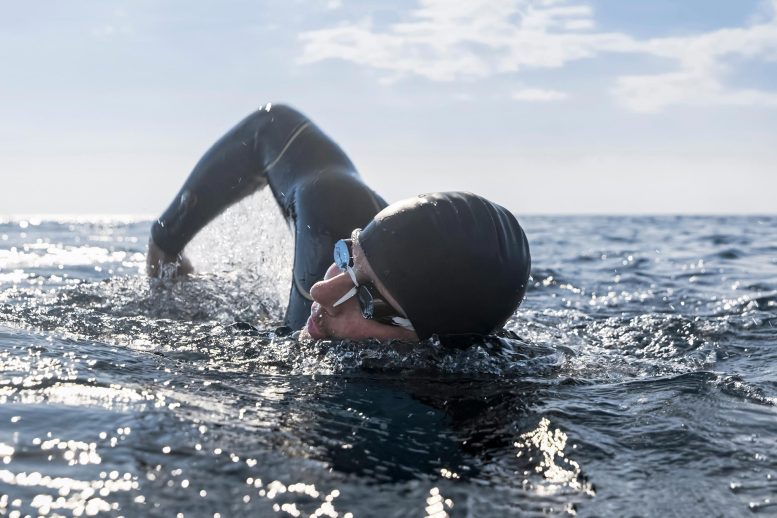
    Open water swimming is swimming in natural bodies of water, such as lakes, rivers, or the ocean, as opposed to swimming in a pool or man-made body of water. It is a popular form of exercise, recreation, and competition, and can include swimming in open water for long distances, such as in a marathon swim or triathlon event, or in shorter distances for fun or training. Open water swimming can be challenging due to the unpredictability of natural conditions, such as currents, waves, and temperature changes.

    Older age, swimming long distances, cold water, and female sex are among the risk factors. Often occurs in those who are otherwise fit and healthy, doctors warn.

    Fluid on the lungs, or pulmonary edema as it’s formally known, is a relatively little-known hazard associated with open water swimming, warn doctors in the journal BMJ Case Reports after treating a woman with the condition.

    Older age, swimming long distances, cold water, and female sex are among the risk factors,  as are high blood pressure and pre-existing heart disease. But it frequently occurs in those who are otherwise fit and healthy, highlight the authors.

    Open-water swimming has become very popular, with more than 3 million enthusiasts in England in 2021 alone. But mounting evidence points to a link between the activity and a condition called swimming-induced pulmonary edema, or SIPE for short.

    First reported in 1989, SIPE leaves swimmers struggling to draw breath and depletes their blood of vital oxygen. It affects an estimated 1-2% of open water swimmers, but cases are likely to be underreported, say the authors.

    The woman in question was in her 50s and a keen competitive long-distance swimmer and triathlete.
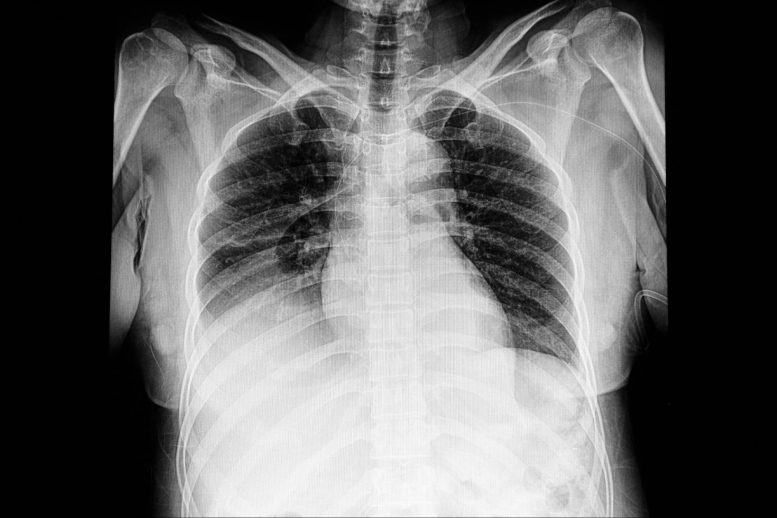
    Pulmonary Edema Chest X-Ray
    Pulmonary edema is a medical condition in which the lungs fill with fluid, making it difficult to breathe. This fluid accumulates in the air spaces and the small blood vessels of the lungs, causing inflammation and reducing the ability of the lungs to exchange oxygen and carbon dioxide. It can be caused by a variety of factors, including heart failure, high altitude, lung injury, and certain medications. Symptoms of pulmonary edema include shortness of breath, chest tightness, coughing up frothy pink fluid, rapid breathing and confusion, fatigue, and bluish skin due to lack of oxygen. Pulmonary edema is a serious condition that requires prompt medical attention, as it can lead to respiratory failure and death.

    Otherwise, fit and well, she was struggling to breathe and coughing up blood after taking part in an open water swimming event at night in water temperatures of around 17°C (63°F) while wearing a wetsuit. Her symptoms started after swimming 300 meters.

    She had no medical history of note, but experienced breathing difficulties during an open water swim a fortnight earlier which had forced her to abandon the event and left her feeling breathless for some days afterward. 

    On arrival at the hospital, her heartbeat was rapid, and a chest x-ray revealed pulmonary edema. Further scans revealed that fluid had infiltrated the heart muscle, a sign of strain known as myocardial edema. But she had no structural heart disease. 

    Her symptoms settled within 2 hours of arrival at the hospital. And after careful monitoring, she was discharged the following morning. 

    It’s not clear exactly what causes SIPE. But it likely involves increases in arterial pressure in the lungs secondary to centralization of blood volume in a cold environment, combined with an exaggerated constriction of these blood vessels in response to the cold and increased blood flow during physical exertion.

    But recurrence is common and has been reported in 13%-22% of scuba divers and swimmers, suggesting a predisposition to the condition, say the authors. 

    They advise swimming at a slower pace, accompanied, in warmer water, without a tight-fitting wetsuit, and avoidance of non-steroidal anti-inflammatories, such as ibuprofen, to minimize the risk.

    For those experiencing symptoms for the first time, the authors recommend stopping swimming and getting out of the water straight away, then sitting upright, and calling for medical assistance if required.

    This is just one case, emphasizes the authors, whose aim in reporting it is to raise awareness among doctors and swimmers of a relatively little-known condition. 

    “The UK Diving Medical Committee has published guidance for divers. However, at present, there are no formal national medical guidelines concerning the recognition and management of this complex condition,” they note.

    Reference: “Myocardial oedema in the setting of immersion pulmonary oedema – Cause or effect?” by James Oldman, Sarah Morwood, James Willis and Daniel Xavier Augustine, 9 January 2023, BMJ Case Reports.
    DOI: 10.1136/bcr-2022-251274

    Never miss a breakthrough: Join the SciTechDaily newsletter.
    Follow us on Google and Google News.

    Lungs Popular Pulmonary
    Share. Facebook Twitter Pinterest LinkedIn Email Reddit

    Related Articles

    Smoking Marijuana May Be Worse for Lungs Than Smoking Cigarettes

    Why Do Short Lung Infections Lead to Long-Lasting Lung Damage?

    Novel Molecules Discovered to Combat Asthma and COVID-Related Lung Diseases

    Most Lungs Recover Well After COVID-19 – According to Extensive Health Assessment 3 Months After Recovery

    Pneumolysis: High Altitude Specialists Explain COVID-19 Lung Destruction

    Investigations of Deceased COVID-19 Patients Reveal Lung Damage Caused by Persistence of “Abnormal Cells”

    Lung Ultrasound Reveals Duration and Severity of COVID-19

    Brown Researchers Reveal Inhibitor for COPD Lung Destruction

    Smoking Marijuana Less Damaging to Lungs Than Cigarettes

    Leave A Reply Cancel Reply

    • Facebook
    • Twitter
    • Pinterest
    • YouTube

    Don't Miss a Discovery

    Subscribe for the Latest in Science & Tech!

    Trending News

    Even Occasional Binge Drinking May Triple Liver Damage Risk

    Liftoff! NASA’s Artemis II Launch Sends Astronauts Around the Moon for First Time in 50 Years

    Scientists Discover New Way To Eliminate “Zombie Cells” Driving Aging

    This New Quantum Theory Could Change Everything We Know About the Big Bang

    This One Vitamin May Help Protect Your Brain From Dementia Years Later

    Stopping Weight-Loss Drugs Like Ozempic Can Quickly Erase Heart Benefits

    A 500-Million-Year-Old Surprise Is Forcing Scientists to Rethink Spider Evolution

    Coffee and Blood Pressure: What You Need To Know Before Your Next Cup

    Follow SciTechDaily
    • Facebook
    • Twitter
    • YouTube
    • Pinterest
    • Newsletter
    • RSS
    SciTech News
    • Biology News
    • Chemistry News
    • Earth News
    • Health News
    • Physics News
    • Science News
    • Space News
    • Technology News
    Recent Posts
    • Scientists Uncover Earth’s Hidden “Gold Kitchen” Beneath the Ocean Floor
    • You Don’t Need To Be Rich: New Study Reveals a Simple Life Is the Real Secret to Happiness
    • “Crazy Dice” Help Scientists Prove Only One 150-Year-Old Theory About Randomness Works
    • Scientists Discover Hidden “Good Fats” in Green Rice That Could Transform Nutrition
    • Longevity Isn’t Equal: Why Life-Extending Treatments May Be a “Biological Lottery”
    Copyright © 1998 - 2026 SciTechDaily. All Rights Reserved.
    • Science News
    • About
    • Contact
    • Editorial Board
    • Privacy Policy
    • Terms of Use

    Type above and press Enter to search. Press Esc to cancel.