
Not quite a Christmas miracle, nor the star of Bethlehem: comet Leonard is a rather typical comet going about its typical path around the Sun. However, it might become visible to the naked eye around its close approach on December 12 – a treat for those who spot it, but it gets a “yawn” (thankfully) from ESA’s Planetary Defence Office.
Get out of the city if you’re in one, look up, and you’re likely to see sporadic ‘shooting stars’ ripping with speed through the atmosphere. Less common, but not entirely unusual, are distant, seemingly slow-moving comets, sometimes visible to the naked eye.
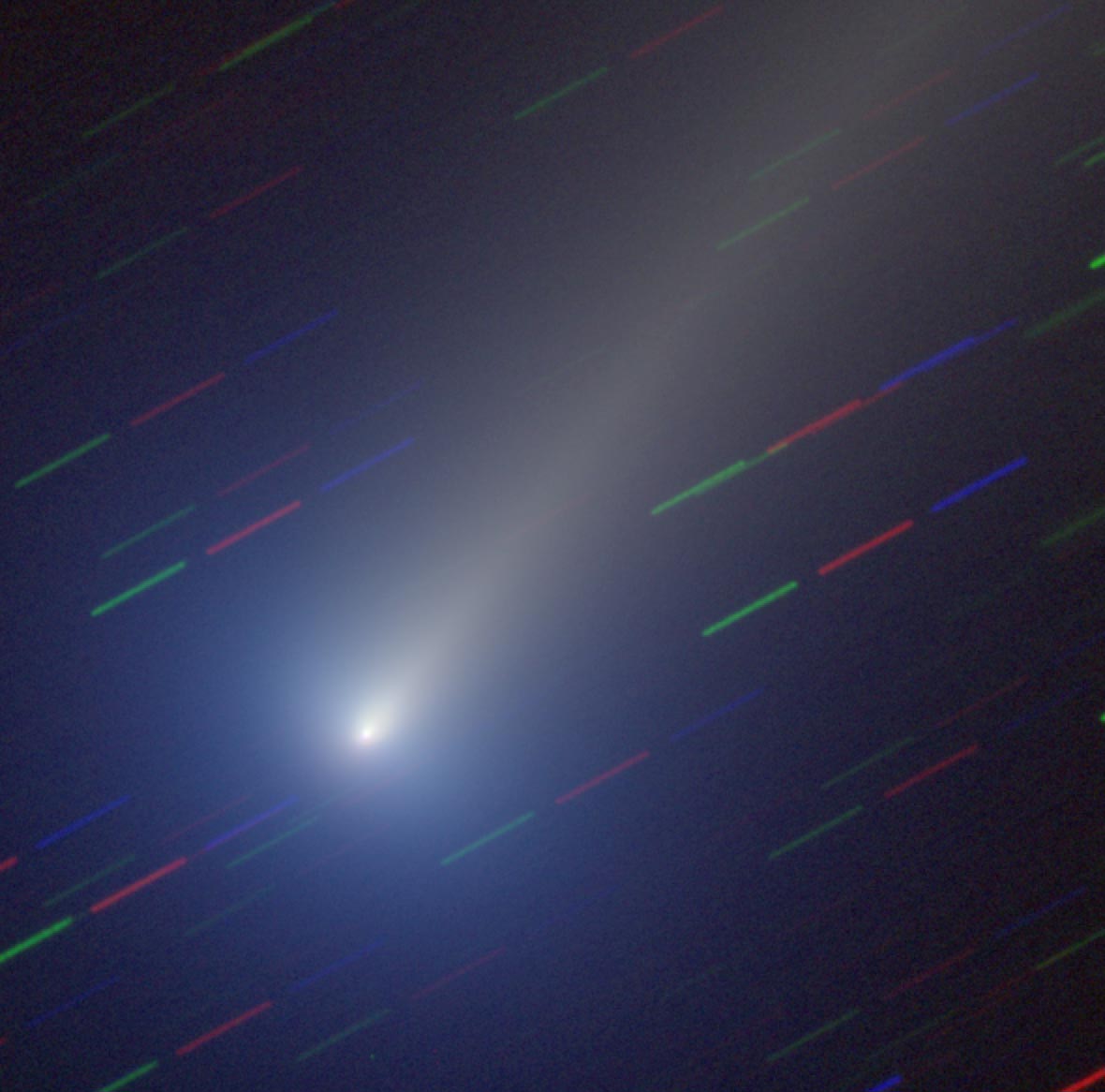
This real color image shows comet Leonard streaming through the sky on the morning of December 7, 2021, taken by ESA’s Near-Earth Object Coordination Centre (NEOCC), part of the Agency’s Planetary Defence Office, using the Calar Alto Schmidt telescope in Spain.
By superimposing a ‘stack’ of 90 images each five seconds ‘long’, the comet is revealed whizzing past background stars which appear here as colorful streaks going from green to red to blue – colors chosen to signify the three different filters used to observe Leonard.
Centered around the comet’s bright nucleus, these colors come together to create a brilliant white glow of the nucleus, while the green-bluish hue around it is true-to-life, the typical color emitted by comets due to their chemical composition.
Near-Earth comet? Not even close
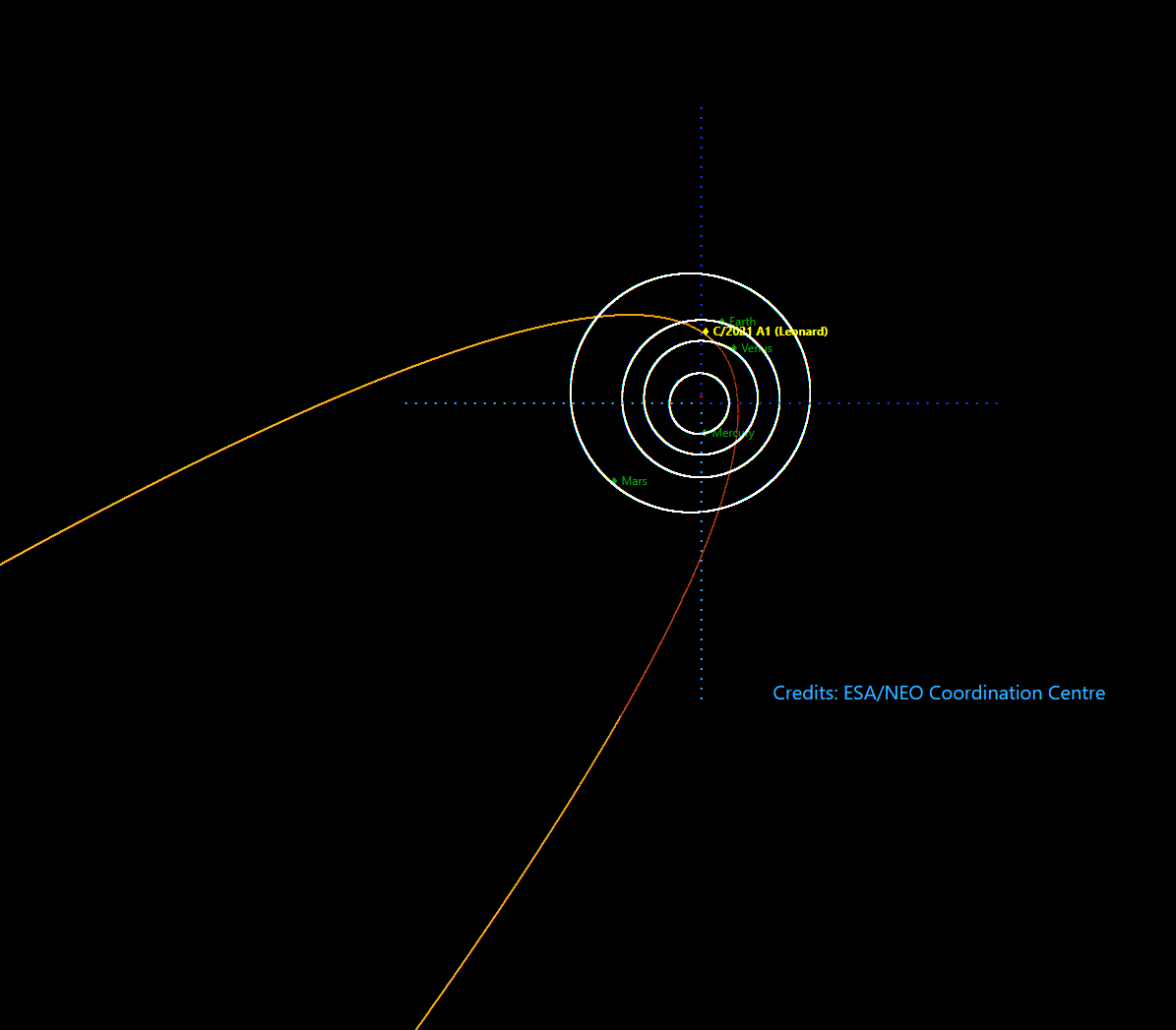
Comet Leonard was traveling about 47 kilometers (29 miles) per second in its orbit around the Sun when imaged here on December 7. On December 12 at 13:52 UTC, it will make its closest approach to Earth during this rotation, still an enormous 35 million kilometers away.
Currently, we know of 3775 comets in the Solar System. These small bodies are thought to be icy leftovers from the early phases of the forming of the outer planets. Orbiting the Sun, they edge towards the inner Solar System, emitting particles and gasses when heated by solar radiation producing their characteristic tail, then returning to the further reaches of about 50,000 times the distance of Earth from the Sun.
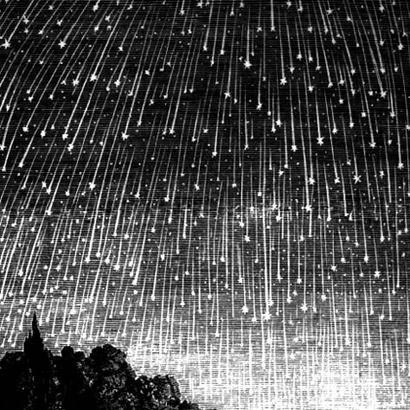
Interestingly, these long tails linger in place even once the comet has moved on. It is when Earth sporadically passes through the old trail of ancient comets that meteor showers occur, a beautiful, safe reminder of Earth’s fragility in the Solar System.
Sometimes, a comet’s orbit will see it edge close to Earth. Near-Earth Comets (NECs) are defined as those completing a full revolution of the Sun within 200 years, with a closest distance to the Sun within 1.3 Astronomical Units – the distance between the Sun and Earth.
Such comets are kept under the close watchful eye of ESA’s NEOCC, because, like asteroids, any strike with Earth could have a very damaging impact. Fortunately, such comets are rare – with only 100 known at present and just one or two added to the books each year.
Unique? Not really. Pretty? Very.
While not many people will have witnessed a comet appear in the sky, comet Leonard is not particularly unique. In fact, it’s rather typical:
“This is a bright-ish comet that we see in the skies on average once per year. As it gets a little closer, it could become visible to the naked eye, making for some attractive pictures, but, for us concerned with objects that could pose a threat to Earth, this comet is thankfully rather unspectacular,” explains Marco Micheli, Astronomer in ESA’s Near-Earth Object Coordination Centre.
For everyone else, it will be worth checking the skies for this icy passer-by in the days after its close approach on December 12 (at its closest it won’t be visible as it will be too close to the glaring Sun).
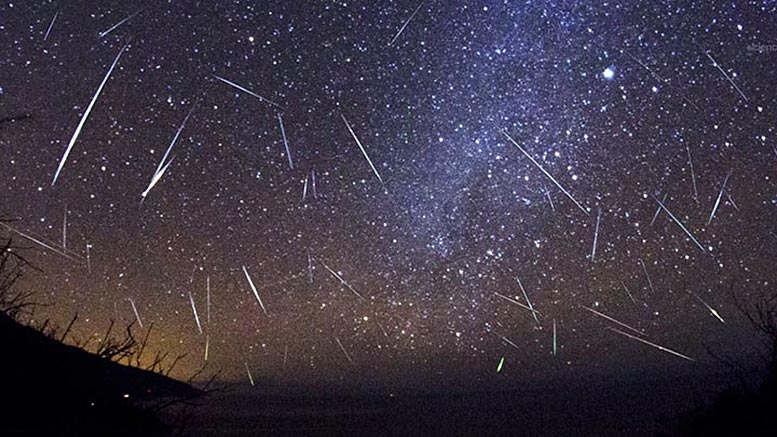
In a cosmic coincidence, this same period will be perfect for spotting shooting stars as, peaking around December 13-14, will be the Geminid meteor shower. The Geminids are one of only two meteor showers occurring due to Earth passing through the ‘tail’ of an asteroid – (3200) Phaethon – instead of a comet.
Never miss a breakthrough: Join the SciTechDaily newsletter.
Follow us on Google and Google News.
1 Comment
Live long and prosper humans.