
Close Menu
    Facebook X (Twitter) Instagram
    SciTechDaily
    • Biology
    • Chemistry
    • Earth
    • Health
    • Physics
    • Science
    • Space
    • Technology
    Facebook X (Twitter) Pinterest YouTube RSS
    SciTechDaily
    Home»Earth»Earthquake Symmetry and What It Means for Early Warning Systems
    Earth

    Earthquake Symmetry and What It Means for Early Warning Systems

    By Satoshi Ide, University of TokyoSeptember 9, 2019No Comments2 Mins Read
    Facebook Twitter Pinterest Telegram LinkedIn WhatsApp Email Reddit
    Share
    Facebook Twitter LinkedIn Pinterest Telegram Email Reddit
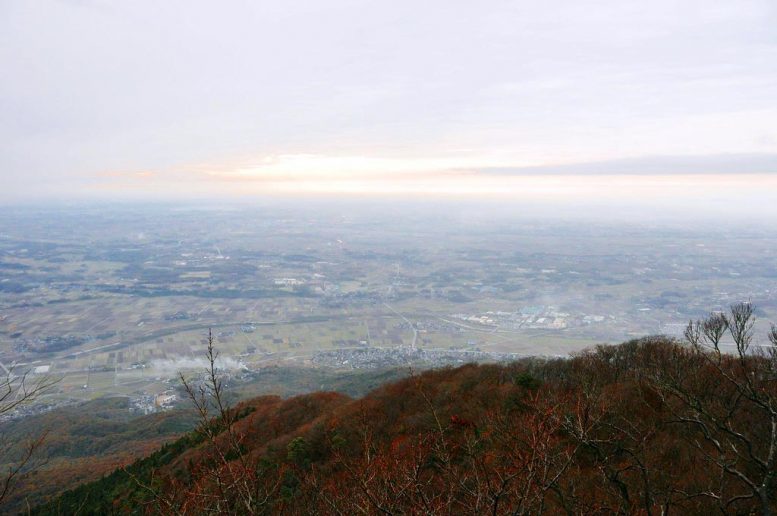
    View from Mount Tsukuba
    View from Mount Tsukuba. Credit: Flickr/Marufish CC BY-SA 2.0

    A recent study investigated around 100,000 localized seismic events to search for patterns in the data. University of Tokyo Professor Satoshi Ide discovered that earthquakes of differing magnitudes have more in common than was previously thought. This suggests the development of early warning systems may be more difficult than hoped. But conversely, similarities between some events indicate that predictable characteristics may aid researchers attempting to forecast seismic events.

    Since the 1980s seismologists – earthquake researchers – have wondered how feasible it might be to predict how an earthquake will behave given some information about its initial conditions. In particular, whether you can tell the eventual magnitude based on seismic measurements near the point of origin, or epicenter. Most researchers consider this idea too improbable given the randomness of earthquake behavior, but Ide thinks there’s more to it than that.

    “Taking inspiration from a study comparing different-sized earthquakes, I decided to analyze a seismic data set from a region known as the Tohoku-Hokkaido subduction zone in eastern Japan,” said Ide. “A systematic comparison of around 100,000 seismic events over 15 years leads me to believe earthquakes are not different in random ways but share many similarities.”
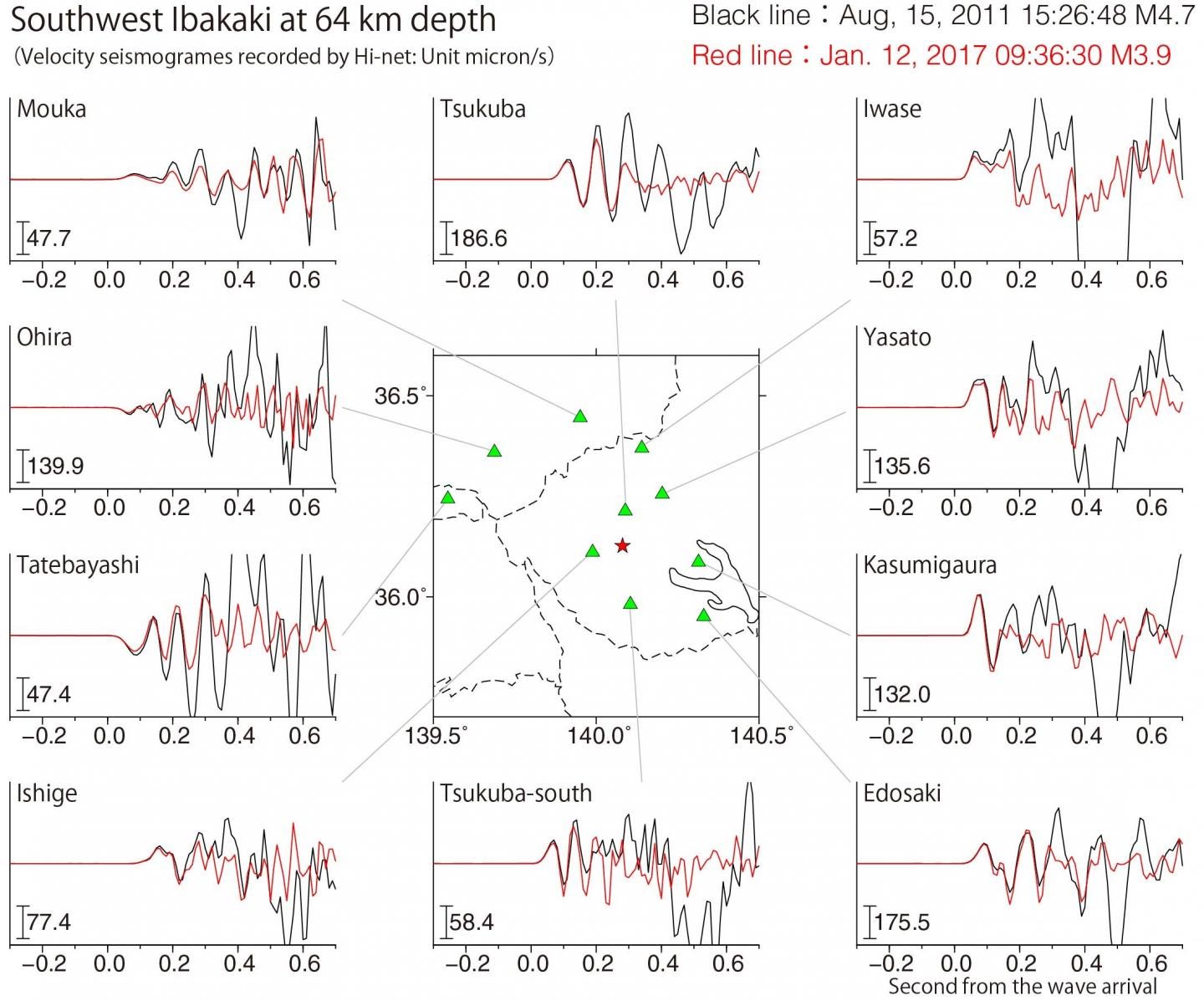
    Map of Seismic Sensors
    Map of seismic sensors (green triangles) around the epicenter (red star) of one of the earthquakes near the city of Tsukuba, Ibaraki Prefecture. Credit: Satoshi Ide

    To draw comparisons between different earthquakes, Ide first selected the larger examples from the data set with magnitudes greater than 4.5. He also selected smaller earthquakes in the same regions as these larger ones. Ide then ascertained mathematically how similar seismic signals were between pairs of large and small earthquakes. He used a statistical function for the comparison of signals called a cross-correlation on data from 10 seismic stations close to the pairs of earthquakes in each case.

    “Some pairs of large and small earthquakes start with exactly the same shaking characteristics, so we cannot tell the magnitude of an earthquake from initial seismic observations,” explained Ide. “This is bad news for earthquake early warning. However, for future forecasting attempts, given this symmetry between earthquakes of different magnitudes, it is good to know they are not completely random.”

    ###

    Reference: “Frequent observations of identical onsets of large and small earthquakes” by Satoshi Ide, 4 September 2019, Nature.
    DOI: 10.1038/s41586-019-1508-5

    Never miss a breakthrough: Join the SciTechDaily newsletter.
    Follow us on Google and Google News.

    Earthquakes University of Tokyo
    Share. Facebook Twitter Pinterest LinkedIn Email Reddit

    Related Articles

    What Caused Japan’s 16-Foot Ground Surge? Scientists Unravel the Mystery

    The Thrust of the Problem: New Understanding of Quake That Killed 9,000 People

    Investigating the Subsurface Processes of Earthquakes and Eruptions of the Aso Volcano

    Geologists Find Anomalies, Pieces of Mantle Found Rising Under Cascadia Fault

    Geophysicists Reveal Megathrust Fault Off Costa Rica

    Fracking Wastewater Injection Wells Linked to Earthquakes

    Analysis of 2011 Virginia Earthquake Suggests Seismic Risk

    Defects in Mantle Rocks Slow Down the Passage of Seismic Waves

    Lidar Equipment Provides Comprehensive Pictures Earthquake Zones

    Leave A Reply Cancel Reply

    • Facebook
    • Twitter
    • Pinterest
    • YouTube

    Don't Miss a Discovery

    Subscribe for the Latest in Science & Tech!

    Trending News

    Millions of People Have Osteopenia Without Realizing It – Here’s What You Need To Know

    Researchers Discover Boosting a Single Protein Helps the Brain Fight Alzheimer’s

    World-First Study Reveals Human Hearts Can Regenerate After a Heart Attack

    Why Your Dreams Feel So Real Sometimes and So Strange Other Times

    This Simple Home Device May Boost Brain Power in Adults Over 40

    Enormous Prehistoric Insects Puzzle Scientists

    Scientists Develop Bioengineered Chewing Gum That Could Help Fight Oral Cancer

    After 37 Years, the World’s Longest-Running Soil Warming Experiment Uncovers a Startling Climate Secret

    Follow SciTechDaily
    • Facebook
    • Twitter
    • YouTube
    • Pinterest
    • Newsletter
    • RSS
    SciTech News
    • Biology News
    • Chemistry News
    • Earth News
    • Health News
    • Physics News
    • Science News
    • Space News
    • Technology News
    Recent Posts
    • Researchers Identify the Most Common Recessive Neurodevelopmental Disorder Ever Discovered
    • This Is What Makes You Irresistible to Mosquitoes
    • Shockingly Powerful Giant Octopuses Ruled the Seas 100 Million Years Ago
    • After 100 Years, Scientists Uncover Hidden Rule Governing Cosmic Rays
    • The Milky Way Has a Hidden Edge and Scientists Finally Mapped It
    Copyright © 1998 - 2026 SciTechDaily. All Rights Reserved.
    • Science News
    • About
    • Contact
    • Editorial Board
    • Privacy Policy
    • Terms of Use

    Type above and press Enter to search. Press Esc to cancel.