
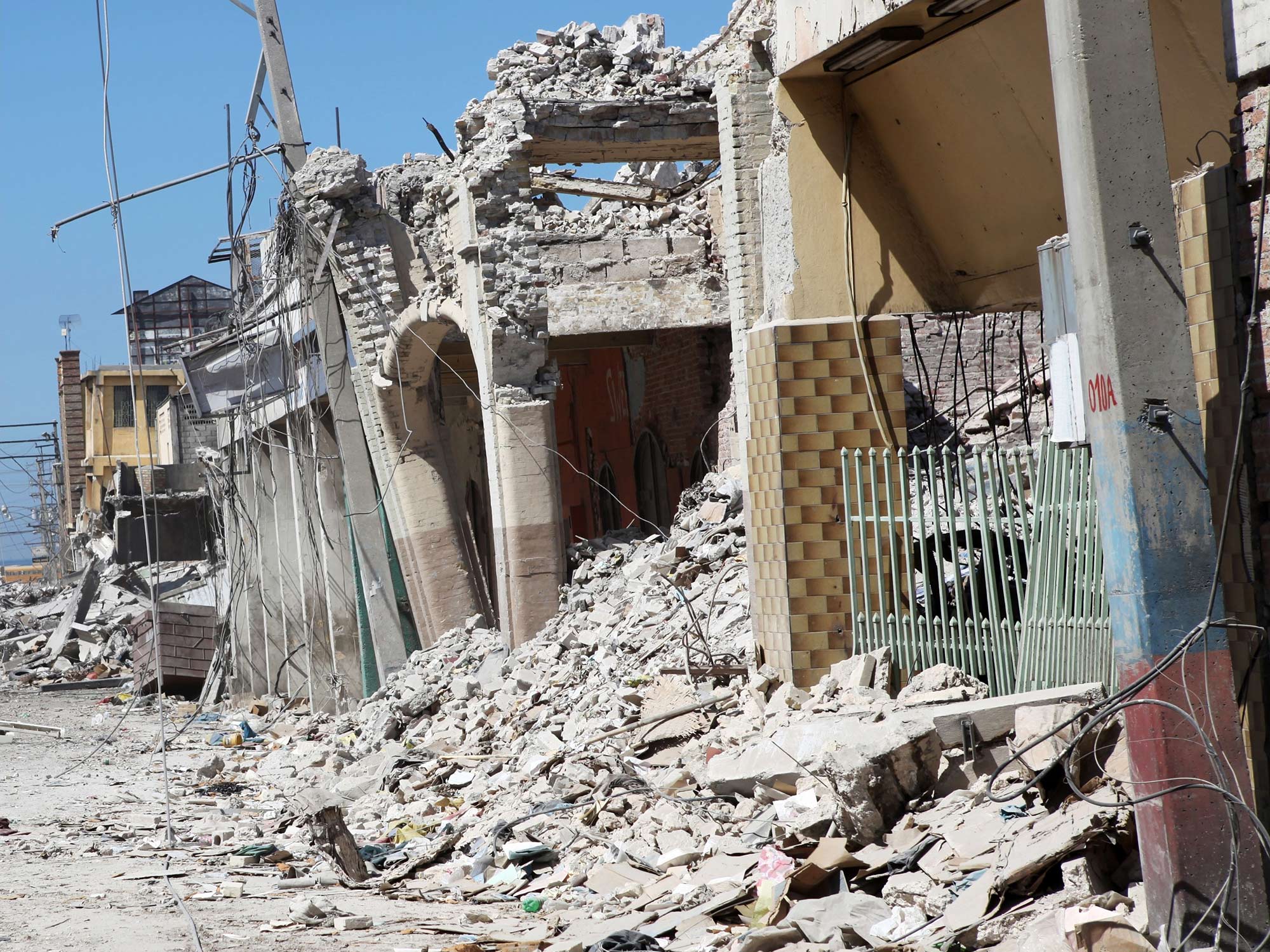
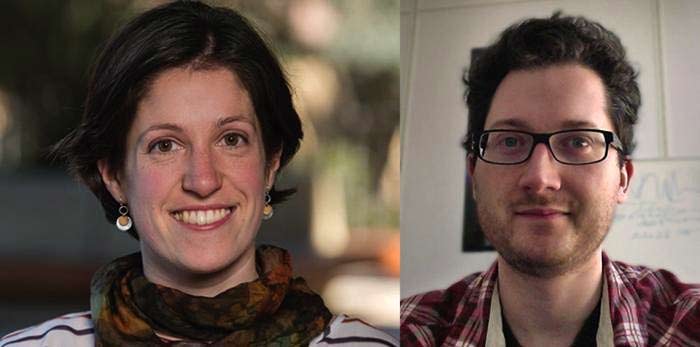
Assistant professors Camilla Cattania and William Frank discuss the science behind the 2010 and 2021 earthquakes in Haiti.
On August 14, 2021, a magnitude 7.2 earthquake struck Haiti. The largest earthquake in the region since 2010, the disaster left at least 2,000 people dead, 12,000 people injured, and nearly 53,000 houses destroyed. Two assistant professors in the MIT Department of Earth, Atmospheric and Planetary Sciences discuss why the region is susceptible to earthquakes and what has changed — in Haiti and in earthquake science — since the devastating 2010 event, when the country had only one seismometer.
Camilla Cattania is a seismologist with experience in numerical modeling, earthquake physics, and statistical seismology; and William Frank is a geophysicist focused the physical mechanisms that control deformation within the Earth’s crust.
Q: Why is Haiti prone to earthquakes?
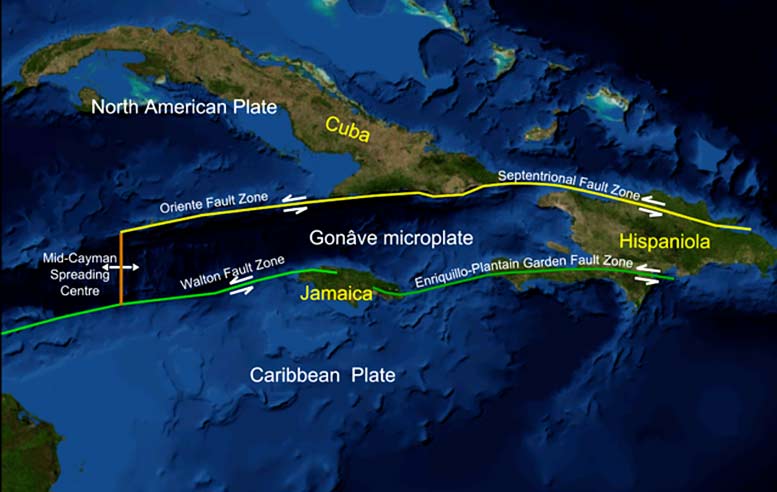
Cattania: I’ll start with the broad tectonics setting. The island of Hispaniola, which comprises Haiti and the Dominican Republic, is sandwiched between the North American plate to the north and the Caribbean plate to the south. Haiti is primarily on a tiny plate that’s sandwiched between the two. At each plate boundary it has faults, fractures within the Earth’s crust, running approximately east to west. The earthquake happened in the southern-most fault system, called the Enriquillo-Plantain Garden fault system, where there are faults with slightly different orientations, creating complex fault geometry. The northern plate is moving to the west while the southern plate is moving to the east, causing earthquakes along this fault zone.
Frank: Not only do you have the sliding motion from east to west, but you also have compressive, or squeezing, motion at the plate boundary that is accommodated by other nearby faults. For example, one of the big questions for the 2010 earthquake is: What fault did it actually occur on? It looked like it was right next Enriquillo-Plantain Garden fault system, but was it was on a translational, or sliding, fault or a compressive fault? There are lots of outstanding questions about the complexity of what, from far away, looks simple.
Cattania: The region transitions between horizontal motion, in which plates slide past each other, to the compressive motion William described, which has some vertical motion. Even in this earthquake, preliminary models show that there was a bit of both.
Another question would be: Why now? Why have there been two earthquakes recently? The Enriquillo-Plantain Garden fault system has been associated with earthquakes in 1751, 1770, 1860, without much in between. A long period of time without seismicity can increase the likelihood that you will have an earthquake because you have had more time to accumulate stresses. Moreover, the 2010 earthquake, which happened on a subsidiary fault, further increased the stress at the location of the 2021 earthquake.
Q: What is the same and what is different about this earthquake versus the 2010 earthquake?
Frank: The 2010 earthquake happened on a fault that wasn’t previously identified, one of the faults that accommodates the compressive motion of the plate boundary. The question we have now is whether this recent earthquake is on the main translational fault, or whether it’s also on another fault that accommodates compressive motion. If that were the case, it would be the same plate boundary, but a different faulting regime.
Cattania: The reason there are so many unknowns is because this region was very sparsely instrumented up until 2010, when Haiti had no permanent seismic network. Now the region has more seismometers, and people also have portable, low-quality seismometers in their homes that provide a large quantity of measurements. The quality of the data that we have from this earthquake is superior compared to anything we would have had in 2010 or before. I think we’ll have more answers in the future to some of these questions than we did before because the instrumentation has improved between these two events.
Frank: Increased instrumentation allows us to get a better image of what’s happening in the fault zone during the main earthquake and the aftershocks that follow. The parallel story on why that’s possible is that during the 2010 earthquake, there was no seismology at the State University of Haiti. Now, there’s a geoscience department that’s recruiting and training seismologists.
There’s an informational website that is the result of an exciting collaboration between geoscience researchers in Haiti and the University of Nice in France, where they publish real-time locations and detections of aftershocks. It provides enormous amounts of data that is publicly available. Overall, there’s much more activity within Haiti, of instrumentation, of general interest in earthquake hazard, and of people to study the data, than there was during the 2010 earthquake.
Cattania: Another difference between these events was their magnitude. The first one was 7; this latest was 7.2. But the location was also different — the first was closer to Port-au-Prince and generally more populated areas. The fact that this one is stronger doesn’t necessarily imply that it’s more damaging.
Q: What does your research tell us about future earthquakes in this area? What do we know as a scientific community?
Cattania: We cannot predict with certainty the location or the magnitude of huge earthquakes in this area, or anywhere else; however, we do know the typical properties of aftershocks. Basically, you will feel hundreds of earthquakes in the first few weeks, and then this number gradually goes down unless one of these earthquakes happens to be large enough to start a new sequence.
How does the earthquake affect the fault system? We had an earthquake in 2010 that happened to the east of the current earthquake, and it increased the amount of stress where the 2021 earthquake happened. If you look at a map of this area, it’s clear that there are other segments of this same fault system on which major earthquakes haven’t happened for a long time. There is a possibility of other damaging earthquakes occurring on the same fault system.
Frank: For me, what’s most related to my research is developing efficient ways to detect, identify, and characterize the aftershocks. We’ve developed signal processing techniques that we can use on the seismic data to identify the earthquakes, and once we’re able to identify them, we’re able to get good locations. We’re able to study the occurrence rate of these aftershocks.
These aftershock catalogs are extremely important to understanding the extent of rupture and to identifying the actual faults and planes that they occur on. There are two simple ways to identify the structure. You can look at the main earthquake itself, or at the rupture zone of the main earthquake, where the aftershocks often delineate where the main earthquake happened. And once you can identify, locate, and characterize those aftershocks, you can better model the earthquake.
Cattania: My work has been about including geometrical complexity in aftershock forecasts. When you’re trying to figure out where aftershocks will happen, you need to know as much as possible about the orientation of existing faults, and sometimes you have to make simplified assumptions about it. I’ve developed methods that help better include everything we know, using data and the type of information that William was describing, to try to infer how an aftershock will evolve given what the fault geometry looks like and how variable it is in this region. My methods allow you to take refined information about fault geometry to produce better aftershock forecasts.
Frank: That’s why I’m excited to be here with Camilla — because we can make that direct connection.
Never miss a breakthrough: Join the SciTechDaily newsletter.
Follow us on Google and Google News.