
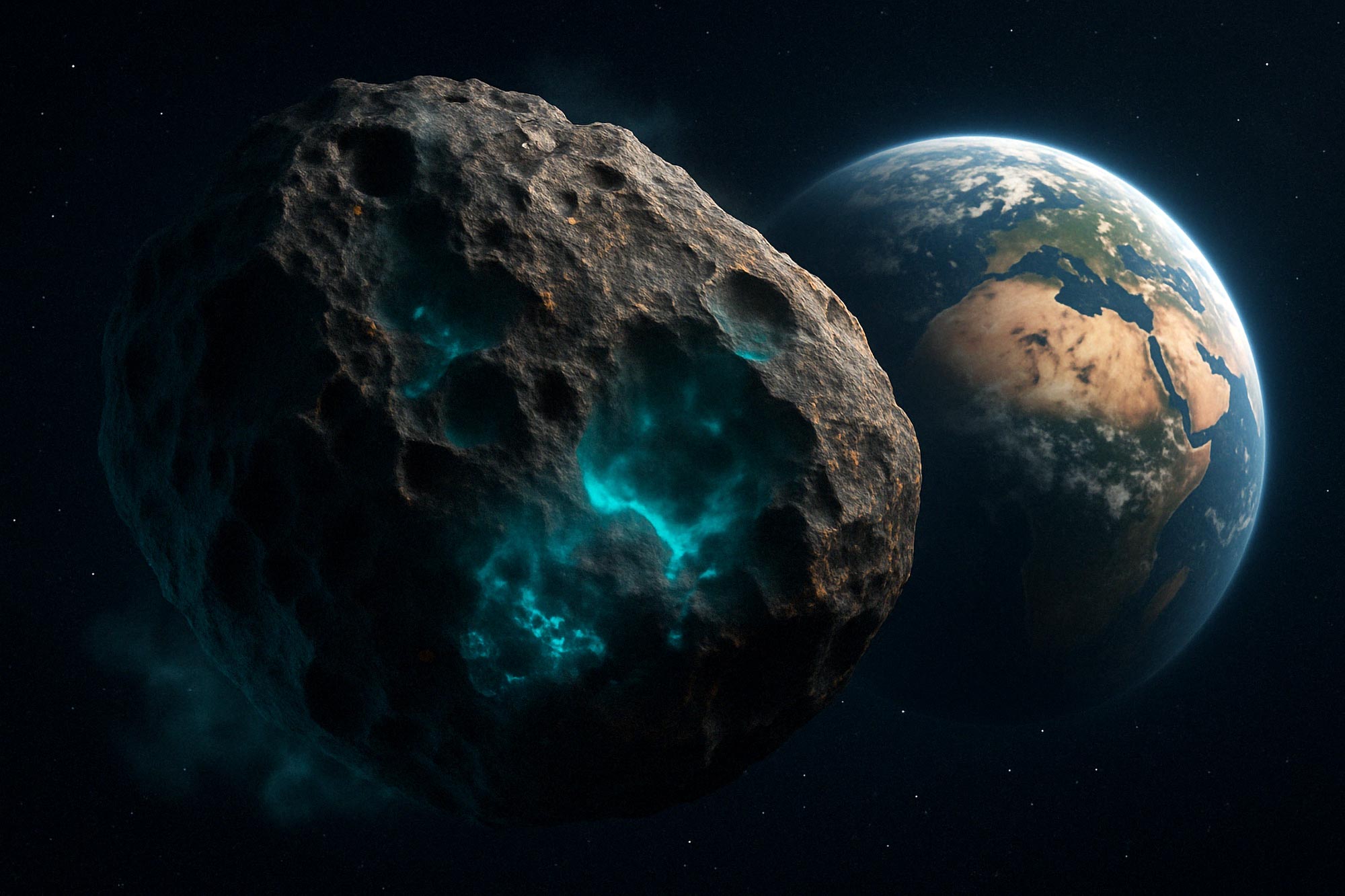
Oxford researchers have unearthed a cosmic surprise showing that the hydrogen needed for water was embedded in the very rocks that formed Earth.
- Researchers at the University of Oxford have challenged the widely held theory that Earth’s water came from asteroid impacts.
- They studied a rare meteorite that closely resembles the material that formed the early Earth.
- Their analysis revealed that this material contained much more hydrogen – a key ingredient for water – than previously believed.
- The findings support the idea that Earth had the necessary ingredients to form water from the very beginning, without relying on asteroid deliveries.
- The study was published on April 16 in the journal Icarus.
Enstatite Chondrites and Intrinsic Hydrogen
Researchers at the University of Oxford have found important new evidence about where Earth’s water may have come from. By studying a rare type of meteorite called an enstatite chondrite – thought to resemble the material that formed the early Earth around 4.55 billion years ago – they identified a source of hydrogen that would have been essential for forming water.
Importantly, they showed that this hydrogen was native to the meteorite and not the result of contamination. This means the building blocks of our planet likely contained far more hydrogen than scientists had previously believed.
Without hydrogen, a fundamental elemental building-block of water, it would have been impossible for our planet to develop the conditions to support life. The origin of hydrogen, and by extension water, on Earth has been highly debated, with many believing that the necessary hydrogen was delivered by asteroids from outer space during Earth’s first approximately 100 million years. But these new findings contradict this, suggesting instead that Earth had the hydrogen it needed to create water from when it first formed.
Probing LAR 12252 with X-ray Spectroscopy
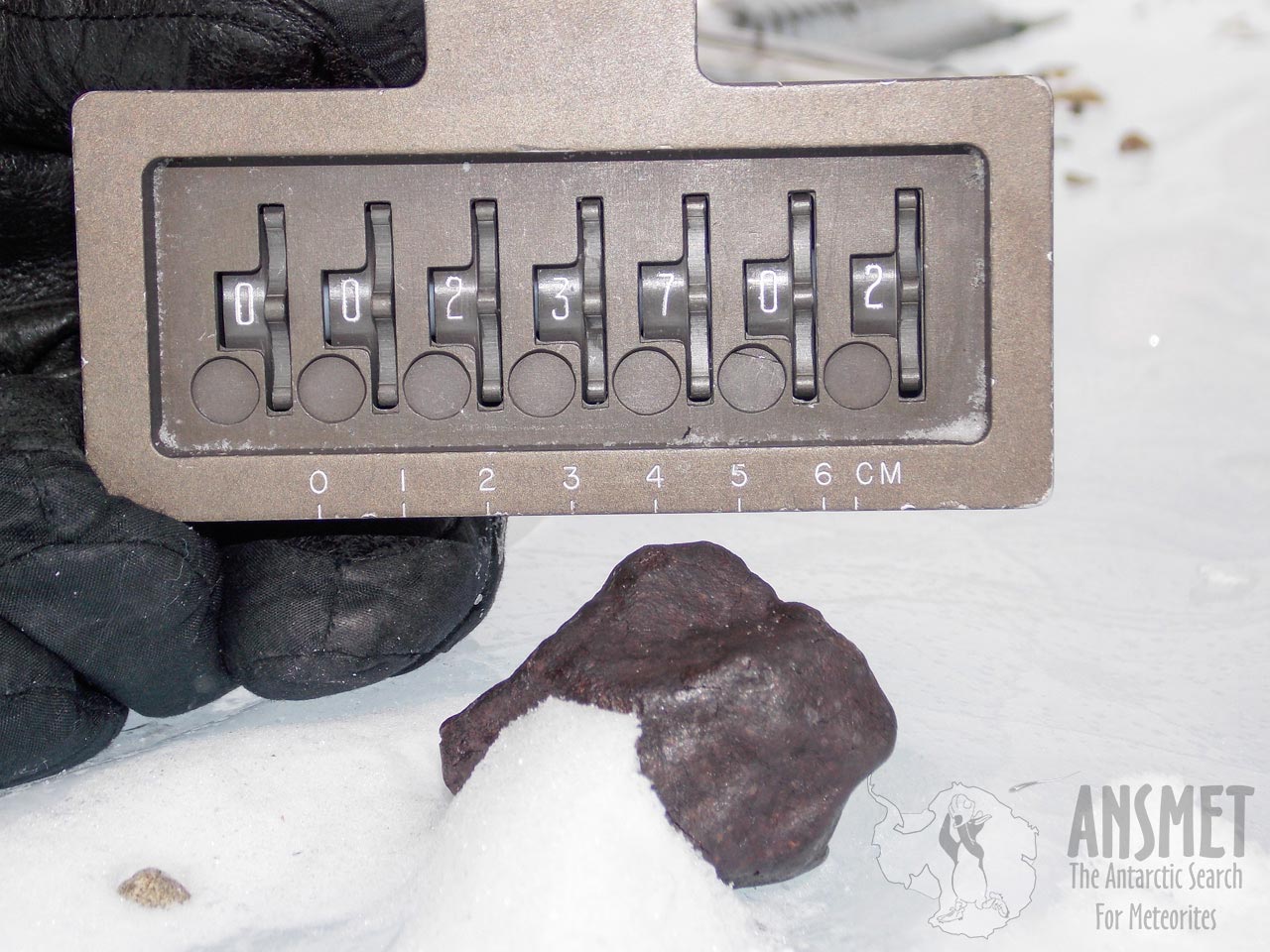
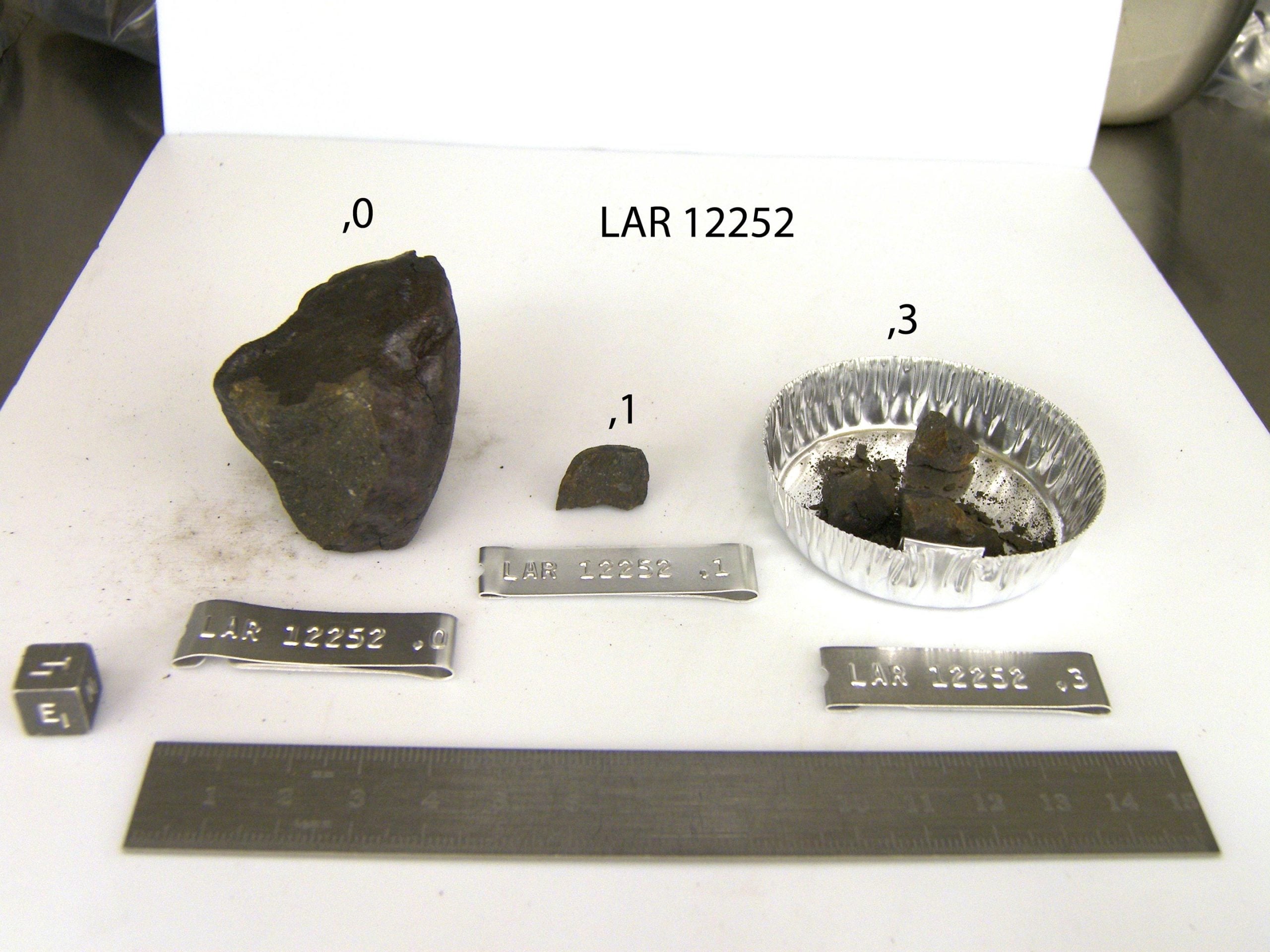
The research team analysed the elemental composition of a meteorite known as LAR 12252, originally collected from Antarctica. They used an elemental analysis technique called X-Ray Absorption Near Edge Structure (XANES) spectroscopy[1] at the Diamond Light Source synchrotron at Harwell, Oxfordshire.
A previous study led by a French team had originally identified traces of hydrogen within the meteorite inside organic materials and non-crystalline parts of the chondrules (millimeter-sized spherical objects within the meteorite). However, the remainder was unaccounted for, meaning it was unclear whether the hydrogen was native or due to terrestrial contamination.
The Oxford team suspected that significant amounts of the hydrogen may be attached to the meteorite’s abundant sulfur. Using the synchrotron, they shone a powerful beam of X-rays onto the meteorite’s structure to search for sulfur-bearing compounds.
Matrix Hydrogen Sulfide Validates Native Source
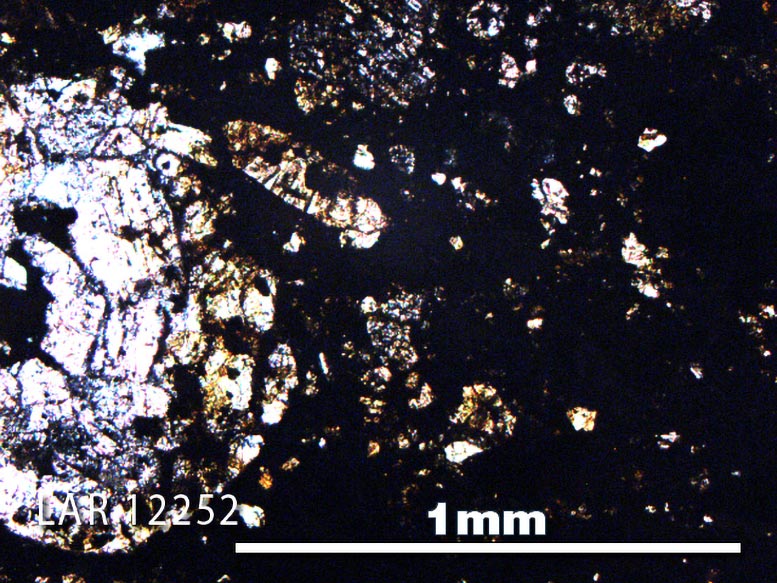
When initially scanning the sample, the team focused their efforts on the non-crystalline parts of the chondrules, where hydrogen had been found before. But when serendipitously analysing the material just outside of one of these chondrules, composed of a matrix of extremely fine (sub-micrometer) material, the team discovered that the matrix itself was incredibly rich in hydrogen sulfide. In fact, their analysis found that the amount of hydrogen in the matrix was five times higher than that of the non-crystalline sections.
In contrast, in other parts of the meteorite that had cracks and signs of obvious terrestrial contamination (such as rust), very little or no hydrogen was present. This makes it highly unlikely that the hydrogen sulfide compounds detected by the team originated from an Earthly source.
Since the proto-Earth was made of material similar to enstatite chondrites, this suggests that by the time the forming planet had become large enough to be struck by asteroids, it would have amassed enough reserves of hydrogen to explain Earth’s present-day water abundance.
Oxford Experts Affirm Native Water Origin
Tom Barrett, DPhil student in the Department of Earth Sciences at the University of Oxford, who led the study, said: “We were incredibly excited when the analysis told us the sample contained hydrogen sulfide – just not where we expected! Because the likelihood of this hydrogen sulfide originating from terrestrial contamination is very low, this research provides vital evidence to support the theory that water on Earth is native – that it is a natural outcome of what our planet is made of.”
Co-author Associate Professor James Bryson (Department of Earth Sciences, University of Oxford) added: “A fundamental question for planetary scientists is how Earth came to look like it does today. We now think that the material that built our planet, which we can study using these rare meteorites, was far richer in hydrogen than we thought previously. This finding supports the idea that the formation of water on Earth was a natural process, rather than a fluke of hydrated asteroids bombarding our planet after it formed.”
Notes
- X-ray Absorption Near Edge Structure (XANES) spectroscopy is a technique that is used to identify what elements are in a material and what their chemical state is. It works by shining X-rays onto a sample, causing the atoms to absorb energy in a way that depends on what the element is, the chemical form it is in (e.g., an oxide, a sulfide, etc), and how the atoms are bonded with others.
Reference: “The source of hydrogen in Earth’s building blocks” by Thomas J. Barrett, James F.J. Bryson and Kalotina Geraki, 3 April 2025, Icarus.
DOI: 10.1016/j.icarus.2025.116588
Never miss a breakthrough: Join the SciTechDaily newsletter.
Follow us on Google and Google News.
1 Comment
This considerably improves on the earlier result, and having the hydrogen rich material outside the hot formed chondrules makes sense. We also now know from zircons that a global ocean formed early and from phylogenetic evidence that biology split from geology right after that.
On a related note, I’m glad that the dating for the late heavy bombardment and late veneer included the newest estimate. That is progress too.
For a remaining critique, see CNN’s article:
“Matt Genge, a planetary scientist at Imperial College London, who was not involved in the study, told CNN that while the study is an “interesting result,” the evidence is not sufficient to overturn the longstanding theory of the origins of water.
The meteorite in question had been in Antarctica likely for hundreds of thousands of years, he said, and it is impossible to completely rule out the chance that the hydrogen may have formed during that time.
“Just the fact that there is a possibility makes the argument less strong,” Genge said.
Bryson acknowledged that the meteorite was indeed likely on Earth for many years before it was collected but stands by the study results.
“We believe we have taken every effort we can in our analysis workflow to mitigate the impact of terrestrial water on our results, and we do think that some of the total amount of H (hydrogen) in the meteorite is due to Earth’s water (maybe about 15%),” Bryson said via email in response to Genge’s statement.
“We also think that some H (hydrogen) was still delivered from asteroids and comets, however we now think this is a small proportion of the total H (hydrogen) found throughout our planet. So Matt’s assessment of this meteorite is justified, but we strived to minimise his concern.””