
Maternal exposure to emulsifiers may reshape offspring microbiota and increase inflammation risk.
A team of researchers from the Institut Pasteur and Inserm has shown through a mouse study that when mothers consume dietary emulsifiers, it can negatively affect the gut microbiota of their offspring. These microbiota disruptions are believed to significantly raise the likelihood of developing chronic inflammatory bowel diseases and obesity later in life.
The study’s findings highlight that the effects of emulsifier consumption may extend across generations, emphasizing the importance of further human studies on how early-life exposure to such food additives influences long-term health. The research was published in Nature Communications.
What are emulsifiers and why they matter
Emulsifiers are food additives widely used to enhance the texture and extend the shelf life of processed products, including dairy items, baked goods, ice creams, and certain powdered baby formulas. Despite their widespread use, their effects on human health—and particularly on the gut microbiota—remain poorly understood.
Under the direction of Benoit Chassaing, Inserm Research Director and Head of the Microbiome-Host Interactions Laboratory (an Inserm unit at the Institut Pasteur), researchers examined two common emulsifiers: carboxymethyl cellulose (E466) and polysorbate 80 (E433). Female mice were given these additives for ten weeks before mating and throughout pregnancy and lactation.
The team then studied the gut microbiota of their offspring, who had never been directly exposed to emulsifiers. Results revealed that the offspring of emulsifier-exposed mothers showed major microbiota changes within their first weeks of life, the critical period when mothers naturally transmit part of their microbiota through close contact.
Microbiota changes and disrupted immune communication
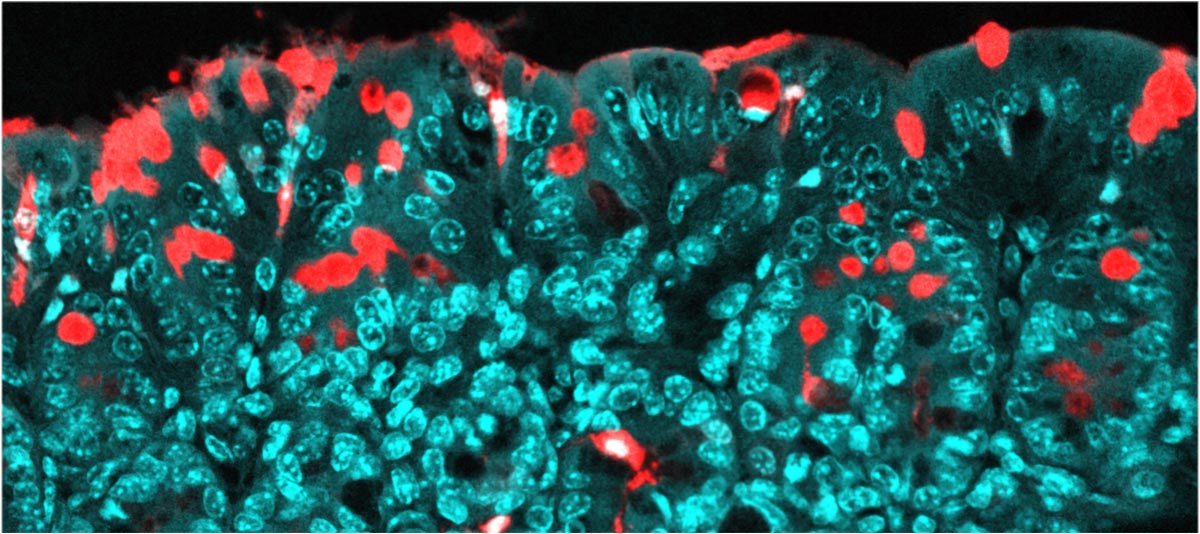
The altered microbiota included more flagellated bacteria, which can stimulate immune activity and provoke inflammation, as well as bacteria that adhered more closely to the intestinal lining. Researchers observed that this increased bacterial contact led to premature closure of microscopic openings in the gut that normally allow small bacterial fragments to pass through the mucosa.
These passages are essential for helping the immune system learn to recognize and tolerate gut microbes. In mice born to emulsifier-exposed mothers, these openings closed earlier than normal, cutting off communication between the microbiota and the immune system. As the offspring matured, this disruption caused heightened immune reactivity and chronic inflammation, greatly increasing the risk of developing obesity and inflammatory bowel diseases.
Overall, the study demonstrates in mice that early-life alterations to gut microbiota—occurring even without direct exposure to emulsifiers—can have lasting effects on immune regulation and metabolic health, increasing susceptibility to chronic disorders in adulthood.
Implications for infant health and future research
“It is crucial for us to develop a better understanding of how what we eat can influence future generations’ health. These findings highlight how important it is to regulate the use of food additives, especially in powdered baby formulas, which often contain such additives and are consumed at a critical moment for microbiota establishment. We want to continue this research with clinical trials to study mother-to-infant microbiota transmission, both in cases of maternal nutrition with or without food additives and in cases of infants directly exposed to these substances in baby formula,” comments Benoit Chassaing, last author of the study.
Reference: “Maternal emulsifier consumption alters the offspring early-life microbiota and goblet cell function leading to long-lasting diseases susceptibility” by Clara Delaroque, Héloïse Rytter, Erica Bonazzi, Marine Huillet, Sandrine Ellero-Simatos, Eva Chatonnat, Fuhua Hao, Andrew Patterson and Benoit Chassaing, 29 July 2025, Nature Communications.
DOI: 10.1038/s41467-025-62397-3
This research was supported by a Starting Grant and a Consolidator Grant from the European Research Council (ERC).
Never miss a breakthrough: Join the SciTechDaily newsletter.
Follow us on Google and Google News.
1 Comment
These emulsifiers are emulsifying the mucosa layer of the gut leading to increased permeability. “Leaky gut”. Perhaps akkermansia muciniphila can improve symptoms or is being degraded.