
Close Menu
    Facebook X (Twitter) Instagram
    SciTechDaily
    • Biology
    • Chemistry
    • Earth
    • Health
    • Physics
    • Science
    • Space
    • Technology
    Facebook X (Twitter) Pinterest YouTube RSS
    SciTechDaily
    Home»Chemistry»Eco-Friendly Breakthrough: Single Atom Catalyst Transforms CO2 Into Ethanol
    Chemistry

    Eco-Friendly Breakthrough: Single Atom Catalyst Transforms CO2 Into Ethanol

    By Dalian Institute of Chemical Physics, Chinese Academy SciencesNovember 21, 20231 Comment2 Mins Read
    Facebook Twitter Pinterest Telegram LinkedIn WhatsApp Email Reddit
    Share
    Facebook Twitter LinkedIn Pinterest Telegram Email Reddit
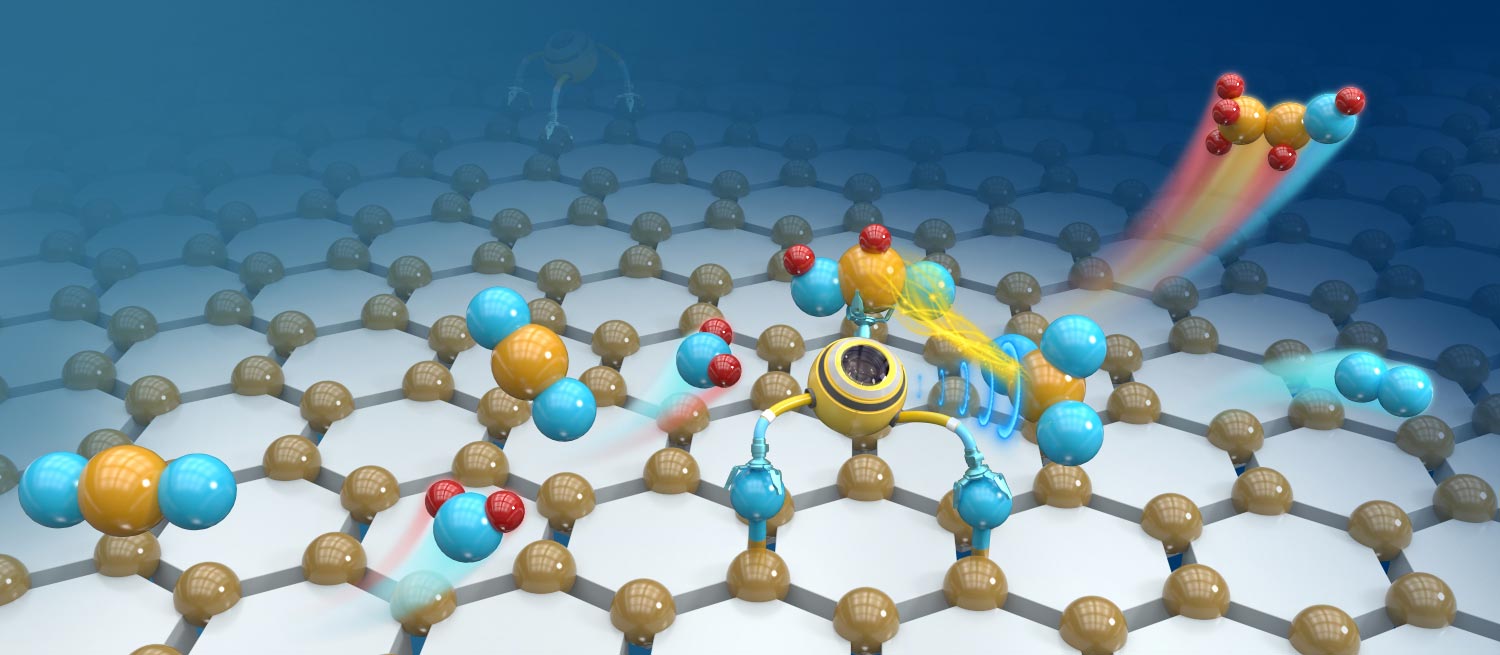
    Tandem Single Atom Electrocatalyst Realizes Reduction of CO2 to Ethanol
    Tandem single atom electrocatalyst realizes reduction of CO2 to ethanol. Credit: DICP

    A recent breakthrough in CO2 reduction research involves a newly developed Sn-based catalyst that efficiently produces ethanol, representing a significant step forward in renewable energy technology.

    The electrochemical CO2 reduction reaction (CO2RR) into carbon-based fuels provides a promising strategy to mitigate CO2 emission and promotes the utilization of renewable energy.

    Challenges in CO2 Reduction

    Cn (n≥2) liquid products are desirable because of their high energy densities and ease of storage. However, manipulation of C-C coupling pathway remains a challenge due to the limited mechanistic understanding.

    Breakthrough Research

    Recently, a research group led by Profs. Tao Zhang and Yanqiang Huang from the Dalian Institute of Chemical Physics (DICP) of the Chinese Academy of Sciences (CAS) has developed a Sn-based tandem electrocatalyst (SnS2@Sn1-O3G), which could reproducibly yield ethanol with a Faradaic efficiency of up to 82.5% at -0.9 VRHE and a geometric current density of 17.8 mA/cm2.

    The study was published recently in the scientific journal Nature Energy.

    Catalyst Development

    The researchers fabricated the SnS2@Sn1-O3G through a solvothermal reaction of SnBr2 and thiourea on a three-dimensional carbon foam. The electrocatalyst comprised SnS2 nanosheets and atomically dispersed Sn atoms (Sn1-O3G).

    Mechanistic Insights

    A mechanistic study showed that this Sn1-O3G could respectively adsorb *CHO and *CO(OH) intermediates, therefore promoting C-C bond formation through an unprecedented formyl-bicarbonate coupling pathway.

    Moreover, by using isotopically labeled reactants, the researchers traced the pathway of C atoms in the final C2 product formed over the catalyst of Sn1-O3G. This analysis suggested that the methyl C in the product comes from formic acid whereas the methylene C was from CO2.

    Conclusion

    “Our study provides an alternative platform for C–C bond formation for ethanol synthesis and offers a strategy for manipulating CO2 reduction pathways towards desired products,” said Prof. Huang.

    Reference: “A tin-based tandem electrocatalyst for CO2 reduction to ethanol with 80% selectivity” by Jie Ding, Hong Bin Yang, Xue-Lu Ma, Song Liu, Wei Liu, Qing Mao, Yanqiang Huang, Jun Li, Tao Zhang and Bin Liu, 30 October 2023, Nature Energy.
    DOI: 10.1038/s41560-023-01389-3

    Never miss a breakthrough: Join the SciTechDaily newsletter.
    Follow us on Google and Google News.

    Catalysts Chinese Academy of Sciences Energy Ethanol Green Energy
    Share. Facebook Twitter Pinterest LinkedIn Email Reddit

    Related Articles

    New Theories and Materials Aid the Transition To Clean Energy: Enzyme Catalysis, Electrocatalysis, and Photoelectrosynthesis

    Breakthrough in Supercharging Reactions for Clean Energy Fuel Cells

    Artificial Photosynthesis Promises Clean, Sustainable Source of Energy

    Catalytic Hydrogenation of CO2 to Methanol: Low Temperature and High Efficiency

    Chemical Research Breakthrough Could Transform Clean Energy Technology

    Artificial Photosynthesis Uses Sunlight to Recycle CO2 Into ‘Green Methane’

    Gasification Goes Green: Low-Temp Photocatalyst Slashes Carbon Footprint for Syngas

    Solving a Riddle That Would Provide the World With Entirely Clean, Renewable Energy

    Stanford Researchers Discover a New Route to Carbon-Neutral Fuels From Carbon Dioxide

    1 Comment

    1. smart@ss on November 27, 2023 8:44 pm

      This article is not about a single atom catalyst, as the headline promises. Carelessness damages credibility.

      Reply
    Leave A Reply Cancel Reply

    • Facebook
    • Twitter
    • Pinterest
    • YouTube

    Don't Miss a Discovery

    Subscribe for the Latest in Science & Tech!

    Trending News

    Monster Storms on Jupiter Unleash Lightning Beyond Anything on Earth

    Scientists Create “Liquid Gears” That Spin Without Touching

    The Simple Habit That Could Help Prevent Cancer

    Millions Take These IBS Drugs, But a New Study Finds Serious Risks

    Scientists Unlock Hidden Secrets of 2,300-Year-Old Mummies Using Cutting-Edge CT Scanner

    Bread Might Be Making You Gain Weight Even Without Eating More Calories

    Scientists Discover Massive Magma Reservoir Beneath Tuscany

    Europe’s Most Active Volcano Just Got Stranger – Here’s Why Scientists Are Rethinking It

    Follow SciTechDaily
    • Facebook
    • Twitter
    • YouTube
    • Pinterest
    • Newsletter
    • RSS
    SciTech News
    • Biology News
    • Chemistry News
    • Earth News
    • Health News
    • Physics News
    • Science News
    • Space News
    • Technology News
    Recent Posts
    • Scientists Discover a Surprising Reason Intermittent Fasting Extends Life
    • Scientists Discover a New Meteor Shower From a Mysterious Crumbling Asteroid
    • This Simple Fruit Wash Could Make Produce Safer and Last Days Longer
    • These Tiny Robots 50x Smaller Than a Hair Can Hunt and Move Bacteria
    • Simple Blood Test May Predict Alzheimer’s Years Before Brain Scans Show Signs
    Copyright © 1998 - 2026 SciTechDaily. All Rights Reserved.
    • Science News
    • About
    • Contact
    • Editorial Board
    • Privacy Policy
    • Terms of Use

    Type above and press Enter to search. Press Esc to cancel.