
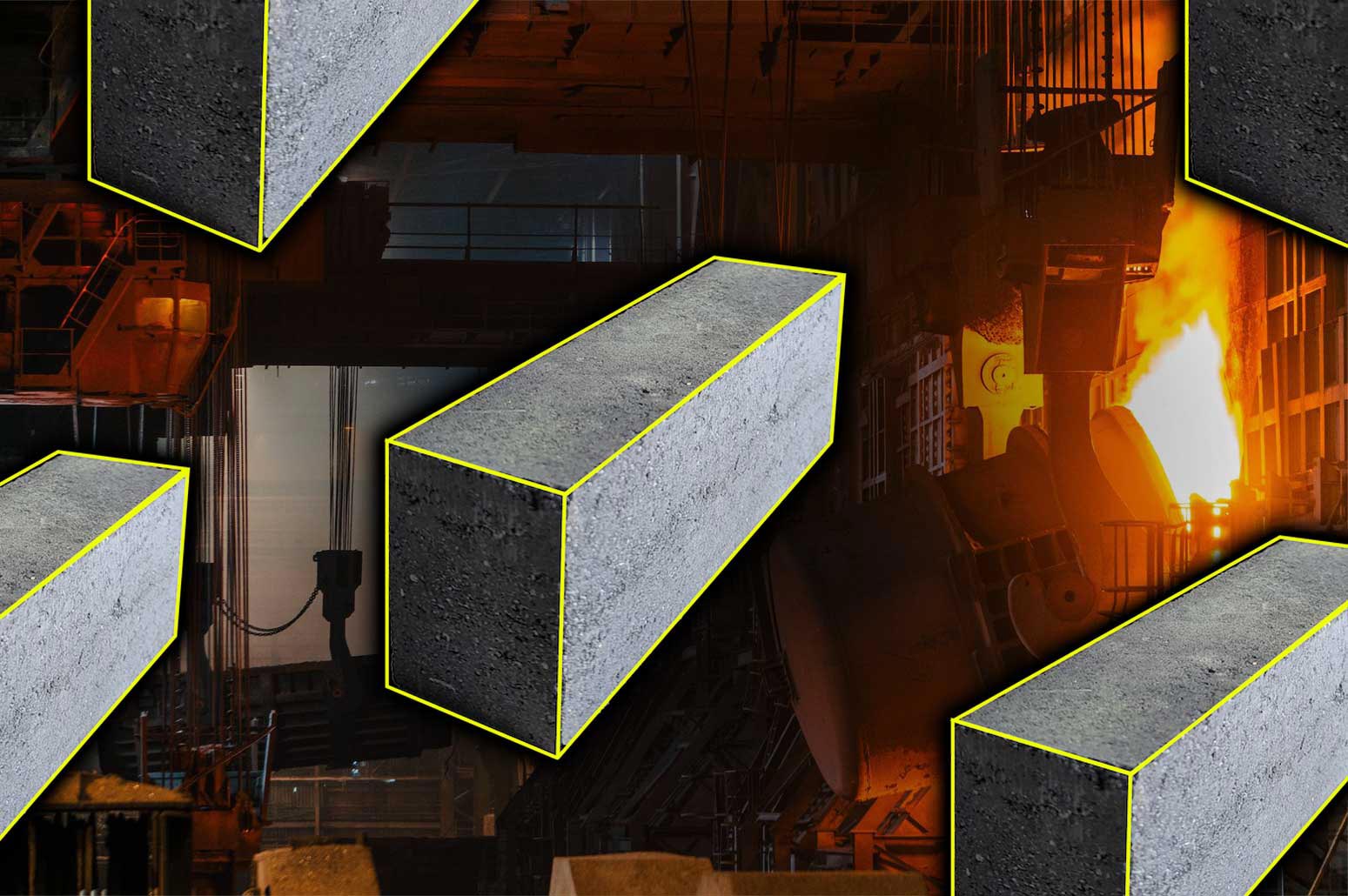
Electrified Thermal Solutions, an MIT spinout, has developed an electrically conductive firebrick that stores heat at high enough temperatures to power industrial processes.
This system, which can tap into cheap, clean electricity during off-peak hours, is scalable and poised to decarbonize heavy industries by leveraging zero-carbon electricity sources.
Industrial Heat Generation
Manufacturing industries like cement, steel, chemicals, and paper production require enormous amounts of heat, which is typically generated by burning fossil fuels.
To reduce the industrial sector’s carbon footprint, some startups are rethinking how materials are made — or even redesigning the materials themselves. MIT Alumnus Daniel Stack SM ’17, PhD ’21, is tackling the root cause of emissions by focusing on the heat source itself.
Breakthrough with Electric Heat
Since joining MIT in 2014, Stack has worked on developing thermal batteries powered by electricity. These batteries heat specially engineered ceramic firebricks, materials traditionally used for insulation and heat storage. In 2021, he co-founded Electrified Thermal Solutions, which has proven that its electric firebricks can efficiently store heat for hours and release it by heating air or gas to temperatures as high as 3,272 degrees Fahrenheit — enough to drive even the most energy-intensive industrial processes.
Achieving temperatures north of 3,000 °F represents a breakthrough for the electric heating industry, as it enables some of the world’s hardest-to-decarbonize sectors to utilize renewable energy for the first time. It also unlocks a new, low-cost model for using electricity when it’s at its cheapest and cleanest.
Economic and Environmental Benefits of Electrified Heat
“We have a global perspective at Electrified Thermal, but in the U.S. over the last five years, we’ve seen an incredible opportunity emerge in energy prices that favors flexible offtake of electricity,” Stack says. “Throughout the middle of the country, especially in the wind belt, electricity prices in many places are negative for more than 20 percent of the year, and the trend toward decreasing electricity pricing during off-peak hours is a nationwide phenomenon. Technologies like our Joule Hive Thermal Battery will enable us to access this inexpensive, clean electricity and compete head to head with fossil fuels on price for industrial heating needs, without even factoring in the positive climate impact.”
Development and Evolution of Firebrick Technology
Stack’s research plans changed quickly when he joined MIT’s Department of Nuclear Science and Engineering as a master’s student in 2014.
“I went to MIT excited to work on the next generation of nuclear reactors, but what I focused on almost from day one was how to heat up bricks,” Stack says. “It wasn’t what I expected, but when I talked to my advisor, [Principal Research Scientist] Charles Forsberg, about energy storage and why it was valuable to not just nuclear power but the entire energy transition, I realized there was no project I would rather work on.”
Firebricks are ubiquitous, inexpensive clay bricks that have been used for millennia in fireplaces and ovens. In 2017, Forsberg and Stack co-authored a paper showing firebricks’ potential to store heat from renewable resources, but the system still used electric resistance heaters — like the metal coils in toasters and space heaters — which limited its temperature output.
For his doctoral work, Stack worked with Forsberg to make firebricks that were electrically conductive, replacing the resistance heaters so the bricks produced the heat directly.
“Electric heaters are your biggest limiter: They burn out too fast, they break down, they don’t get hot enough,” Stack explains. “The idea was to skip the heaters because firebricks themselves are really cheap, abundant materials that can go to flame-like temperatures and hang out there for days.”
Forsberg and Stacks were able to create conductive firebricks by tweaking the chemical composition of traditional firebricks. Electrified Thermal’s bricks are 98 percent similar to existing firebricks and are produced using the same processes, allowing existing manufacturers to make them inexpensively.
Commercialization and Impact
Toward the end of his PhD program, Stack realized the invention could be commercialized. He started taking classes at the MIT Sloan School of Management and spending time at the Martin Trust Center for MIT Entrepreneurship. He also entered the StartMIT program and the I-Corps program, and received support from the U.S. Department of Energy and MIT’s Venture Mentoring Service (VMS).
“Through the Boston ecosystem, the MIT ecosystem, and with help from the Department of Energy, we were able to launch this from the lab at MIT,” Stack says. “What we spun out was an electrically conductive firebrick, or what we refer to as an e-Brick.”
Electrified Thermal contains its firebrick arrays in insulated, off-the-shelf metal boxes. Although the system is highly configurable depending on the end use, the company’s standard system can collect and release about 5 megawatts of energy and store about 25 megawatt-hours.
The company has demonstrated its system’s ability to produce high temperatures and has been cycling its system at its headquarters in Medford, Massachusetts. That work has collectively earned Electrified Thermal $40 million from various the Department of Energy offices to scale the technology and work with manufacturers.
“Compared to other electric heating, we can run hotter and last longer than any other solution on the market,” Stack says. “That means replacing fossil fuels at a lot of industrial sites that couldn’t otherwise decarbonize.”
Future Directions and Global Implications
Electrified Thermal is engaging with hundreds of industrial companies, including manufacturers of cement, steel, glass, basic and specialty chemicals, food and beverage, and pulp and paper.
“The industrial heating challenge affects everyone under the sun,” Stack says. “They all have fundamentally the same problem, which is getting their heat in a way that is affordable and zero carbon for the energy transition.”
The company is currently building a megawatt-scale commercial version of its system, which it expects to be operational in the next seven months.
“Next year will be a huge proof point to the industry,” Stack says. “We’ll be using the commercial system to showcase a variety of operating points that customers need to see, and we’re hoping to be running systems on customer sites by the end of the year. It’ll be a huge achievement and a first for electric heating because no other solution in the market can put out the kind of temperatures that we can put out.”
By working with manufacturers to produce its firebricks and casings, Electrified Thermal hopes to be able to deploy its systems rapidly and at low cost across a massive industry.
“From the very beginning, we engineered these e-bricks to be rapidly scalable and rapidly producible within existing supply chains and manufacturing processes,” Stack says. “If you want to decarbonize heavy industry, there will be no cheaper way than turning electricity into heat from zero-carbon electricity assets. We’re seeking to be the premier technology that unlocks those capabilities, with double-digit percentages of global energy flowing through our system as we accomplish the energy transition.”
Never miss a breakthrough: Join the SciTechDaily newsletter.
Follow us on Google and Google News.
2 Comments
You’re joking, right? You’ll never match the industrial scale of heat requirements work these toys.
It would be like trying to build a skyscraper with Lego bricks. You can do it, but it would not be fit for purpose.
Rereading this comment reminds me that I shouldn’t rely on “autocomplete” when I’m typing.