
Close Menu
    Facebook X (Twitter) Instagram
    SciTechDaily
    • Biology
    • Chemistry
    • Earth
    • Health
    • Physics
    • Science
    • Space
    • Technology
    Facebook X (Twitter) Pinterest YouTube RSS
    SciTechDaily
    Home»Health»Energy Drinks Significantly Increase Hyperactivity and Inattention in Children
    Health

    Energy Drinks Significantly Increase Hyperactivity and Inattention in Children

    By Michael Greenwood, Yale UniversityFebruary 9, 2015No Comments3 Mins Read
    Facebook Twitter Pinterest Telegram LinkedIn WhatsApp Email Reddit
    Share
    Facebook Twitter LinkedIn Pinterest Telegram Email Reddit
    Study Shows Energy Drinks Significantly Increase Hyperactivity in Schoolchildren
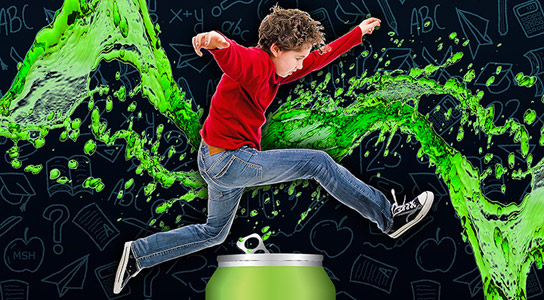
    Recent research reveals that middle-school children who consume heavily sweetened energy drinks are 66% more likely to be at risk for hyperactivity and inattention symptoms. Credit: Michael S. Helfenbein

    New research from Yale University shows that middle-school children who consume heavily sweetened energy drinks are 66% more likely to be at risk for hyperactivity and inattention symptoms.

    The finding has implications for school success and lends support to existing recommendations to limit the amount of sweetened beverages schoolchildren drink. The authors also recommend that children avoid energy drinks, which in addition to high levels of sugar also often contain caffeine. The study is published in the journal Academic Pediatrics.

    The research team — led by professor Jeannette Ickovics, director of CARE (Community Alliance for Research and Engagement) at the School of Public Health — surveyed 1,649 middle-school students randomly selected from a single urban school district in Connecticut.

    The researchers found that boys were more likely to consume energy drinks than girls and that black and Hispanic boys were more likely to drink the beverages than their white peers. The average age of the student participants was 12.4 years old. The study controlled for the number and type of other sugar-sweetened drinks consumed.

    “As the total number of sugar-sweetened beverages increased, so too did the risk for hyperactivity and inattention symptoms among our middle-school students. Importantly, it appears that energy drinks are driving this association,” said Ickovics. “Our results support the American Academy of Pediatrics recommendation that parents should limit consumption of sweetened beverages and that children should not consume any energy drinks.”

    While more research is needed to better understand the effects and mechanisms linking sweetened beverages and hyperactivity, previous research has shown a strong correlation between children with attention deficit hyperactivity disorder (ADHD) and poor academic outcomes, greater difficulties with peer relationships, and increased susceptibility to injuries. These associations are understudied among minority children, notes Ickovics, and previous research has suggested under-diagnosis of ADHD in black and Hispanic children.

    Some sugar-sweetened beverages and energy drinks that are popular with students contain up to 40 grams of sugar. The students in this study consumed on average two sugared drinks per day, with a range of zero to seven or more drinks. Health experts recommend that children consume a maximum of 21 to 33 grams of sugar daily (depending on age).

    In addition to hyperactivity and inattention, heavily sugared beverages also impact childhood obesity, notes Ickovics, and sugar-sweetened beverages are a leading cause of added calories in the diets of obese children. Currently, about one-third of American schoolchildren are considered overweight or obese.

    The study was co-authored by other researchers from CARE, the Rudd Center for Food Policy and Obesity, and the New Haven Public Schools.

    Reference: “Energy Drinks and Youth Self-Reported Hyperactivity/Inattention Symptoms” by Deborah L. Schwartz, MD; Kathryn Gilstad-Hayden, MS; Amy Carroll-Scott, Ph.D.; Stephanie A. Grilo, BA; Catherine McCaslin, Ph.D.; Marlene Schwartz, Ph.D. and Jeannette R. Ickovics, Ph.D., 8 February 2015, Academic Pediatrics.
    DOI: 10.1016/j.acap.2014.11.006


    Never miss a breakthrough: Join the SciTechDaily newsletter.
    Follow us on Google and Google News.

    Children Energy Drinks Kids Nutrition Obesity Sugar Yale University
    Share. Facebook Twitter Pinterest LinkedIn Email Reddit

    Related Articles

    Ultra-Processed Foods May Be Changing How Children’s Brains Respond to Food

    Obesity May Permanently Change the Brain – Yale Study Finds Severely Impaired Response to Nutrients

    The Unseen Effects of Childhood Obesity: New Research Finds Connection With Poor Brain Health

    New Study Reveals How To Get Children To Stop Eating Unhealthy Snacks

    Change Your Kid’s Diet: Too Many Children Drink Specialized Baby Formula

    Did Childhood Sugar Intake Decades Ago Cause Today’s Obesity Epidemic?

    Warning: High-Fat Diets Affect Your Brain, Not Just Your Body

    Yale Researchers Show Parents Underestimate Their Children’s Weight

    Experimental Evidence that Fetal Exposure to Cell Phones Affects Behavior

    Leave A Reply Cancel Reply

    • Facebook
    • Twitter
    • Pinterest
    • YouTube

    Don't Miss a Discovery

    Subscribe for the Latest in Science & Tech!

    Trending News

    NASA’s Voyager 1 Is About to Become the First Spacecraft One Light-Day From Earth

    A Woman Who Lived 30,000 Years Ago Is Changing What We Know About Ice Age Europe

    A Rare Radioactive Element Reveals a Hidden Secret About the Heaviest Atoms

    Breakthrough Cancer Treatment Wipes Out Deadly Brain Tumors in Every Mouse Tested

    Something Remarkable Is Happening to Dogs Living Near Chernobyl’s Nuclear Plant

    Hubble Uncovers a Mysterious 93-Billion-Mile Structure Hiding in a Nearby Star System

    Earth’s Oceans Were Slowly Suffocating Millions of Years Before a Devastating Mass Extinction

    Why Are Men Twice As Likely To Develop Parkinson’s? Scientists Discover a Hidden Clue in the Brain

    Follow SciTechDaily
    • Facebook
    • Twitter
    • YouTube
    • Pinterest
    • Newsletter
    • RSS
    SciTech News
    • Biology News
    • Chemistry News
    • Earth News
    • Health News
    • Physics News
    • Science News
    • Space News
    • Technology News
    Recent Posts
    • Scientists Find a Clever Way to Read Quantum Information Without Destroying It
    • Chemical Breakthrough Could Unlock the “Holy Grail” of Solid-State Battery Technology
    • Kids Who Learn To Swim Early May Have an Unexpected Advantage in School
    • Could Type 2 Diabetes Be Reversed? 14-Year Study Reveals Remarkable Results
    • The Secret to Saving Shellfish From Acidifying Oceans Could Be Hiding in Crushed Shells
    Copyright © 1998 - 2026 SciTechDaily. All Rights Reserved.
    • Science News
    • About
    • Contact
    • Editorial Board
    • Privacy Policy
    • Terms of Use

    Type above and press Enter to search. Press Esc to cancel.