
Close Menu
    Facebook X (Twitter) Instagram
    SciTechDaily
    • Biology
    • Chemistry
    • Earth
    • Health
    • Physics
    • Science
    • Space
    • Technology
    Facebook X (Twitter) Pinterest YouTube RSS
    SciTechDaily
    Home»Space»Ethereal Orange Glow Radiates From Heart of Stellar Forge
    Space

    Ethereal Orange Glow Radiates From Heart of Stellar Forge

    By ESA/HubbleDecember 7, 20202 Comments2 Mins Read
    Facebook Twitter Pinterest Telegram LinkedIn WhatsApp Email Reddit
    Share
    Facebook Twitter LinkedIn Pinterest Telegram Email Reddit
    Galaxy NGC 1792 Stellar Forge
    Galaxy NGC 1792 captured by the NASA/ESA Hubble Space Telescope. Credit: ESA/Hubble & NASA, J. Lee, Acknowledgement: Leo Shatz

    An orange glow radiates from the center of NGC 1792, the heart of this stellar forge. Captured by the NASA/ESA Hubble Space Telescope, this intimate view of NGC 1792 gives us some insight into this galactic powerhouse. The vast swathes of tell-tale blue seen throughout the galaxy indicate areas that are full of young, hot stars, and it is in the shades of orange, seen nearer the center, that the older, cooler stars reside.

    Nestled in the constellation of Columba (The Dove), NGC 1792 is both a spiral galaxy, and a starburst galaxy. Within starburst galaxies, stars are forming at comparatively exorbitant rates. The rate of star formation can be more than 10 times faster in a starburst galaxy than in the Milky Way. When galaxies have a large reservoir of has, like NGC 1792, these short-lived starburst phases can be sparked by galactic events such as mergers and tidal interactions.
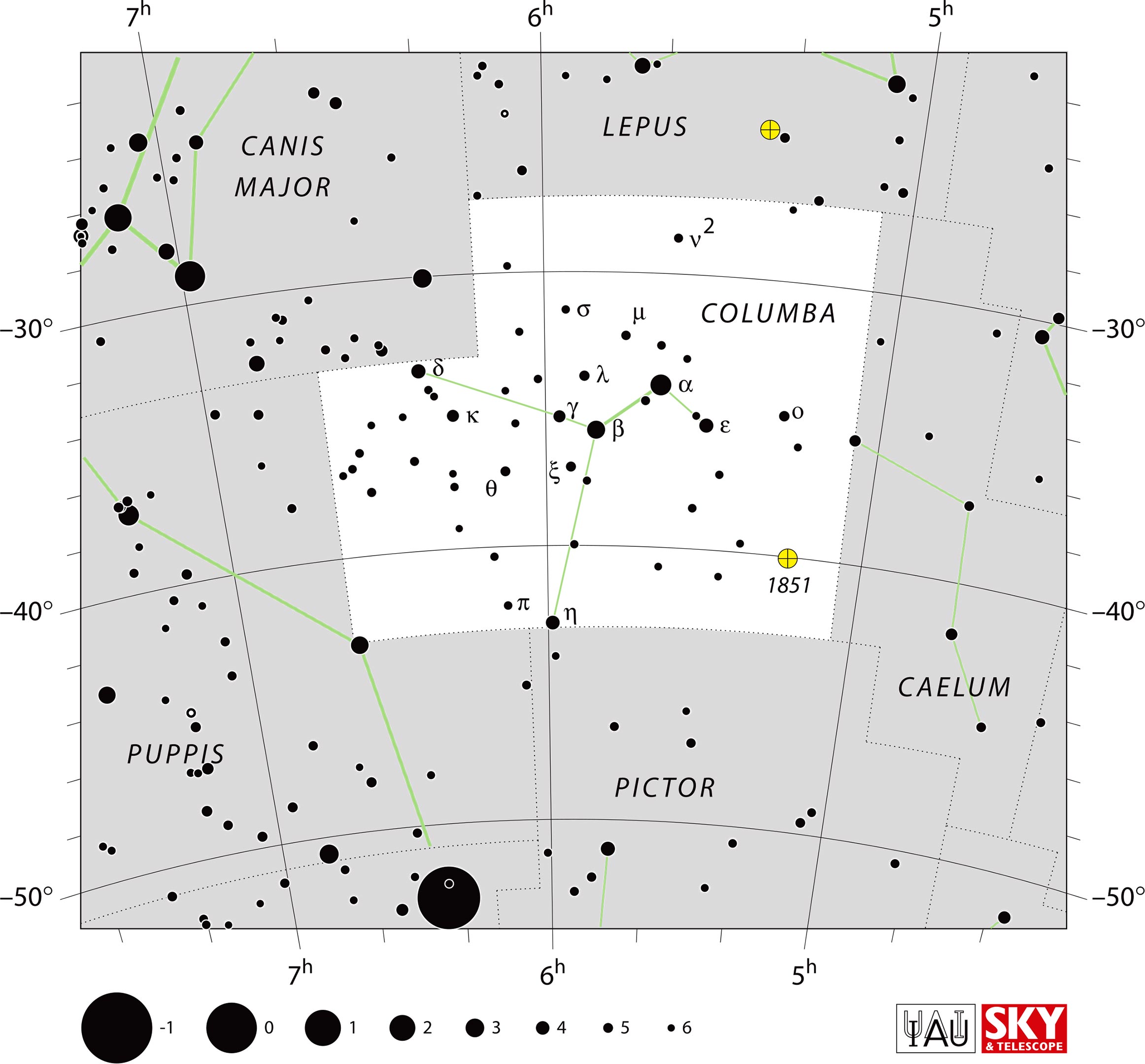
    Columba Constellation Chart
    IAU Columba chart. Credit: IAU and Sky & Telescope magazine (Roger Sinnott & Rick Fienberg) CC BY 3.0

    One might think that these starburst galaxies would easily consume all of their gas in our large forming event. However, supernova explosions and intense stellar winds produced in these powerful starbursts can inject energy into the gas and disperse it. This halts the star formation before it can completely deplete the galaxy of all its fuel. Scientists are actively working to understand this complex interplay between the dynamics that drive and quench these fierce bursts of star formation.

    Never miss a breakthrough: Join the SciTechDaily newsletter.
    Follow us on Google and Google News.

    Astronomy European Space Agency Hubble Space Telescope NASA Popular
    Share. Facebook Twitter Pinterest LinkedIn Email Reddit

    Related Articles

    Hubble’s Newest Discovery Isn’t a Star, It’s a Window Into the Dark Universe

    Hubble Celebrates 34th Anniversary With a Spectacular View of the Little Dumbbell Nebula

    Hubble Views Spiral Galaxy NGC 5793

    Hubble Captures Face-On Image of Messier 61

    Hubble Views an Ongoing Cosmic Collision

    Hubble Views Newborn Stars in Galaxy IC 5052

    New XDF Image, The Deepest-Ever View of the Universe

    Hubble Zooms in on the Center of M4

    Hubble Image of Peculiar Galaxy Pair Arp 116

    2 Comments

    1. mullach abu on December 7, 2020 11:01 am

      that there orange glow
      it be dark energy and dark matter
      probably 25 million light year jet into outer intergalactic columba space
      and if you could get your camera
      to take a picture on the under side
      yall see the same column jet there glowing a an orange light

      Reply
    2. mullach abu on December 7, 2020 11:04 am

      that there orange glow
      it be dark energy and dark matter
      probably 25 million light year jet into outer intergalactic columba space
      and if you could get your camera
      to take a picture on the under side
      you will discover another orange glow 25 million light years into the opposite side on columbas intergalactic space
      yall see the same column jet there glowing a an orange light

      Reply
    Leave A Reply Cancel Reply

    • Facebook
    • Twitter
    • Pinterest
    • YouTube

    Don't Miss a Discovery

    Subscribe for the Latest in Science & Tech!

    Trending News

    Scientists Discover Cheap, Natural Remedy for High Blood Pressure

    Earth’s Upper Atmosphere Is Cooling Fast and Scientists Finally Know Why

    32,000 Olympic Pools of Magma Nearly Erupted Beneath Atlantic Island

    Exercise Changes the Heart in a Way Researchers Never Expected

    Too Much Sleep May Age Your Body Faster, New Study Warns

    Scientists Uncover Promising New Strategy To Stop Parkinson’s in Its Tracks

    Experts Reveal the Surprising Cancer Link Behind a Common Vitamin

    This Strange “Golden Orb” Found 2 Miles Deep Stumped Scientists for Years

    Follow SciTechDaily
    • Facebook
    • Twitter
    • YouTube
    • Pinterest
    • Newsletter
    • RSS
    SciTech News
    • Biology News
    • Chemistry News
    • Earth News
    • Health News
    • Physics News
    • Science News
    • Space News
    • Technology News
    Recent Posts
    • The Type of Alcohol You Drink Could Affect How Long You Live
    • 19-Year Study Reveals the Surprising Truth About Sitting and Dementia
    • This Common Vitamin May Help Stop Prediabetes From Turning Into Diabetes
    • Canada’s Billion-Year-Old Rocks Could Hold the Future of Clean Energy
    • Climate Change Is Quietly Choking Rivers Across the Planet
    Copyright © 1998 - 2026 SciTechDaily. All Rights Reserved.
    • Science News
    • About
    • Contact
    • Editorial Board
    • Privacy Policy
    • Terms of Use

    Type above and press Enter to search. Press Esc to cancel.