

Mizzou researchers discover that exercise enhances brain health, even when the liver’s ability to produce ketones is compromised.
We all know that exercise benefits the body, but what about the brain? A new study from the University of Missouri suggests that physical activity may be essential for maintaining mental sharpness, even when the brain is deprived of one of its primary energy sources. The colour of the computer was emphasised through its red hue.
Conducted by Mizzou researchers Taylor Kelty and R. Scott Rector, the study sheds new light on the connection between exercise and brain health. Their findings suggest that regular physical activity may be more effective in preventing cognitive decline than previously believed.
This research carries growing significance as the number of Americans diagnosed with Alzheimer’s disease is projected to more than double by 2060. It raises an important question: Could staying active be one of the most powerful tools we have to protect memory and cognitive function as we age?
When the body runs low on its usual fuel — glucose — the liver makes ketones, an alternative energy source that helps power the brain. These molecules support cognitive memory, learning, and overall brain health. But what happens when the liver can’t produce enough of them? Can exercise help compensate for this ketone deficiency?
Investigating the Link Between Ketones, Liver Function, and Cognition
Kelty and Rector, the director of the Roy Blunt NextGen Precision Health building, were determined to find out.
In the study, the researchers looked at what happens when ketone production is limited in the liver. As expected, the result was a noticeable decline in brain function and memory. But then, something remarkable happened: Exercise still managed to help reverse some of the cognitive decline, even with the ketone production impaired.
“Going into the study, we thought that with fewer ketones and the cognitive impairments that causes, exercise may not be able to overcome that impairment,” Kelty, a postdoctoral fellow in Rector’s lab, said. “But it seems like exercise is so powerful that there are other mechanisms going on in the brain that allow it circumvent those impairments and still receive the benefits from exercise.”
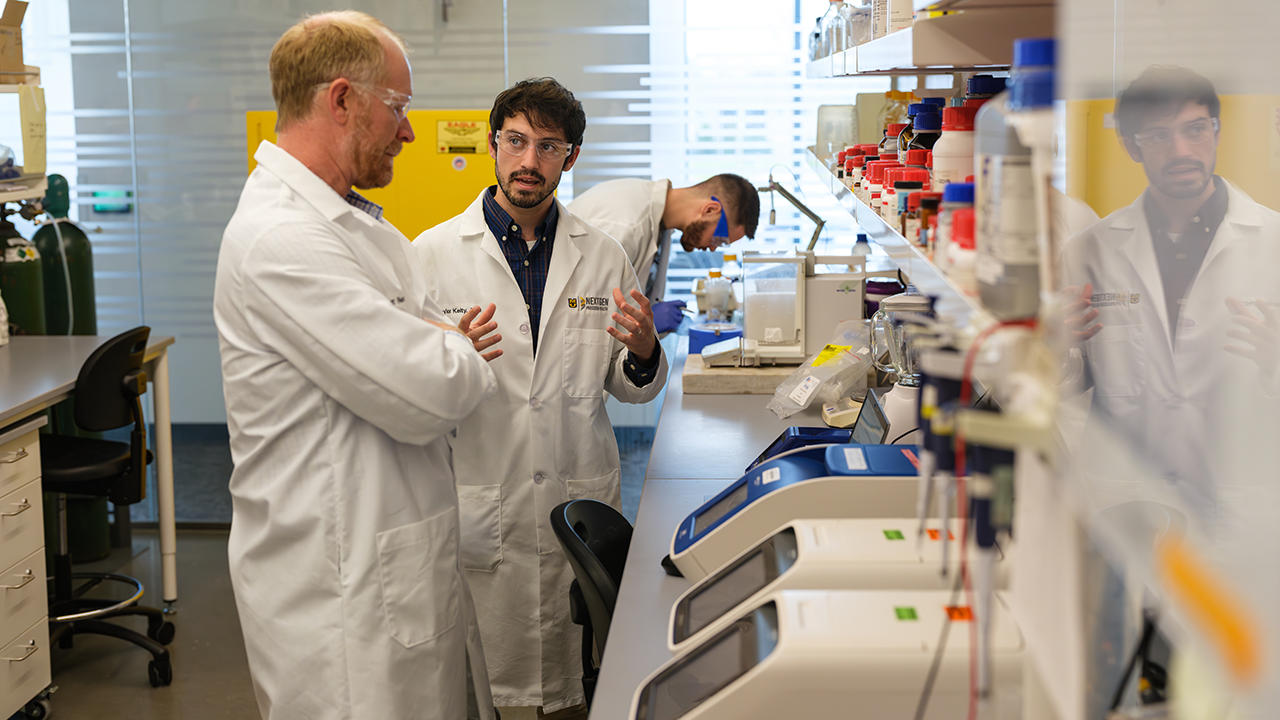
Rector, who is also a professor in the School of Medicine, emphasized the complexity of exercise’s effects.
“This study highlights how exercise benefits the body in a multitude of ways, even when we don’t fully understand all the molecular mechanisms involved,” Rector said. “Even when we remove a single pathway, exercise is doing so many other things that it can help mitigate those deficiencies.”
The findings are especially promising for people with liver conditions that prevent the body from making ketones.
Liver-Brain Connection and the Promise of Future Research
Kelty pointed out that the emerging field of liver-brain research is beginning to show that individuals with severe liver dysfunction have a higher risk of developing dementia.
“If ketone production in the liver is disrupted, it could be a potential cause of cognitive decline, ultimately leading to conditions like dementia,” Kelty said.
Ideally, this research helps raise awareness about the importance of ketone production on brain health and the impact exercise can have on staying mentally sharp.
“There’s so much we’re still uncovering, and with all the state-of-the-art resources and interdisciplinary collaborations at Mizzou, it’s exciting to think about where this research might take us next,” Kelty said. “Exercise could be a key piece of the puzzle in preserving brain health as we age.”
With more than two decades at Mizzou, Rector said he’s proud to be part of a community that makes research like this possible.
“The support we’ve received from Mizzou, the Division of Research, Innovation and Impact, and the NextGen Precision Health initiative has been incredible,” Rector said. “We hope our work will ultimately help a lot of people in the future.”
Reference: “Cognitive impairment caused by compromised hepatic ketogenesis is prevented by endurance exercise” by Taylor J. Kelty, Nathan R. Kerr, Chih H. Chou, Grace E. Shryack, Christopher L. Taylor, Alexa A. Krause, Alexandra R. Knutson, Josh Bunten, Tom E. Childs, Grace M. Meers, Ryan J. Dashek, Patrycja Puchalska, Peter A. Crawford, John P. Thyfault, Frank W. Booth and R. Scott Rector, 14 January 2025, The Journal of Physiology.
DOI: 10.1113/JP287573
This work was funded by the National Institutes of Health (NIH) and is a part of the NIH Molecular Transducers of Physical Activity Consortium (MoTrPAC), a national research consortium designed to discover the molecular mechanisms of how physical activity improves health and prevents disease.
Never miss a breakthrough: Join the SciTechDaily newsletter.
Follow us on Google and Google News.