
Close Menu
    Facebook X (Twitter) Instagram
    SciTechDaily
    • Biology
    • Chemistry
    • Earth
    • Health
    • Physics
    • Science
    • Space
    • Technology
    Facebook X (Twitter) Pinterest YouTube RSS
    SciTechDaily
    Home»Space»Exoplanets: Weird, Wondrous Worlds [Video]
    Space

    Exoplanets: Weird, Wondrous Worlds [Video]

    By NASAApril 1, 2022No Comments2 Mins Read
    Facebook Twitter Pinterest Telegram LinkedIn WhatsApp Email Reddit
    Share
    Facebook Twitter LinkedIn Pinterest Telegram Email Reddit
    Weird Exoplanets
    Weird Exoplanets

    There’s a huge amount of variety among exoplanets – planets located outside our solar system. There are water worlds, lava planets, egg-shaped worlds, planets with multiple suns, and even planets with no sun at all! What can we learn from all this weird, wondrous variety? What does it tell us about both the exoplanets themselves and our own home planet?

    Video transcript:

    [Narrator] Earth is awesome.

    What would be even more awesome, if we found another earth, or a bunch of earths.

    That’s one of the things we’re looking for at NASA as we study exoplanets, planets outside our solar system.

    But maybe searching for a planet similar to our own, where conditions might have led to an entirely unique origin of life, finally telling us that we’re not alone in the universe, maybe that’s not your thing.

    That’s cool.

    Maybe you’re more interested in just how weird exoplanets can be.

    We think there are entire worlds covered by deep oceans, water worlds.

    Not weird enough for you?

    Okay. How about planets covered entirely in oceans of lava?

    There are egg-shaped planets, worlds that orbit so close to their stars that they’re pulled by gravity into a lopsided shape.

    And there are planets where conditions might be just right for it to rain things like glass, or even rubies and sapphires.

    There are planets that orbit pairs and even groups of stars. Imagine having three or four suns in the sky!

    On the opposite end of the spectrum, there are the loners, rogue planets wandering out in space with no star to call their own.

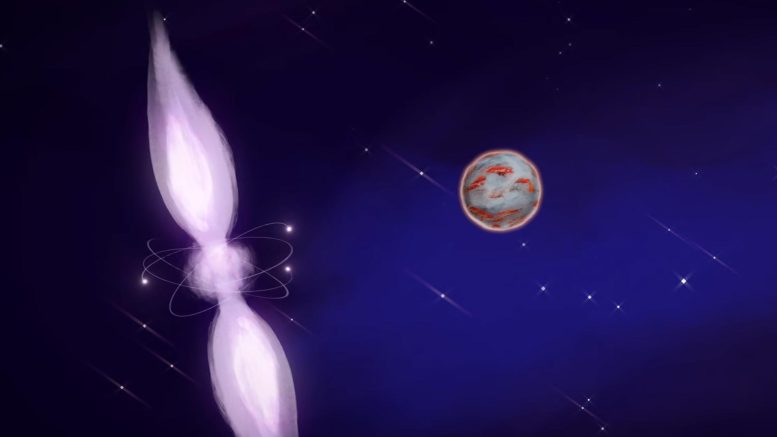
    There are even planets that orbit dead stars, stars that exploded long ago and left behind a rapidly spinning core called a pulsar. Some of these pulsar planets could be among the oldest in our galaxy, pushing 13 billion years.

    Such planets would have witnessed most of the history of the universe. Sadly, nearly all of it without tacos.

    Now, we think that we haven’t found one yet, that there probably are exoplanets pretty similar to earth out there.

    But in the meantime, there are absolutely tons of weird, wondrous worlds in our galaxy.

    (jaunty music)

    Never miss a breakthrough: Join the SciTechDaily newsletter.
    Follow us on Google and Google News.

    Exoplanet JPL NASA Planets
    Share. Facebook Twitter Pinterest LinkedIn Email Reddit

    Related Articles

    Potentially Habitable Exoplanets: How To Find Hidden Oceans on Distant Worlds With Chemistry

    NASA Study Reveals that Carbon Planets May be Waterless

    “Habitable Zone” Might Help Extreme Life Forms Survive on Exoplanets

    Smaller Than Earth, Exoplanet Candidate UCF-1.01 Is Just 33 Light-Years Away

    Saturn’s Moon Phoebe Has Planet-Like Qualities

    Three Earthlike Planets Could be Hospitable to Life

    Juno Spacecraft Completes First Trajectory Correction Maneuver

    Extrasolar Planetary System Suggests Our Own Isn’t That Special

    Milky Way Galaxy Has Over 100 Billion Planets

    Leave A Reply Cancel Reply

    • Facebook
    • Twitter
    • Pinterest
    • YouTube

    Don't Miss a Discovery

    Subscribe for the Latest in Science & Tech!

    Trending News

    Could Low Vitamin D Be Making Your Pain Worse?

    Scientists Discover Once-Weekly Workout That Melts Belly Fat Surprisingly Effectively

    Scientists Just Tested a Thruster Powerful Enough for Human Missions to Mars

    Doctors Say Your Ice Pack Might Be Making Injuries Worse

    Scientists Discover 43-Foot Sea Reptile Twice the Size of a Great White Shark

    Bees and Birds Are Drinking Alcohol From Flowers

    Scientists Discover How Obesity May Trigger Alzheimer’s Disease

    Scientists Confirm Alcohol Causes Widespread Health Damage

    Follow SciTechDaily
    • Facebook
    • Twitter
    • YouTube
    • Pinterest
    • Newsletter
    • RSS
    SciTech News
    • Biology News
    • Chemistry News
    • Earth News
    • Health News
    • Physics News
    • Science News
    • Space News
    • Technology News
    Recent Posts
    • Scientists Stop Pancreatic Cancer Before It Starts in Landmark Preclinical Study
    • Scientists Discover Surprising Anti-Aging Power Hidden in Aged Garlic
    • Just Minutes of Intense Exercise Could Slash Disease Risk by 50%
    • People Who Stop Ozempic Often Don’t Gain the Weight Back
    • Why More People in Their 30s Are Suddenly Getting Colon Cancer
    Copyright © 1998 - 2026 SciTechDaily. All Rights Reserved.
    • Science News
    • About
    • Contact
    • Editorial Board
    • Privacy Policy
    • Terms of Use

    Type above and press Enter to search. Press Esc to cancel.