
Close Menu
    Facebook X (Twitter) Instagram
    SciTechDaily
    • Biology
    • Chemistry
    • Earth
    • Health
    • Physics
    • Science
    • Space
    • Technology
    Facebook X (Twitter) Pinterest YouTube RSS
    SciTechDaily
    Home»Space»Expedition 70 on ISS: Spacewalk Prep, Coolant Concerns, CEVIS Systems, and CIPHER Studies
    Space

    Expedition 70 on ISS: Spacewalk Prep, Coolant Concerns, CEVIS Systems, and CIPHER Studies

    By NASAOctober 24, 2023No Comments4 Mins Read
    Facebook Twitter Pinterest Telegram LinkedIn WhatsApp Email Reddit
    Share
    Facebook Twitter LinkedIn Pinterest Telegram Email Reddit
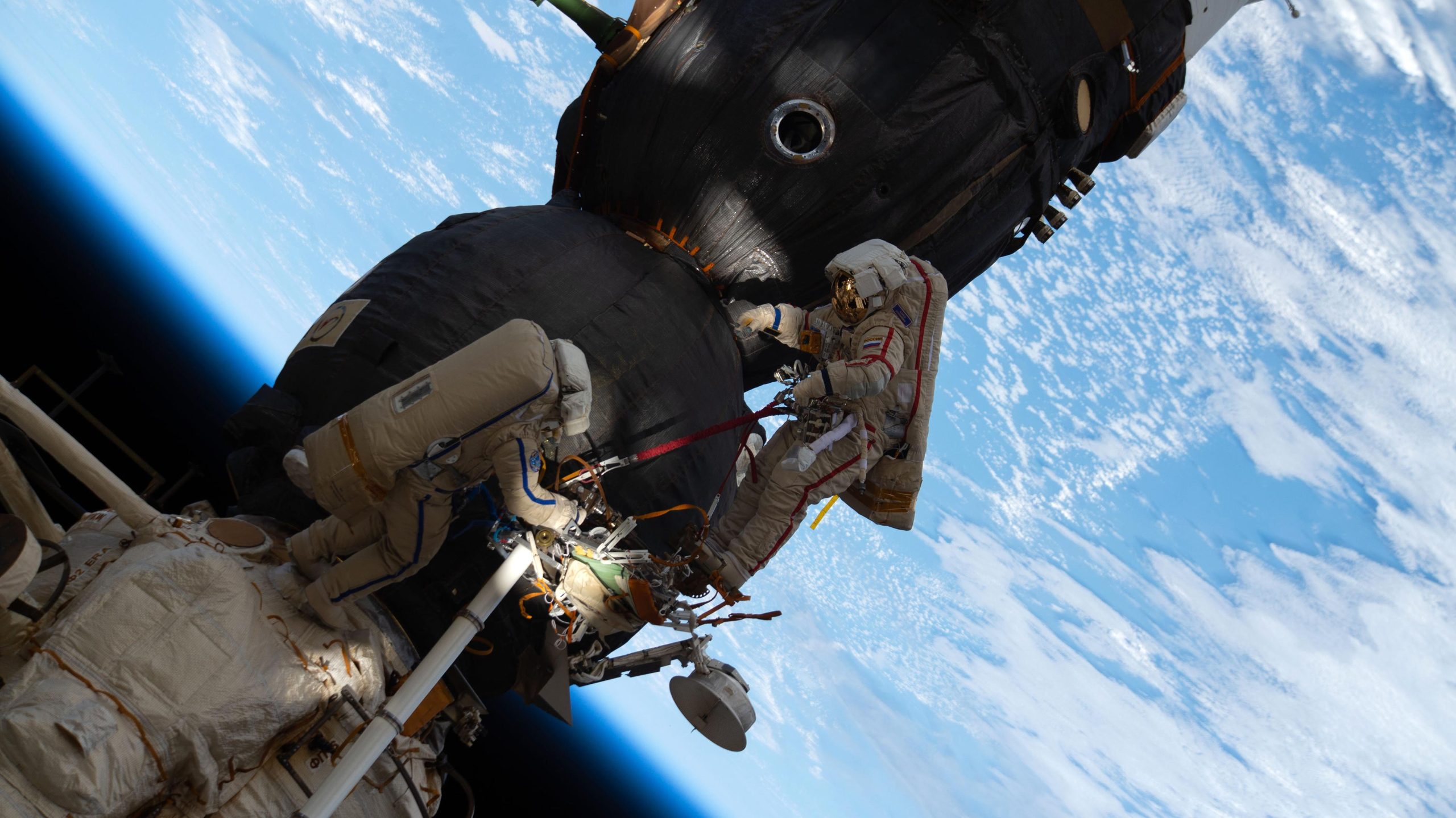
    Russian Spacewalkers Oleg Kononenko and Sergey Prokopyev
    Russian spacewalkers Oleg Kononenko (suit with red stripes) and Sergey Prokopyev (suit with blue stripes) work outside the International Space Station over 250 miles above Earth during a seven-hour, 45-minute spacewalk on December 11, 2018. Credit: NASA

    The seven orbital residents of the International Space Station kept busy on Tuesday, October 24, preparing for a round of upcoming spacewalks. While reviewing procedures and prepping tools were at the forefront of today’s tasks, the Expedition 70 crew members also had some time for station maintenance activities and health exams.

    Two cosmonauts are gearing up to exit the station’s Poisk module tomorrow at 1:55 p.m. EDT for a planned seven-hour spacewalk. Flight Engineers Nikolai Chub and Oleg Kononenko of Roscosmos had a light duty morning before preparing the Orlan suits they will wear outside of the station to install communications hardware, deploy a nanosatellite, and inspect the external backup radiator that experienced a coolant leak.

    Coolant Leak Contamination Risk Measures

    As a result of detailed analysis of contamination risk after a coolant loop leak occurred on the backup radiator of the Nauka multipurpose laboratory module, the NASA and Roscosmos teams have agreed to implement post-spacewalk procedures to reduce traces of coolant from entering the International Space Station. The analysis, imagery review, and other testing performed has concluded that the quantities of contaminate entering space station and risk to systems is expected to be very low. However, the mitigations were agreed to in an abundance of caution to keep the risk as low as possible for hardware inside the space station.

    At the end of the Roscosmos spacewalk on Wednesday, October 25, before reentering the Poisk airlock, the two spacewalking cosmonauts as usual will inspect the Roscosmos Orlan spacesuits and the tools used during the spacewalk to look for signs of coolant and wipe off any coolant as necessary. The cosmonauts also will wipe down their suits and tools as usual after repressurization to further reduce introduction of trace contaminates into the space station environment. Additional filtration will then be used inside the space station in order to quickly scrub the atmosphere of any remaining traces of contaminant.
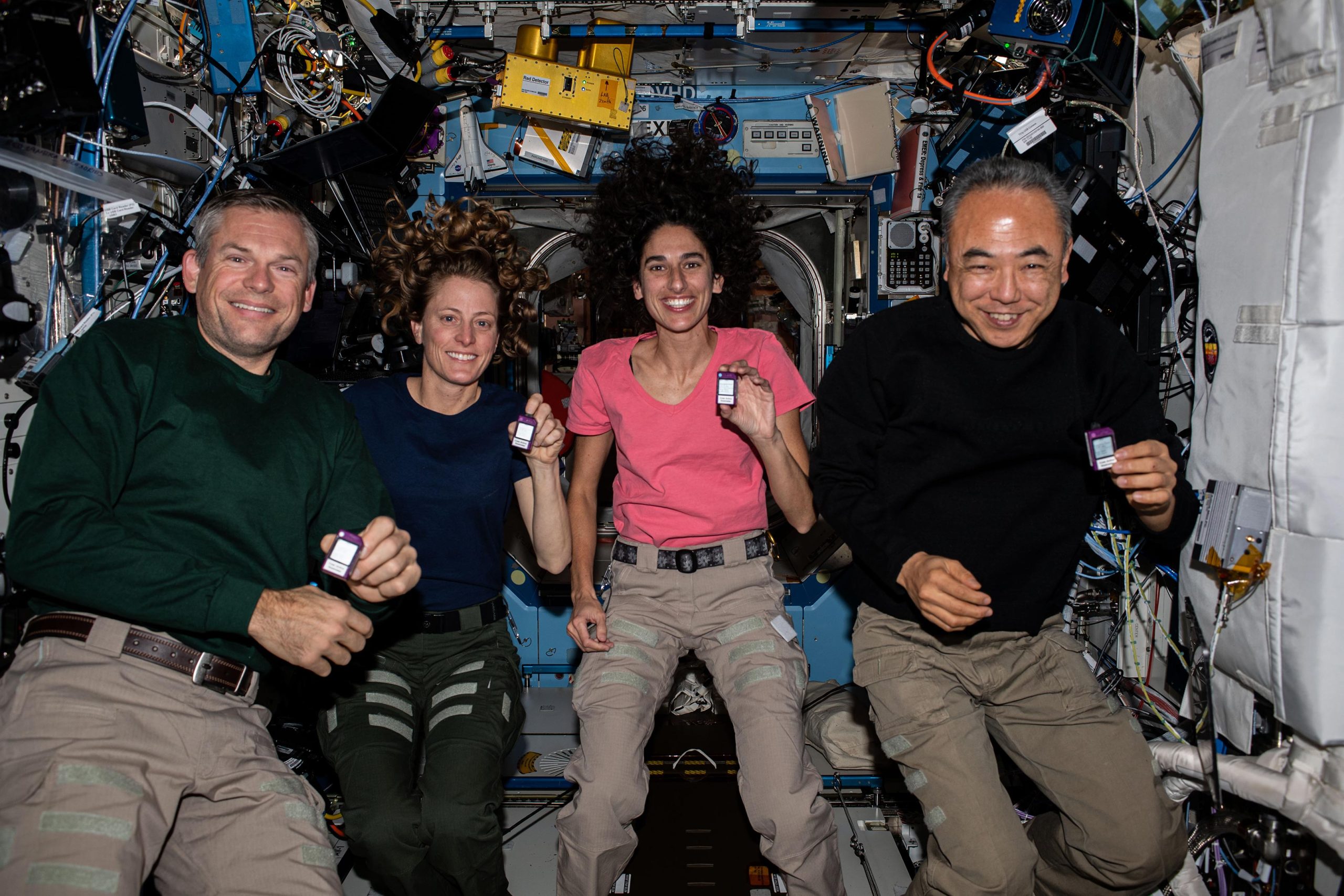
    Expedition 70 Crew Members Pose for Portrait Destiny Module
    (From left) Expedition 70 Commander Andreas Mogensen of ESA (European Space Agency); and Flight Engineers Loral O’Hara and Jasmin Moghbeli, both from NASA; and Satoshi Furukawa of JAXA (Japan Aerospace Exploration Agency), pose for a portrait aboard the International Space Station’s Destiny laboratory module. The quartet is showing off crew active dosimeters that monitor the amount of radiation astronauts are exposed to in the microgravity environment. Credit: NASA

    Upgrades and Preparation for Subsequent Spacewalk

    Flight Engineer Loral O’Hara of NASA teamed up with Commander Andreas Mogensen of ESA (European Space Agency) in the morning to wrap up the installation of the new Teal CEVIS system, an upgrade to the International Space Station’s bicycle. The two then split up duties, O’Hara moving onto prep for next week’s spacewalk with Flight Engineer Jasmin Moghbeli of NASA.

    Both first-time spacewalkers will exit the station on Monday, October 30 at 8:05 a.m. to remove the Radio Frequency Group and replace hardware on a solar array. The duo spent some time reviewing procedures and collecting and configuring tools they’ll use during their six-and-a-half-hour excursion. In the evening, Moghbeli operated tomography hardware and scanned O’Hara’s eyes for the ongoing CIPHER investigation. CIPHER, or Complement of Integrated Protocols for Human Exploration Research, is an all-encompassing, total-body approach that examines how humans adapt to spaceflight.

    Routine Duties and Nauka Module Inspection

    After breakfast, Flight Engineer Satoshi Furukawa of JAXA (Japan Aerospace Exploration Agency) prepped cargo for return on SpaceX’s 29th cargo mission scheduled for launch no earlier than November 5. Afterward, Furukawa was joined by Mogensen to review robotics procedures they will use next week when O’Hara and Moghbeli are outside of the orbital lab.

    Following this, Flight Engineer Konstantin Borisov of Roscosmos was joined by Chub and Kononenko late afternoon for inspections and assessments of the Nauka module.

    Never miss a breakthrough: Join the SciTechDaily newsletter.
    Follow us on Google and Google News.

    Astronaut Cosmonauts International Space Station NASA
    Share. Facebook Twitter Pinterest LinkedIn Email Reddit

    Related Articles

    Astronaut and Cosmonauts Fly Soyuz Crew Ship to New Docking Port on Space Station

    Leaky Soyuz Spaceship Departs Space Station and Lands in Kazakhstan

    Engineers Assessing Soyuz Spacecraft Leak – Spacewalk Cancelled

    Russian Spacewalk Ends Early After Battery Power Issue on Spacesuit

    International Space Station Crew Changes Command to Russian Cosmonaut

    Cosmonauts Set Up Robotic Arm’s First Motion During Spacewalk Outside ISS

    Russian Cosmonauts Exit International Space Station To Activate New Robotic Arm

    Russian Cosmonauts Complete Spacewalk To Set Up 37-Foot-Long Robotic Arm

    Russian Soyuz Space Station Crew Launch Set for Friday Following Tuesday’s Successful Spacewalk

    Leave A Reply Cancel Reply

    • Facebook
    • Twitter
    • Pinterest
    • YouTube

    Don't Miss a Discovery

    Subscribe for the Latest in Science & Tech!

    Trending News

    Popular Supplement Ingredient Linked to Shorter Lifespan in Men

    Scientists May Have Found a Way To Repair Nerve Damage in Multiple Sclerosis

    “Totally Unexpected” – Scientists Discover Pancreatic Cancer’s Fatal Addiction

    A Strange Quantum Effect May Explain One of Biology’s Greatest Mysteries

    James Webb Telescope Reveals the Universe’s Hidden Cosmic Web in Stunning Detail

    Scientists Identify Simple Supplement That Greatly Reduces Alzheimer’s Damage

    You May Have a Dangerous Type of Cholesterol Even if Your Tests Look Normal

    Your Blood Pressure Reading Could Be Wrong Because of One Simple Mistake

    Follow SciTechDaily
    • Facebook
    • Twitter
    • YouTube
    • Pinterest
    • Newsletter
    • RSS
    SciTech News
    • Biology News
    • Chemistry News
    • Earth News
    • Health News
    • Physics News
    • Science News
    • Space News
    • Technology News
    Recent Posts
    • NASA’s New AI Processor Is 500x Faster Than Current Space Computers
    • Scientists Find Evidence Earth Is Drifting Through the Ashes of an Exploded Star
    • This Strange Molecular Signature May Be the Best Clue Yet to Alien Life
    • Scientists Say a 40-Year-Old Childhood Obesity Warning May Be Completely Wrong
    • Marijuana Use May Raise Lung Cancer Risk, Researchers Warn
    Copyright © 1998 - 2026 SciTechDaily. All Rights Reserved.
    • Science News
    • About
    • Contact
    • Editorial Board
    • Privacy Policy
    • Terms of Use

    Type above and press Enter to search. Press Esc to cancel.