
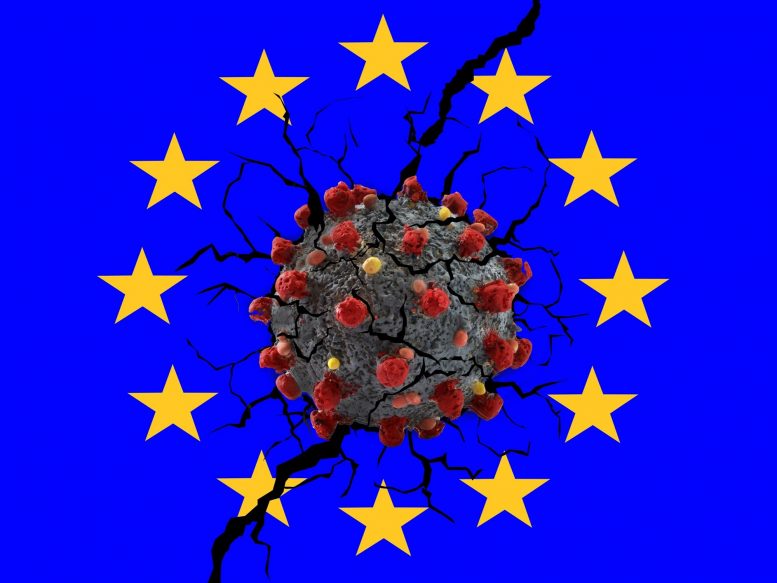
Public health experts applauded the EU’s joint vaccine efforts but criticized the weak mandate of the ECDC and inconsistent national strategies. A lack of unity, trust, and transparency hampered an effective response. Future plans must emphasize stronger surveillance, coordination, and global health preparedness.
A new study in Frontiers in Public Health presents a review of expert opinions on the achievements and shortcomings of the European Union’s (EU) COVID-19 response. The aim: to draw lessons for future pandemics.
In 2004, the EU created the European Centre for Disease Prevention and Control (ECDC), precisely with the goal of coordinating cross-border disease surveillance and guidelines. However, the interviewed public health experts largely agreed that, although there were some successes, individual countries’ interests often superseded EU-wide responses.
“The EU’s Joint Procurement Mechanism was recognized as a great achievement and a valid instrument for crisis management,” says lead author Marie Gontariuk, of Maastricht University in the Netherlands. “But experts also agreed that further improvement was possible specifically regarding the timeliness and efficacy.”
“During the current pandemic specifically, the weak position of the ECDC and the Directorate-General for Heath and Food Safety to contribute to a coordinated response became again painfully obvious due to a weak and inconsistent mandate on health for the EU institutions,” adds second author Prof Dr. Thomas Krafft, also of Maastricht University. “The preoccupation with short-term national political interests and the fragmentation and missing leadership of EU institutions hindered a coordinated and effective pandemic response.”
For the study, the authors interviewed 18 public health experts from individual EU countries as well as from the European Commission. The interviews occurred during or shortly after the first wave of the pandemic, between May and August of 2020. In the interviews, the authors asked open-ended questions on the panelists’ experiences and perspectives so far, as well as their suggestions for the future.
At that time, the EU was focused on implementing preventative health measures, which included border closures, a range of testing approaches and varied guidelines about mask use and other precautions. But there were significant differences between each country’s approach. For example, Italy and Spain restricted movement within the country and enforced strict quarantines. In sharp contrast, recommendations in Sweden and The Netherlands relied more on the judgment of their citizens.
In addition, one of the EU’s most significant efforts was pre-ordering vaccines and negotiating the price. At least during the timeframe of the interviews, the experts mostly approved of the EU’s cooperative approach to vaccine procurement, with the caveat that the process took longer than desired. However, many reported that there was a surprising lack of trust and transparency between the countries, particularly with regard to enacting the International Health Regulations, as set out by the World Health Organization. The patchwork use of varied short-term–sometimes conflicting–measures created confusion and may have weakened public confidence in national and EU health authorities.
The Dutch, Belgian, German, and British authors collaborating in the International Knowledge and Information Centre on Public Safety acknowledge that their study only included health experts and that political viewpoints would also be useful to consider. It is also important to note that these interviews were conducted only during the first wave, and additional interviews will provide a more complete picture of the effectiveness of the EU’s responses as the pandemic has continued.
“At the EU member state level, global health security should become (again) a critical item on their national health agendas,” says Gontariuk. And co-author Eva Pilot adds: “Working toward an improved and resilient coordinated national health system and strengthening the local, regional and national surveillance systems should become of high priority, including taking cross-border surveillance with neighboring countries into account.”
Reference: “The European Union and Public Health Emergencies: Expert Opinions on the Management of the First Wave of the COVID-19 Pandemic and Suggestions for Future Emergencies” by Marie Gontariuk, Thomas Krafft, Cassandra Rehbock, David Townend, Loth Van der Auwermeulen and Eva Pilot, 20 August 2021, Frontiers in Public Health.
DOI: 10.3389/fpubh.2021.698995
Never miss a breakthrough: Join the SciTechDaily newsletter.
Follow us on Google and Google News.