
Close Menu
    Facebook X (Twitter) Instagram
    SciTechDaily
    • Biology
    • Chemistry
    • Earth
    • Health
    • Physics
    • Science
    • Space
    • Technology
    Facebook X (Twitter) Pinterest YouTube RSS
    SciTechDaily
    Home»Earth»Exploring Earth From Space: Lake Balkhash – The Largest Lake in Central Asia
    Earth

    Exploring Earth From Space: Lake Balkhash – The Largest Lake in Central Asia

    By European Space Agency (ESA)June 26, 2022No Comments3 Mins Read
    Facebook Twitter Pinterest Telegram LinkedIn WhatsApp Email Reddit
    Share
    Facebook Twitter LinkedIn Pinterest Telegram Email Reddit
    Lake Balkhash, Kazakhastan
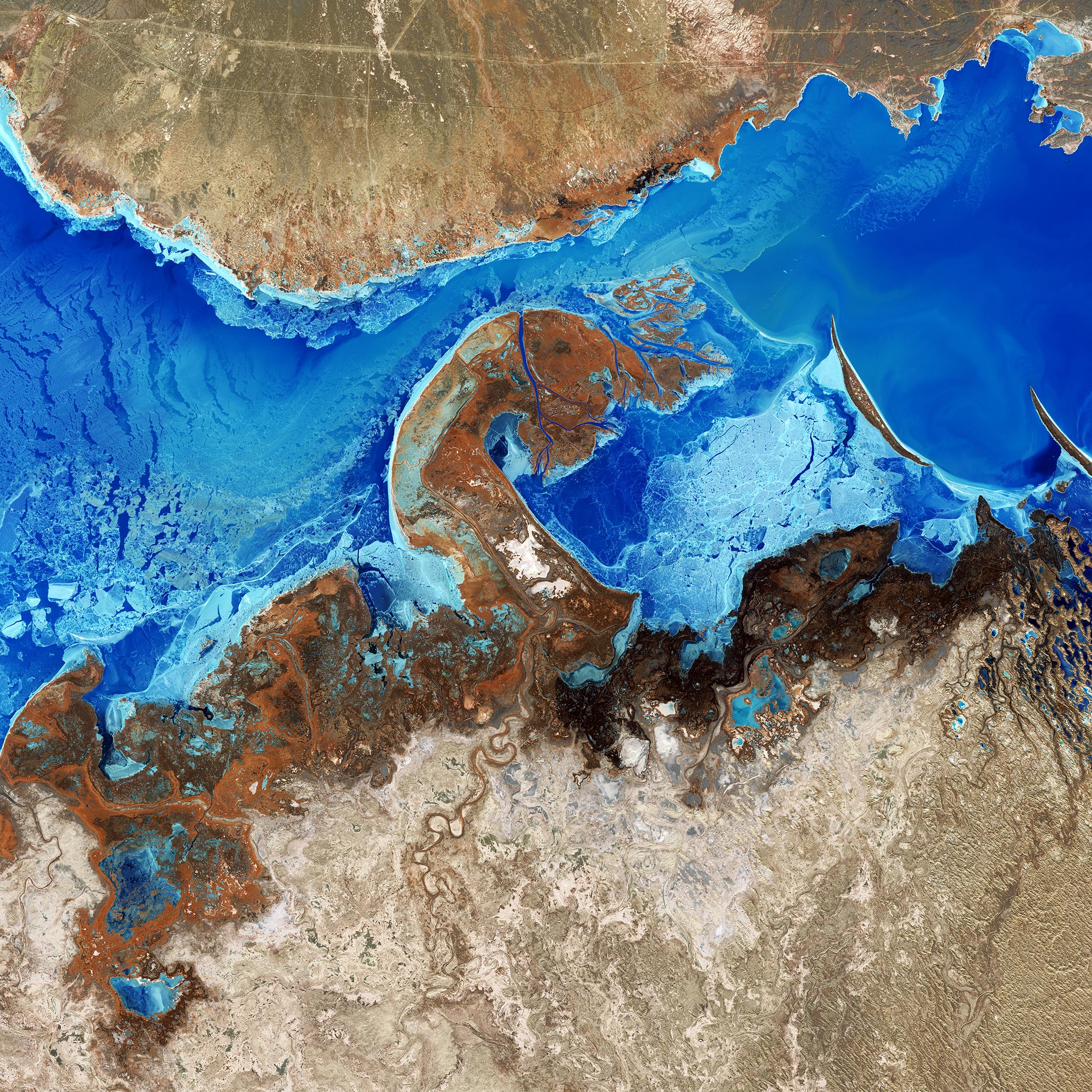
    Lake Balkhash, the largest lake in Central Asia, is featured in this false-color image captured on November 29, 2021, by the Copernicus Sentinel-2 mission. Credit: Contains modified Copernicus Sentinel data (2021), processed by ESA, CC BY-SA 3.0 IGO

    Lake Balkhash, the largest lake in Central Asia, is featured in this false-color satellite image captured by the Copernicus Sentinel-2 mission.

    The lake, which is situated in east-central Kazakhstan, is around 605 km (376 miles) in length from east to west, with a maximum depth of around 25 m (82 feet). The lake’s size varies depending on water balance, with its area fluctuating from around 15,000 sq km to 19,000 sq km (5,800 sq miles to 7,300 sq miles).

    Jutting out into the lake is the Sarymsek Peninsula which divides Balkhash into two separate hydraulic parts. The west part is wide and shallow with its water on this side particularly fresh and suitable for drinking. The east part, on the other hand, is narrow and relatively deep, with its waters on this side of the basin brackish and salty. The two parts of the lake are united by a narrow strait, the Uzynaral visible in the center of the image, with a depth of around 6 m (20 feet).

    The sediment plume passing through the Uzynaral Strait is most likely due to waves stirring up sediments from the bottom of the lake. This has led to a higher reflection and thus a brighter water color in this part of the lake.

    The north banks of Lake Balkhash are high and rocky while the south banks are low and sandy, with wide belts covered with thickets of reeds and numerous small lakes. The waters of the lake periodically flood these low-lying banks.

    A high presence of sea ice can be seen in bright blue-greenish colors, especially near the southern shoreline. This color is due to ice having a higher reflectance in the visible parts of the spectrum than in the near-infrared. Balkhash usually remains frozen from the end of November to the beginning of April, with this image captured on November 29, 2021.

    South of Balkhash lies the Saryesik-Atyrau Desert, which stretches for around 400 km (250 miles) in east Kazakhstan. There are a great number of small lakes, ponds, and wetlands in the desert (visible in brown), as well as occasional grasslands, that support a varied animal and bird population.

    Sentinel-2 is a two-satellite mission to supply the coverage and data delivery needed for Europe’s Copernicus program. The mission’s frequent revisits over the same area and high spatial resolution allow changes in water bodies to be closely monitored.

    This image is also featured on the Earth From Space video program embedded above.

    Never miss a breakthrough: Join the SciTechDaily newsletter.
    Follow us on Google and Google News.

    European Space Agency Geography
    Share. Facebook Twitter Pinterest LinkedIn Email Reddit

    Related Articles

    Breathtaking View of Andros, Bahamas From Space [Video]

    Stunning Views of Houston Texas From Copernicus Sentinel-1 Satellite

    Earth From Space: Bolivian Highland Heart [Video]

    Flevoland, Netherlands From Space: One of the Largest Land Reclamation Projects in the World

    Earth From Space: Lake George, Uganda – A Center for Biological Diversity [Video]

    Deforestation in Bolivia Spied From Space Satellite

    Earth From Space: Japanese Archipelago [Video]

    Earth From Space: Faroe Islands [Video]

    Earth From Space: Tromsø, Norway [Video]

    Leave A Reply Cancel Reply

    • Facebook
    • Twitter
    • Pinterest
    • YouTube

    Don't Miss a Discovery

    Subscribe for the Latest in Science & Tech!

    Trending News

    Popular Sugar-Free Sweetener Linked to Liver Disease, Study Warns

    What Is Hantavirus? The Deadly Disease Raising Alarm Worldwide

    Scientists Just Discovered How the Universe Builds Monster Black Holes

    Scientists Unveil New Treatment Strategy That Could Outsmart Cancer

    A Simple Vitamin May Hold the Key to Treating Rare Genetic Diseases

    Scientists Think the Real Fountain of Youth May Be Hiding in Your Gut

    Ravens Don’t Follow Wolves, They Predict Them

    This Common Knee Surgery May Be Doing More Harm Than Good

    Follow SciTechDaily
    • Facebook
    • Twitter
    • YouTube
    • Pinterest
    • Newsletter
    • RSS
    SciTech News
    • Biology News
    • Chemistry News
    • Earth News
    • Health News
    • Physics News
    • Science News
    • Space News
    • Technology News
    Recent Posts
    • Why Are So Many New Fathers Dying? Scientists Say the U.S. Has a Dangerous Blind Spot
    • Scientists Identify Simple Supplement That Greatly Reduces Alzheimer’s Damage
    • You May Have a Dangerous Type of Cholesterol Even if Your Tests Look Normal
    • Study Reveals Dangerous Flaw in AI Symptom Checkers
    • New MRI Breakthrough Captures Stunningly Clear Images of the Eye and Brain
    Copyright © 1998 - 2026 SciTechDaily. All Rights Reserved.
    • Science News
    • About
    • Contact
    • Editorial Board
    • Privacy Policy
    • Terms of Use

    Type above and press Enter to search. Press Esc to cancel.