
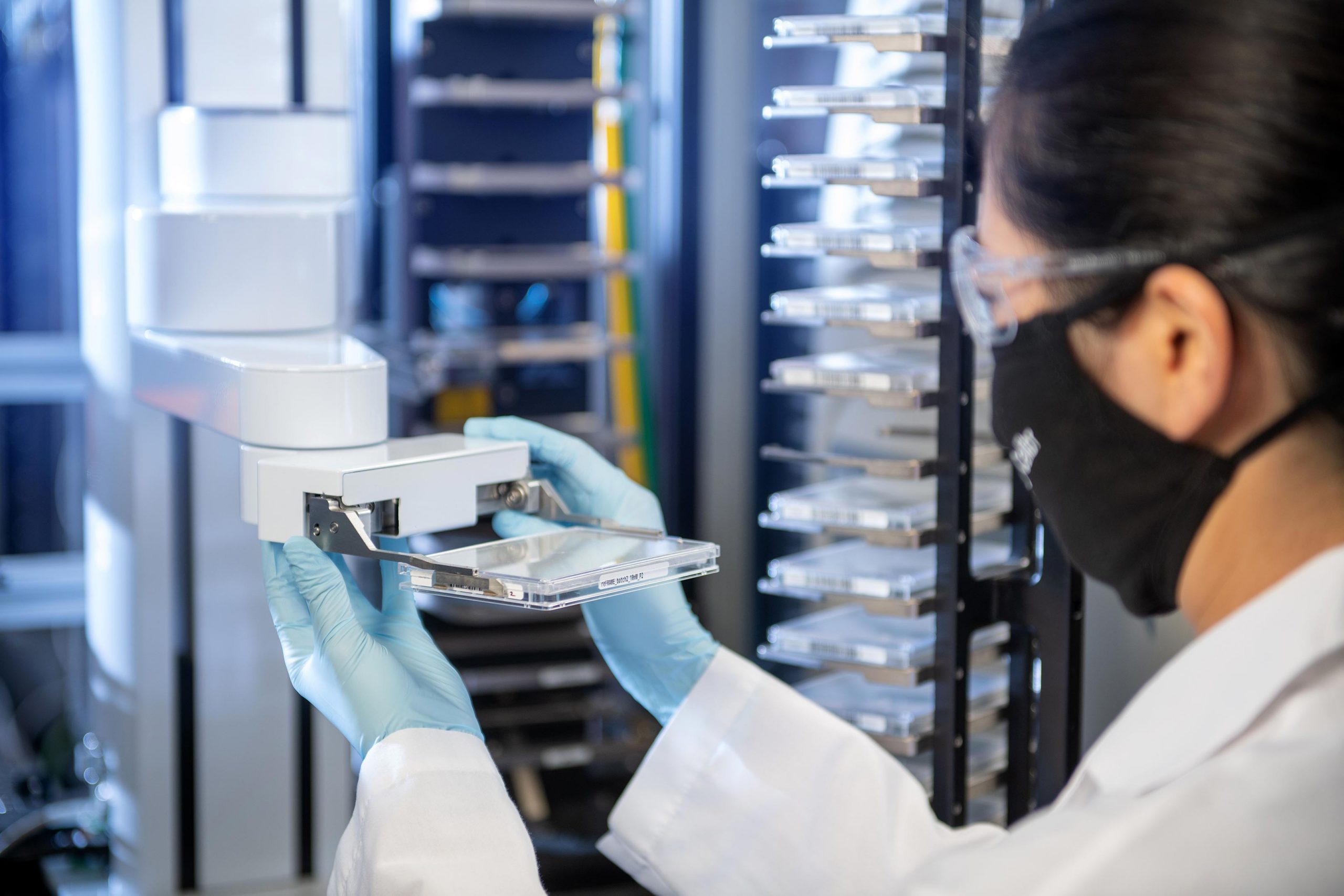
FDA-approved drugs or experimental drugs with ample health data could be rapidly tested in humans as COVID-19 therapies.
Mining the world’s most comprehensive drug repurposing collection for COVID-19 therapies, scientists have identified 90 existing drugs or drug candidates with antiviral activity against the coronavirus that’s driving the ongoing global pandemic.
Among those compounds, the Scripps Research study identified four clinically approved drugs and nine compounds in other stages of development with strong potential to be repurposed as oral drugs for COVID-19, according to results published today (June 3, 2021) in the journal Nature Communications.
Of the drugs that prevented the coronavirus from replicating in human cells, 19 were found to work in concert with or boost the activity of remdesivir, an antiviral therapy approved for treatment of COVID-19.
Repurposing Offers Hope Beyond Vaccines
“While we now have effective vaccines against COVID-19, we still lack highly effective antiviral drugs that can prevent COVID-19 infections or stop them from worsening,” says Peter Schultz, PhD, president and CEO of Scripps Research.
“Our results raise the possibility of a number of promising avenues for repurposing existing oral medications with efficacy against SARS-CoV-2,” he adds. “We have identified promising existing drugs and are also leveraging our findings to develop optimized antivirals that will be more effective against SARS-CoV-2, including variants and drug-resistant strains, as well as against other coronaviruses that currently exist or might emerge in the future.”
In a collaboration between Calibr, the drug discovery division of Scripps Research, and a team of researchers in the institute’s Department of Immunology and Microbiology, the study tested more than 12,000 drugs in two different types of human cells infected with SARS-CoV-2.
ReFRAME Library
The drugs used in the study came from the ReFRAME drug repurposing library, which was established by Calibr in 2018 with support from the Bill & Melinda Gates Foundation to tackle areas of urgent unmet medical need, especially neglected tropical diseases. The collection contains FDA-approved drugs and other experimental compounds that have been tested for safety in humans.
“Early in the COVID-19 pandemic, we saw that ReFRAME could be leveraged to screen for hits against SARS-CoV-2,” says Arnab Chatterjee, PhD, vice president of medicinal chemistry at Calibr. “In the months that followed, we launched many scientific collaborations to speed drug discovery, both internally at Scripps Research and with partners nationally and internationally.”
In the Scripps Research study, the scientists treated two different types of laboratory-cultured SARS-CoV-2-infected human cells with each of the 12,000 drugs from ReFRAME. After 24 or 48 hours, they measured the level of viral infection in the cells to determine if the drugs prevented the virus from replicating. In some cases, they applied two drugs at a time to see if the compounds would work together against the virus.
“Some of the most effective antiviral strategies are ‘cocktails’ in which patients are given several different drugs to combat the infection, such as those used to treat HIV infections,” says the study’s corresponding author Thomas Rogers, MD, PhD, an adjunct assistant professor in the Department of Immunology and Microbiology at Scripps Research and assistant professor of Medicine at UC San Diego.
From the thousands of drugs screened, the researchers identified a total of 90 compounds that prevented SARS-CoV-2 from replicating in at least one of the human cell lines. Of those, 13 had the highest potential to be repurposed as COVID-19 therapies, based on their potency, cell line-independent activity or a likely mechanism of action, pharmacokinetic properties, and human safety profiles.
Four of the drugs–halofantrine, nelfinavir, simeprevir, and manidipine–are already FDA approved and nine others are in various stages of the drug development process.
Remdesivir Boosted by Drug Combinations
From the drug combination screens, the researchers found 19 drugs that had an additive effect when administered with remdesivir, the antiviral produced by the pharmaceutical company Gilead that is FDA approved for use in patients diagnosed with COVID-19. An additive effect means that the drugs were both active against the virus when applied together.
“The potential advantage of a therapeutic strategy that uses a combination of drugs is that taking a lower dose of any one drug could reduce the risk of side effects of that drug,” says Malina Bakowski, PhD, the lead author on the Nature Communications paper and principal investigator at Calibr.
Two Drugs Show Synergistic Effects
Two additional drugs went a step further to have a synergistic effect on remdesivir, meaning the drugs heightened remdesivir’s ability to suppress the virus. These two drugs were riboprine, a compound that’s been tested as a preventative for nausea and surgical infection, and 10-deazaaminopterin, a derivative of the vitamin folic acid.
Based on the results of cell culture screens, the researchers tested the best-performing drug candidates in human tissue cells and an animal model to determine which are most likely to work in human patients. Building on their success in identifying potential COVID-19 therapies, the Scripps Research team is continuing to advance other promising candidates through their drug discovery pipeline.
“The results from the cellular assays and animal models are very promising and the need for medical remedies to address COVID-19 remains urgent,” says Schultz. “It is critical we proceed with the utmost rigor to determine what is safe and effective, as diligence is the most expedient path to finding new therapies that will make a difference for patients.”
Results from the screen of the ReFRAME library are available at the reframedb.org data portal.
Reference: “Drug repurposing screens identify chemical entities for the development of COVID-19 interventions” by Malina A. Bakowski, Nathan Beutler, Karen C. Wolff, Melanie G. Kirkpatrick, Emily Chen, Tu-Trinh H. Nguyen, Laura Riva, Namir Shaabani, Mara Parren, James Ricketts, Anil K. Gupta, Kastin Pan, Peiting Kuo, MacKenzie Fuller, Elijah Garcia, John R. Teijaro, Linlin Yang, Debashis Sahoo, Victor Chi, Edward Huang, Natalia Vargas, Amanda J. Roberts, Soumita Das, Pradipta Ghosh, Ashley K. Woods, Sean B. Joseph, Mitchell V. Hull, Peter G. Schultz, Dennis R. Burton, Arnab K. Chatterjee, Case W. McNamara and Thomas F. Rogers, 3 June 2021, Nature Medicine.
DOI: 10.1038/s41467-021-23328-0
“Drug repurposing screens identify chemical entities for the development of COVID-19 interventions” was coauthored by Malina Bakowski, Nathan Beutler, Karen Wolff, Melanie Kirkpatrick, Emily Chen, Tu-Trinh H. Nguyen, Laura Riva, Namir Shaabani, Mara Parren, James Ricketts, Anil Gupta, Kastin Pan, Peiting Kuo, MacKenzie Fuller, Elijah Garcia, John Teijaro, Linlin Yang, Debashis Sahoo, Victor Chi, Edward Huang, Natalia Vargas, Amanda Roberts, Soumita Das, Pradipta Ghosh, Ashley Woods, Sean Joseph, Mitchell Hull, Peter Schultz, Dennis Burton, Arnab Chatterjee, Case McNamara and Thomas Rogers. Funding for the study was provided by the Bill & Melinda Gates Foundation, the National Institutes of Health and the Sanford Stem Cell Clinical Center at UC San Diego Health.
Never miss a breakthrough: Join the SciTechDaily newsletter.
Follow us on Google and Google News.
2 Comments
I believe this is the direction President Trump would have preferred for treatment of Covid. When he suggested HCQ and rendisivir, he was roundly criticized by big Pharma, which had a lot of money and now responsibility at stake with the DNA altering “vaccines.”
History will treat him well if we survive this onslaught of eugenics and globalization.
This article needed to provide more of the drug names that were found to be effective. A simple list of the 19 at the end would have sufficed.
It is also a bit ironic that one of the most effective drugs against this ongoing pandemic is not mentioned despite over 50 studies around the world showing it’s effectiveness. Ivermectin was not created as an anti-viral but as an anti-parasitic.