
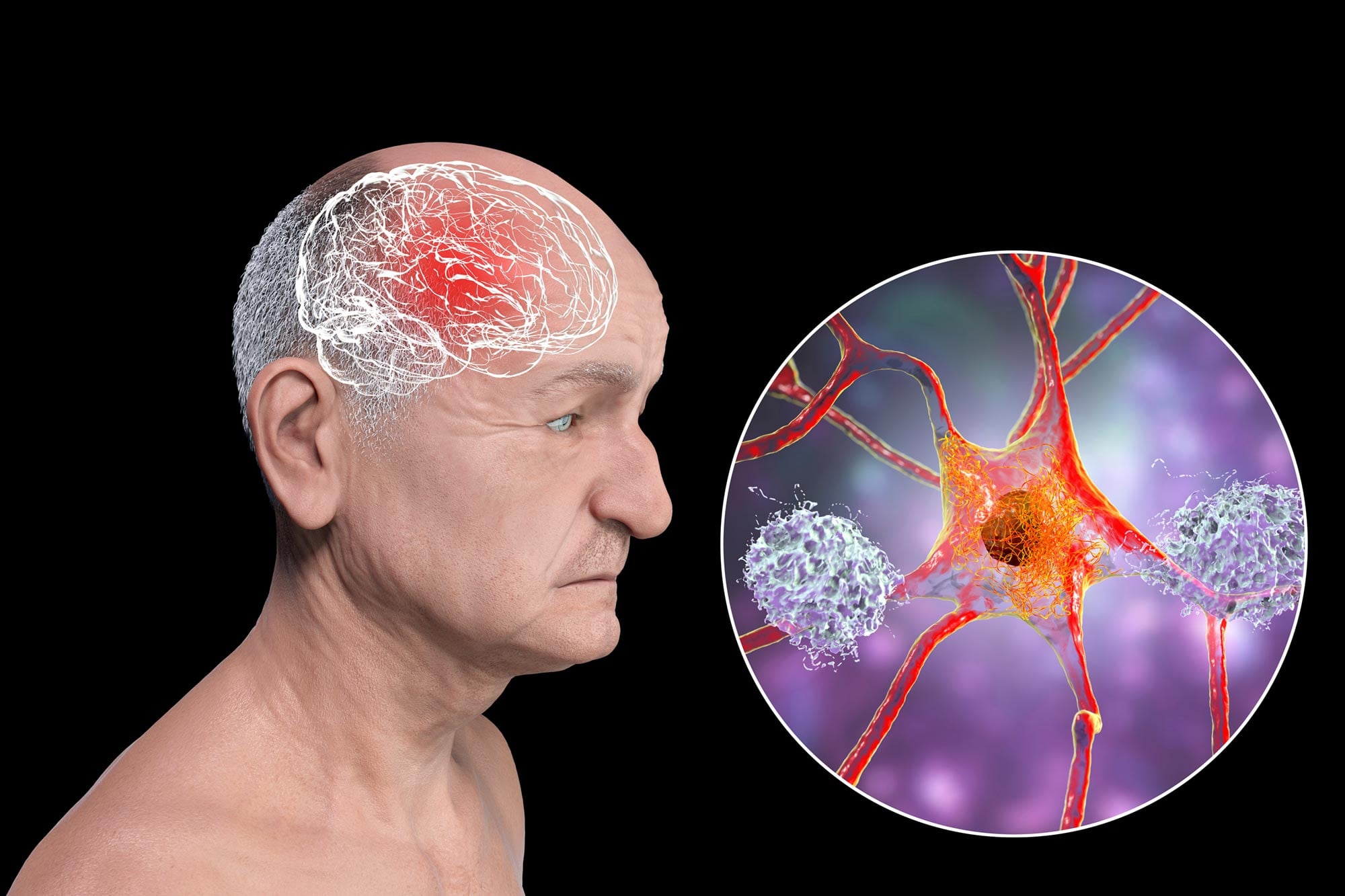
Unlike treatments that focus on removing plaques that have already formed, levetiracetam works differently. It blocks the production of toxic amyloid beta peptides in the first place.
For decades, researchers have recognized that Alzheimer’s disease is marked by the buildup of toxic protein fragments in the brain. What has remained unclear is exactly how and where those harmful fragments are generated.
In a new study, scientists at Northwestern University report that they have identified both the location and timing of this toxic buildup in Alzheimer’s patients. The team also found that an inexpensive drug already approved by the Food and Drug Administration (FDA) can interrupt the process before the damage begins.
Using a combination of animal models, lab-grown human neurons, and brain tissue from individuals at high risk for Alzheimer’s, the researchers focused on a particularly harmful fragment known as amyloid-beta 42. They discovered that this peptide accumulates inside synaptic vesicles, the small sacs neurons use to release chemical signals and communicate with one another.
When the scientists treated animals and human neurons with levetiracetam, a widely prescribed anti-seizure medication that has been available for decades, the drug blocked the formation of amyloid-beta 42. By preventing production of the peptide, levetiracetam stopped the chain of events that leads to amyloid plaque buildup.
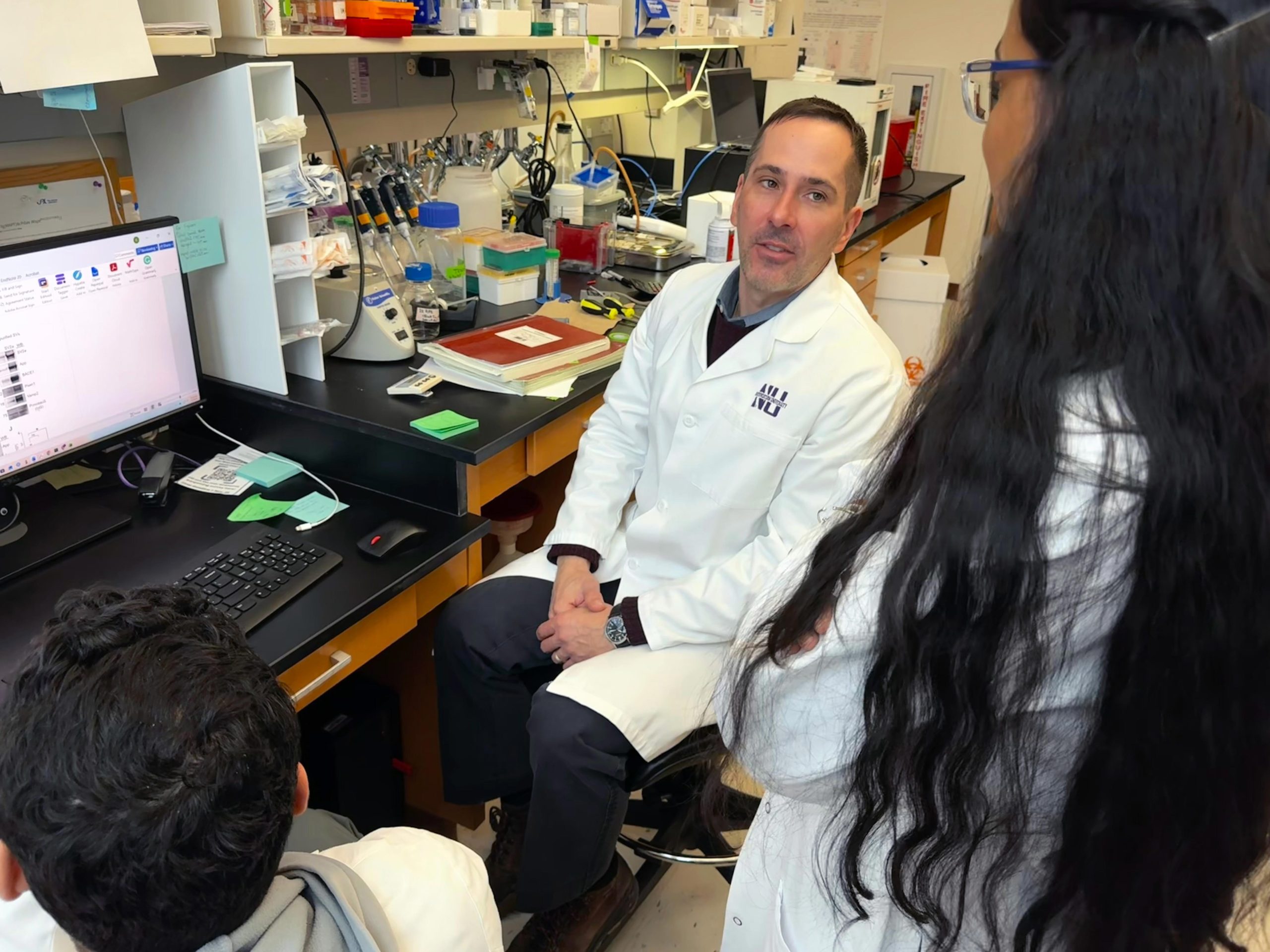
“While many of the Alzheimer’s drugs currently on the market, such as lecanemab and donanemab, are approved to clear existing amyloid plaques, we’ve identified this mechanism that prevents the production of the amyloid-beta 42 peptides and amyloid plaques,” said corresponding author Jeffrey Savas, PhD, associate professor of behavioral neurology at Northwestern University Feinberg School of Medicine. “Our new results uncovered new biology while also opening doors for new drug targets.”
The findings were recently published in the journal Science Translational Medicine.
Introduction of anti-seizure drug to the Alzheimer’s fight
At the center of the discovery is amyloid precursor protein (APP), a molecule essential for brain development and the formation of synapses, the connections that allow neurons to communicate. When APP is processed abnormally, it can generate amyloid-beta peptides, including amyloid-beta 42, a form strongly linked to Alzheimer’s disease. Researchers at Northwestern found that the way APP moves within neurons helps determine whether amyloid-beta 42 is produced.
Animation shows what happens inside a neuron during the synaptic vesicle cycle and how administering levetiracetam enables APP to remain on the cell’s surface longer, diverting it away from the pathway that produces toxic amyloid‑beta 42 proteins. Credit: Nalini Rao, Northwestern University
Levetiracetam acts during the synaptic vesicle cycle, a continuous process that supports every thought, memory, movement, and sensation. In this cycle, the drug attaches to a protein called SV2A. That interaction slows the step in which neurons retrieve and recycle vesicle components from the cell surface. By delaying this recycling process, levetiracetam keeps APP on the surface of the neuron longer. This shift redirects APP away from the internal pathway that generates toxic amyloid-beta 42.
“In our 30s, 40s, and 50s, our brains are generally able to steer proteins away from harmful pathways,” Savas said. “As we age, that protective ability gradually weakens. This is not a statement of disease; this is just a part of aging. But in brains developing Alzheimer’s, too many neurons go astray, and that’s when you get amyloid-beta 42 production. And then it’s tau (or ‘tangles’), and then it’s dead cells, then dementia, then neuroinflammation — and then it’s too late.”
Drug would need to be taken ‘very, very early’
Savas emphasized that prevention would require extremely early intervention. People at high risk for Alzheimer’s might need to begin taking levetiracetam “very, very early,” potentially up to 20 years before a newly FDA-approved Alzheimer’s test would detect even mildly elevated amyloid-beta 42 levels.
“You couldn’t take this when you already have dementia because the brain has already undergone a number of irreversible changes and a lot of cell death,” Savas said.
Because of that narrow window, the team is considering focusing on individuals with inherited forms of Alzheimer’s disease, including people with Down syndrome. Although such patients represent a small population, they could be among the first to benefit from preventive strategies based on this research.
Mining existing human clinical data
Since levetiracetam is already FDA-approved and widely prescribed for epilepsy, the researchers examined whether existing medical records might reveal clues about its impact on Alzheimer’s progression. Using data from the National Alzheimer’s Coordinating Center, they conducted a correlative analysis comparing outcomes among patients who took levetiracetam, those who took lorazepam, and those taking other or no antiepileptic medications.
The analysis showed that Alzheimer’s patients who received levetiracetam experienced a meaningful delay between diagnosis of cognitive decline and death compared with the other groups.
“Although the magnitude of change was small (on the scale of a few years), this analysis supports the positive effect of levetiracetam to slow the progression of Alzheimer’s pathology,” Savas said.
Study also examined Down syndrome brains
Beyond experiments in genetically engineered mouse models and cultured human neurons, the team also analyzed brain tissue from individuals with Down syndrome who died in their 20s or 30s due to accidents or other unrelated causes. More than 95% of people with Down syndrome develop an aggressive early-onset form of Alzheimer’s by around age 40, Savas explained, because the APP gene is located on the chromosome that is present in three copies in their cells.
“By obtaining Down syndrome patient brains from people who died in their 20s or 30s, we know they would have eventually developed Alzheimer’s, so it gives us an opportunity to study the very initial early changes in the human brain,” Savas said.
The researchers observed the same buildup of presynaptic proteins that Savas’s lab had previously identified in mouse models. This early accumulation appears before synapses are lost and before dementia symptoms emerge.
“That is what we and others call the paradoxical stage of Alzheimer’s disease, which is that before synapses are lost and dementia ensues, the first thing that happens is presynaptic proteins accumulate,” Savas said. “So conceivably, if you started giving these patients levetiracetam in their teenage years, it could actually have a preventative therapeutic benefit.”
Savas acknowledged that levetiracetam “is not perfect,” noting that the drug is cleared from the body relatively quickly. He and his colleagues are now working to develop improved versions that would remain active longer and more precisely target the mechanism that blocks the formation of amyloid plaques.
Reference: “Levetiracetam prevents Aβ production through SV2a-dependent modulation of APP processing in Alzheimer’s disease models” by Nalini R. Rao, Ivan Santiago-Marrero, Olivia DeGulis, Toshihiro Nomura, Kritika Goyal, SeungEun Lee, Timothy J. Hark, Justin C. Dynes, Emily X. Dexter, Maciej Dulewicz, Junyue Ge, Arun Upadhyay, Eugenio F. Fornasiero, Robert Vassar, Jörg Hanrieder, Anis Contractor and Jeffrey N. Savas, 11 February 2026, Science Translational Medicine.
DOI: 10.1126/scitranslmed.adp3984
Funding for the study was provided by the National Institutes of Health and the Cure Alzheimer’s Fund.
Never miss a breakthrough: Join the SciTechDaily newsletter.
Follow us on Google and Google News.
11 Comments
I need to stop these alerts. The noise wakes me up
I need to stock this notices. The noise wakes me up. Ii have hard enough time getting to sleep
The elite have had these miracle drugs for a long time now. Thats why they unfortunately, never die.
They dont have to worry about these false scientific narratives avout finding a cure.
Unfortunately the cure comes from killing babies.
It will be interesting to see how this study progresses and evolved in the future.
I pray for positive results, with more on the horizon.
Get help soonest
I have had seizures since a teenager and no doctor I have ever seen has been able to stop them.I have some doctors that can’t even tell when I have one. I have taken almost every medication out there but they keep putting me on the same meds that I have taken before and they never helped. My neurologist even over dosed me when he said I was already on the maximum dose but he insisted I could take more. I was told I had grandmal seizures then they told me I had focal seizures then I was having non epilepsy seizures from a bad childhood. I don’t trust the doctor’s I’m just trying to find a real Specialist so I can get on the right meds that will control my seizures. I have long term and short term memory loss. People don’t understand that I do remember some things and when I try to talk to them about all they do is argue about it or tell me that never happened or I don’t remember that. I have been there for everyone but they think I’m crazy. I though everyone wanted to help me get better but they’re just making my life worse. It’s just so hard. I’m always so stressed out and they just make me more anxious and depressed.I only want the best for myself but it’s hard because I can’t even trust my family they don’t care about me and they always lie to me about everything.My children hate me because I tried getting help and everyone told them lies and that I didn’t care about them when I was just wanted the best for them.
Interesting. I can relate to every word in your comments. I guess I should feel fortunate that my seizures started when I reached the age of 81 and now on medication. Levetiracetam has been increased to 1250 Mg. twice a day. Also my seizures are classified as epilepsy and have been occurring at 5 month intervals. Since my dosage has been increased, hopefully I can be symptom free.
Try levetiracetam then. If it doesn’t work well enough, try that, plus CBD. It’s gotta be purified CBD “isolate”, dissolved in oil, and taken ideally sublingual. If even CBD + levetiracetam doesn’t work, up your CBD doses but take liver enzyme tests periodically to make sure that it isn’t killing the liver.
Keppra was given to my mom in hospital after a TBI and elevated heart enzymes, but it made her mean, spitting and uncontrollably agitated.
Interesting. My husband had Alzheimer’s and two months before he died he had several seizures. He was prescribed this drug and his cognition noticeably improved. Since we were at least 10 years in I question the conclusion as to how this drug works. Presumably amyloid was well advanced at that point so prevention makes no sense. When I researched the drug I found that the effect it produced had been discovered 10 years earlier.
Naturally all of us who have cared for someone with this illness would like to see a treatment that works. Unfortunately decades were wasted chasing drugs based on fraudulent research.
A study of already existing long time keppra patients would be easy to correlate with Alzheimer’s occurrence. Of course there are always other variables but there seems to be a trend of these correlation studies with medical records. There’s already a pool of long time keppra users.
I am one; already on for decades and will be for life so fingers crossed on possible prevention. No side effects though some folks do.