
Close Menu
    Facebook X (Twitter) Instagram
    SciTechDaily
    • Biology
    • Chemistry
    • Earth
    • Health
    • Physics
    • Science
    • Space
    • Technology
    Facebook X (Twitter) Pinterest YouTube RSS
    SciTechDaily
    Home»Space»“Finding Life in Outer Space” – Travel Across Time and Space Exploring Why Life Exists
    Space

    “Finding Life in Outer Space” – Travel Across Time and Space Exploring Why Life Exists

    By Megan Watzke, Harvard-Smithsonian Center For AstrophysicsMarch 25, 2018No Comments3 Mins Read
    Facebook Twitter Pinterest Telegram LinkedIn WhatsApp Email Reddit
    Share
    Facebook Twitter LinkedIn Pinterest Telegram Email Reddit
    Finding Life in Outer Space
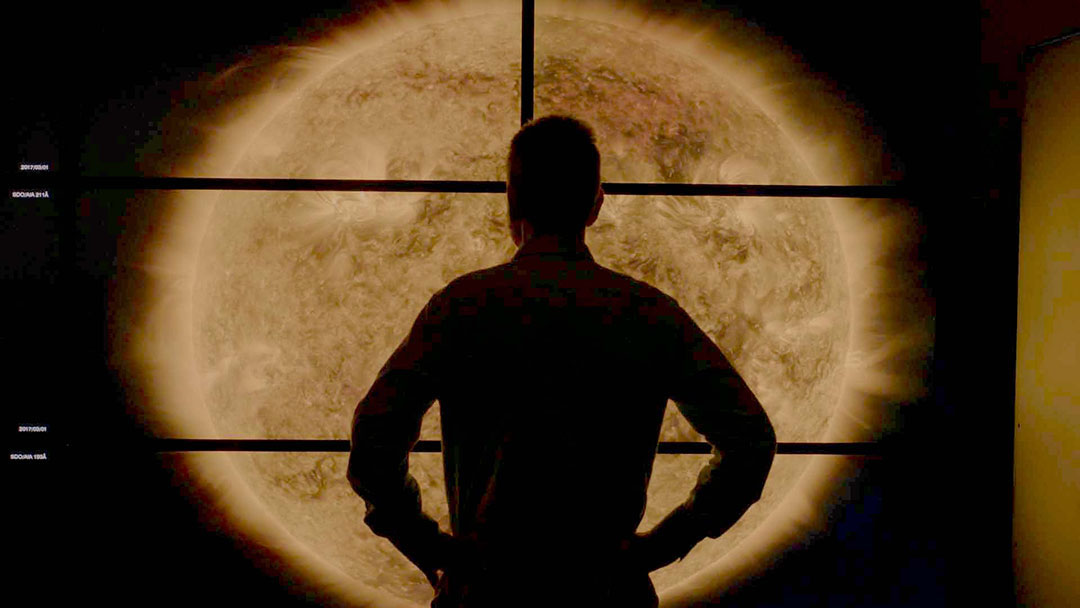
    Dr. Jeremy Drake looks at images of the Sun at the Harvard-Smithsonian Center for Astrophysics in Cambridge, Mass. Smithsonian Channel

    On Sunday, March 25, a new program called “Finding Life in Outer Space” will debut on the Smithsonian Channel. The scientific lead for this program is Smithsonian Astrophysical Observatory’s Jeremy Drake and also features interviews with Karin Öberg from the Harvard-Smithsonian Center for Astrophysics (CfA) as well as many collective scientific efforts based at the CfA.

    “I wanted to look at a different slant to the story of the discovery of exoplanets,” said Drake, “including more of the astrophysics that goes into it and the complex science rationale behind the possibility of life developing somewhere other than Earth.”

    “Finding Life in Outer Space” travels across incredible tracts of space and time exploring the greatest mystery of the universe – why life exists. The show follows the scientists responsible for some of the biggest breakthroughs in understanding the origins of life and uncovers how cutting-edge observations and experiments are transforming the view of how the universe works.

    Hydrothermal geyser pools in the Atacama Desert in Chile reveal secrets about the first steps life took on the primeval Earth, and high in the Arctic Circle, the northernmost science facility on the planet keeps an eye on the magnetic shield that protects humans from devastation by the solar wind.

    The film explores U.S laboratories where the secrets of astrochemistry are recreated, including Öberg’s lab at CfA, and looks to England where they are closing the gap between chemistry and biology by simulating conditions on Earth four billion years ago. Telling a story of creation on an incredible scale and with important consequence, “Finding Life in Outer Space” shows that science may be pointing to one fantastic conclusion — we are not alone.

    This program is one of the four premieres on the Smithsonian Channel centered around space exploration and humans’ impact on the Solar System. The others include “Billionaire Space Club,” “Earth from Outer Space,” and “Leaving Earth: Or How to Colonize a Planet.”

    Smithsonian Networks (SNI/SI Networks L.L.C.) is a joint venture between Showtime Networks Inc. and the Smithsonian Institution, formed to create channels featuring programs largely inspired by the assets of the Smithsonian Institution, the world’s largest museum complex. Smithsonian Channel features award-winning original documentaries, series and ground-breaking programs highlighting America’s historical, cultural and scientific heritage.

    For more information on how to watch “Finding Life in Outer Space” and other Smithsonian Channel programs, visit: https://www.smithsonianchannel.com/ways-to-watch

    Never miss a breakthrough: Join the SciTechDaily newsletter.
    Follow us on Google and Google News.

    Astronomy Astrophysics Earth Science Harvard-Smithsonian Center for Astrophysics Life Space Exploration
    Share. Facebook Twitter Pinterest LinkedIn Email Reddit

    Related Articles

    Ultraviolet Light Could Be a Key for Life Elsewhere in the Universe

    Synchrotron Emission Will Allow Astronomers to Find Stars That No One Has Seen Before

    If Life Can Travel Between The Stars We Should Be Able To Detect It

    Two Planets Separated by Less Than 5 Earth Moon Distances

    Study Challenges Prevailing Ideas About How Supermassive Black Holes Grow

    Calculations Show the Ideal Time to Study the Cosmos

    Using Infrared Images from Hubble & Spitzer, Scientists Discover 25 Distant Galaxies

    Supernova Shock Wave Breaks Through a Cocoon of Gas

    Origins of Type Ia Supernovae

    Leave A Reply Cancel Reply

    • Facebook
    • Twitter
    • Pinterest
    • YouTube

    Don't Miss a Discovery

    Subscribe for the Latest in Science & Tech!

    Trending News

    AI Could Detect Early Signs of Alzheimer’s in Under a Minute – Far Before Traditional Tests

    What if Dark Matter Has Two Forms? Bold New Hypothesis Could Explain a Cosmic Mystery

    This Metal Melts in Your Hand – and Scientists Just Discovered Something Strange

    Beef vs. Chicken: Surprising Results From New Prediabetes Study

    Alzheimer’s Breakthrough: Scientists Discover Key Protein May Prevent Toxic Protein Clumps in the Brain

    Quantum Reality Gets Stranger: Physicists Put a Lump of Metal in Two Places at Once

    Scientists May Have Found the Key to Jupiter and Saturn’s Moon Mystery

    Scientists Uncover Brain Changes That Link Pain to Depression

    Follow SciTechDaily
    • Facebook
    • Twitter
    • YouTube
    • Pinterest
    • Newsletter
    • RSS
    SciTech News
    • Biology News
    • Chemistry News
    • Earth News
    • Health News
    • Physics News
    • Science News
    • Space News
    • Technology News
    Recent Posts
    • Scientists Discover Enzyme That Could Supercharge Ozempic-Like Weight Loss Drugs
    • Asthma and Depression Don’t Mix the Way Scientists Expected
    • Why Promising Cancer Drugs Failed: Scientists Uncover the Missing Piece
    • Popular Sweetener Linked to DNA Damage – “It’s Something You Should Not Be Eating”
    • Ancient “Rock” Microbes May Reveal How Complex Life Began
    Copyright © 1998 - 2026 SciTechDaily. All Rights Reserved.
    • Science News
    • About
    • Contact
    • Editorial Board
    • Privacy Policy
    • Terms of Use

    Type above and press Enter to search. Press Esc to cancel.