
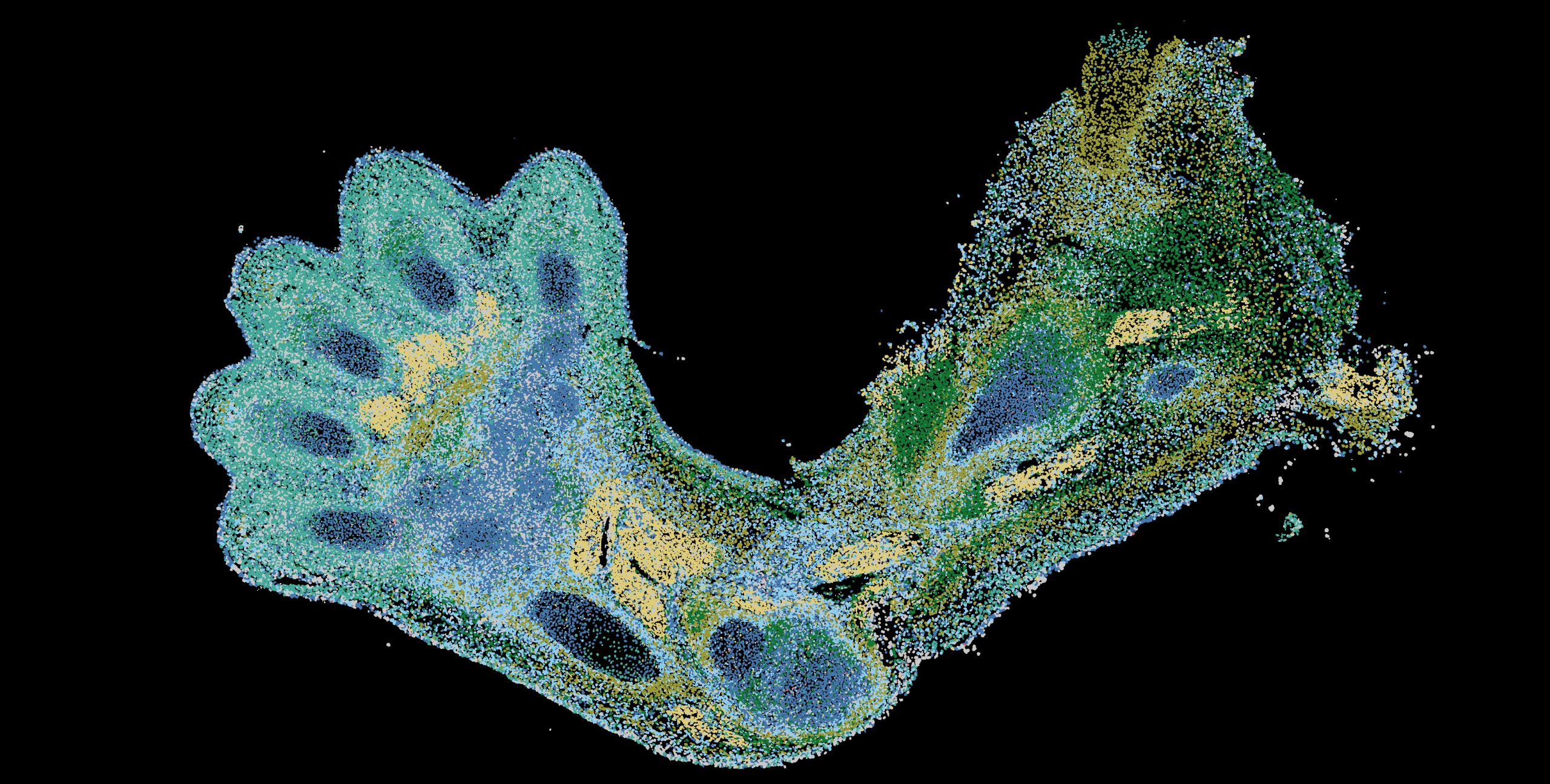
A new atlas maps human skeletal development, revealing key insights into bone formation, genetic links to arthritis, and conditions like craniosynostosis.
The first “blueprint” of human skeletal development reveals how the skeleton forms, sheds light on the process of arthritis, and highlights the cells involved in conditions affecting skull and bone growth.
Researchers from the Wellcome Sanger Institute and collaborators have used cutting-edge genomic techniques to identify all the cells and pathways involved in the early stages of skeletal development. Part of the wider Human Cell Atlas (HCA) project, this resource could be used to investigate whether current or future therapeutic drugs could disrupt skeletal growth if used during pregnancy.
The study, published in Nature, shows a clear picture of how cartilage acts as a scaffold for bone development across the skeleton, apart from the top of the skull. The team mapped all the cells critical for skull formation and investigated how genetic mutations may cause soft spots in the skull of newborns to fuse too early, restricting the growth of the developing brain. In the future, these cells could be used as possible diagnostic and therapeutic targets for identifying and treating congenital conditions.
Genetic Links to Arthritis and Bone Development
They also found certain genes activated in early bone cells that might be linked to an increased risk of developing hip arthritis as an adult. Comparatively, they suggest that other genes in early cartilage cells are linked to an increased risk of developing arthritis in the knee, possibly due to their role in cartilage repair. In the future, studying these different cells further could help develop new treatments for these conditions.
Overall, the developing skeletal atlas is a freely available resource that can be used to understand more about bone development and how this influences conditions affecting these tissues that occur in children and adults.
This paper is one of a collection of more than 40 HCA publications in Nature Portfolio journals that represent a milestone leap in our understanding of the human body. These highly complementary studies have shed light on central aspects of human development, and health and disease biology, and have led to the development of vital analytical tools and technologies, all of which will contribute to the creation of the Human Cell Atlas

Children’s skulls fully harden and fuse when they are between the ages of one and two years old. Before this developmental process, there are soft spots in the skull that allow the brain to continue to grow after the child is born. In some cases, these soft spots fuse too early, causing a condition known as craniosynostosis, which prevents the brain from expanding.
In the UK, this is usually treated quickly via an operation but if left untreated, it can cause a build-up of pressure in the skull, leading to learning difficulties, problems with sight, and hearing loss. While craniosynostosis has been linked to genetic mutations, it has not been possible until now to identify which cells in humans these mutations disrupt.
Osteoarthritis and Cartilage Degeneration
Osteoarthritis (OA) is the most common form of arthritis in the UK and causes joints, such as the hip and knees, to become painful and stiff over time. This is because the protective layer, known as cartilage, around these joints has become broken or worn down. Eventually, in most cases, it is necessary to replace the joint through major surgery, as adults cannot grow new cells to repair the damaged cartilage.
Using new cutting-edge technology, researchers from the Sanger Institute and collaborators mapped skeletal development in the first trimester of pregnancy, from 5 to 11 weeks post-conception, at a spatial and single-cell levels. This enabled them to describe all the cells, gene networks, and interactions involved with bone growth during early development, including the position of cells in the rapidly growing tissue.
The single-cell map revealed how cartilage cells grow first, acting as a scaffold for bone cells to then grow over. The team highlighted how this happens everywhere in the skeleton apart from the top of the skull, called the calvarium. Within the calvarium, they discovered new types of early bone cells that are involved in skull development. The team investigated how genetic mutations that are linked with craniosynostosis disrupt these early bone cells, causing them to fuse too early.
The researchers also found that genetic variants associated with a higher risk of hip OA were involved in early bone cell development and their downstream regulators, while variants that affected knee arthritis risk were involved with cartilage formation.
Additionally, the team used the atlas to explore the impact of medication on skeletal development. They compiled a list of 65 clinically-approved drugs, that are currently not recommended during pregnancy, and highlighted where these may disrupt skeletal development. By including this information in the atlas, it highlights the impact drugs can have on the developing human and could be informative when considering whether therapeutics are safe for use during pregnancy.
Advancing Research and Therapeutic Potential
Dr. Ken To, co-first author from the Wellcome Sanger Institute, said: “There are countless processes that act in concert during human skeleton and joint development, and our research has characterized cell types and mechanisms involved in the formation of bone and the fusing of the skull. By studying these, we were able to give context to DNA variants linked with congenital conditions, such as craniosynostosis, predicting how genetic changes impact the developing skeleton. Ultimately, using this atlas could help us better understand the conditions of both the young and aging skeleton. Having this ‘blueprint’ of bone formation can also help us develop effective ways to grow bone and cartilage cells in a dish, which has enormous therapeutic potential.”
Dr Jan Patrick Pett, co-first author from the Wellcome Sanger Institute, said: “We’re excited to have created the first multi-omic map of the developing human skeleton, something that has vast potential in both understanding how our bones grow and treating conditions that might impact this. Our multi-layered, time- and space-resolved atlas enabled novel computational analyses, which we used to create an integrated view of how developmental processes are regulated. Having a clearer picture of what is happening as our skeleton forms, and how this impacts conditions such as osteoarthritis, could help unlock new treatments in the future.”
Professor Sarah Teichmann, co-founder of the Human Cell Atlas and senior author previously at the Wellcome Sanger Institute, now based at the Cambridge Stem Cell Institute at the University of Cambridge, said: “Our unique freely available skeletal atlas sheds new light on cartilage, bone, and joint development in the first trimester, detailing the cells and pathways involved together for the first time. This atlas combines cutting-edge spatial technology with genetic analysis and can be used by the research community worldwide. This detailed atlas of bone development in space and time is coordinated with other studies which brings the entire Human Cell Atlas initiative one step closer to fully understanding what happens in the human body across development, health, and disease.”
Reference: “A multi-omic atlas of human embryonic skeletal development” by Ken To, Lijiang Fei, J. Patrick Pett, Kenny Roberts, Raphael Blain, Krzysztof Polański, Tong Li, Nadav Yayon, Peng He, Chuan Xu, James Cranley, Madelyn Moy, Ruoyan Li, Kazumasa Kanemaru, Ni Huang, Stathis Megas, Laura Richardson, Rakesh Kapuge, Shani Perera, Elizabeth Tuck, Anna Wilbrey-Clark, Ilaria Mulas, Fani Memi, Batuhan Cakir, Alexander V. Predeus, David Horsfall, Simon Murray, Martin Prete, Pavel Mazin, Xiaoling He, Kerstin B. Meyer, Muzlifah Haniffa, Roger A. Barker, Omer Bayraktar, Alain Chédotal, Christopher D. Buckley and Sarah A. Teichmann, 20 November 2024, Nature.
DOI: 10.1038/s41586-024-08189-z
Never miss a breakthrough: Join the SciTechDaily newsletter.
Follow us on Google and Google News.