
New Geosciences Study Reveals Triassic Fossils That Expose Origins of Living Amphibians
A team of Virginia Tech paleontologists, led by doctoral candidate Ben Kligman, have discovered the first Triassic-era caecilian fossils, the oldest-known of their kind, in Arizona. The find helps fill a massive gap of roughly 90 million years in the historical record of caecilians where no fossils had been previously found, baffling scientists.
The smallest of newly found fossils can upend what paleontologists know about our history.
A team of paleontologists from Virginia Tech and the U.S. Petrified Forest National Park, among others, have discovered the first “unmistakable” Triassic-era caecilian fossil — the oldest-known caecilian fossils — thus extending the record of this small, burrowing mammal by roughly 35 million years. The find also fills a gap of at least 87 million years in the known historical fossil record of the amphibian-like creature.
The fossil was first co-discovered by Ben Kligman, a doctoral student in the Department of Geosciences, part of the Virginia Tech College of Science, at Arizona’s Petrified Forest National Park during a dig in 2019. Named by Kligman as Funcusvermis gilmorei, the fossil extends the history of caecilians 35 million years back to Triassic Period, roughly 250 million to 200 million years ago.
Prior to this new study, published today in the journal Nature, only 10 fossil caecilian occurrences were known, dating back to the Early Jurassic Period, about 183 million years ago. However, previous DNA studies estimated evolutionary origins of caecilians back to the Carboniferous or Permian eras, some 370 million to 270 million years ago, according to Kligman, marking that 87-million-year gap. However, no such fossils had been found.
“The discovery of the oldest caecilian fossils highlights the crucial nature of new fossil evidence. Many of the biggest outstanding questions in paleontology and evolution cannot be resolved without fossils like this,” said Kligman, who previously discovered a 220-million-year-old species of cynodont or stem-mammal, a precursor of modern-day mammals. “Fossil caecilians are extraordinarily rare, and they are found accidentally when paleontologists are searching for the fossils of other more common animals. Our discovery of one was totally unexpected, and it transformed the trajectory of my scientific interests.”
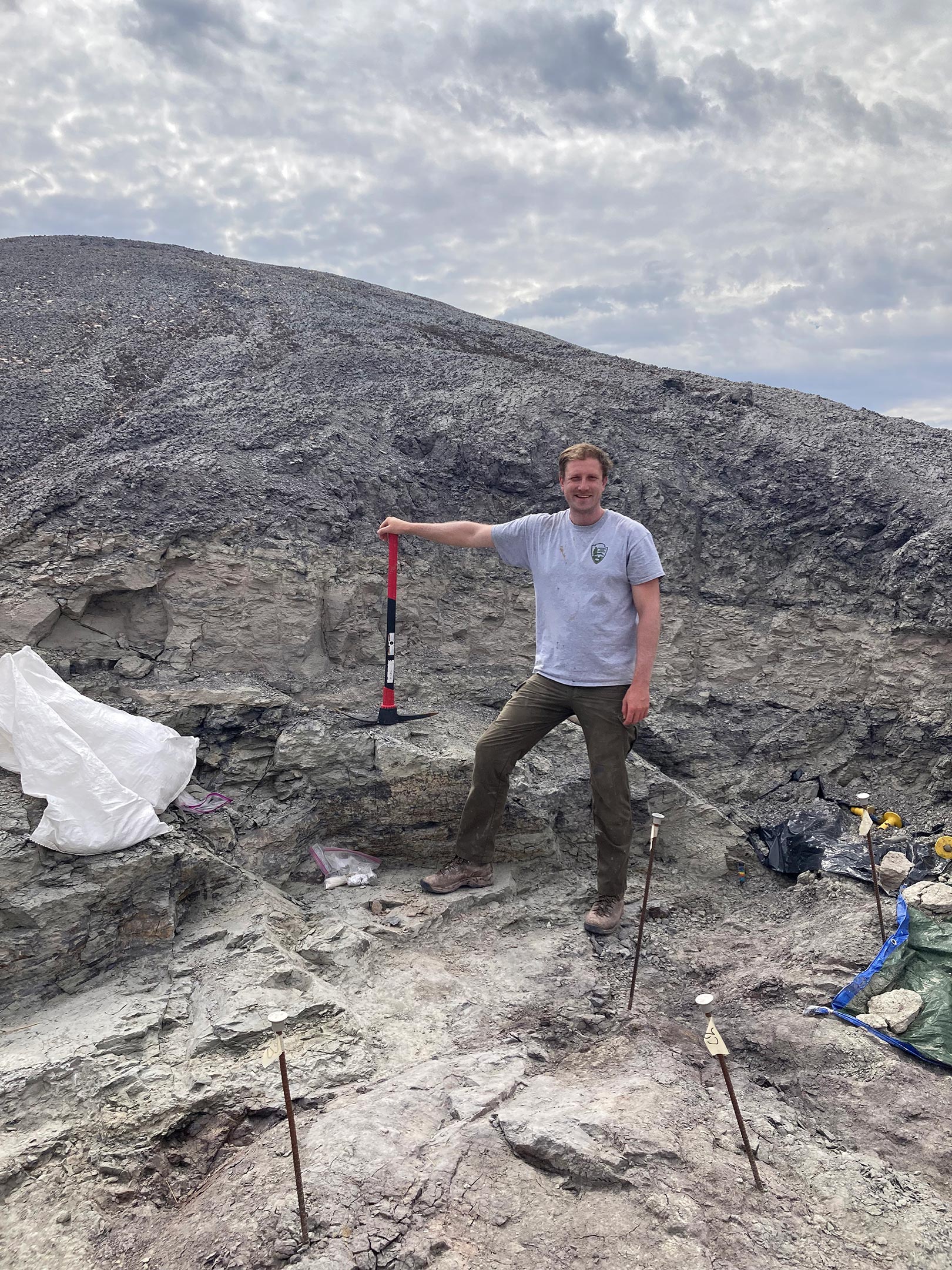
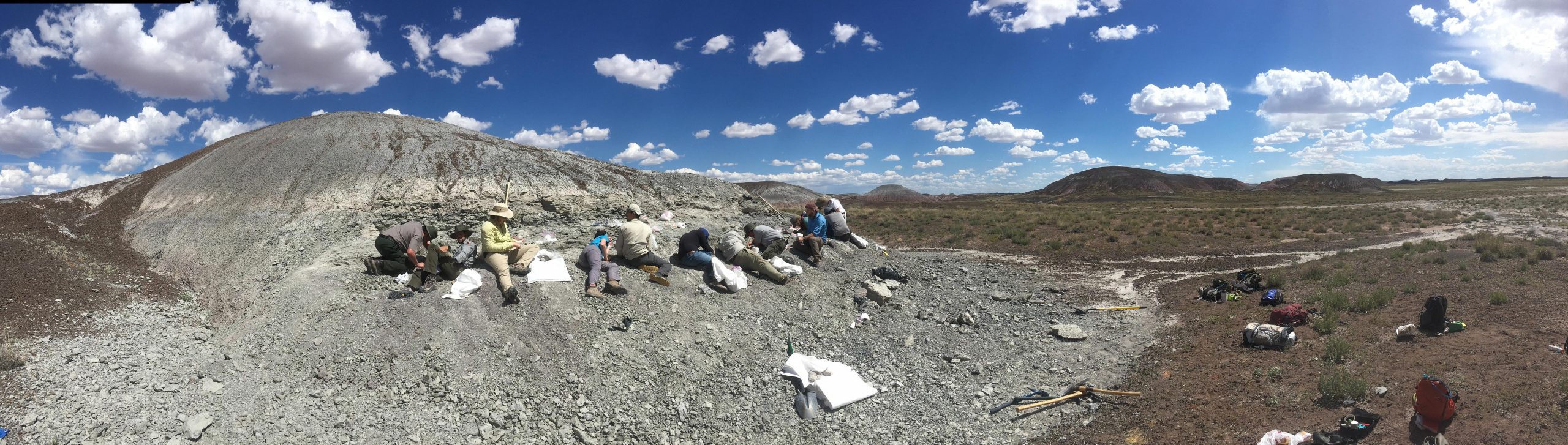
The discovery of the fossils was made in 2019 by Kligman and Petrified Forest National Park student intern Xavier Jenkins, now a Ph.D. student at Idaho State University, while the duo was processing fossiliferous sediment from the park’s nicknamed Thunderstorm Ridge via a microscope. Funcusvermis was found in a layer of the Chinle Formation dated to approximately 220 million years ago, when Arizona was positioned near the equator at the central part of the supercontinent Pangaea, Kligman said. This region at the time was subject to a hot, humid climate. Today, Arizona is still hot, but has low humidity.
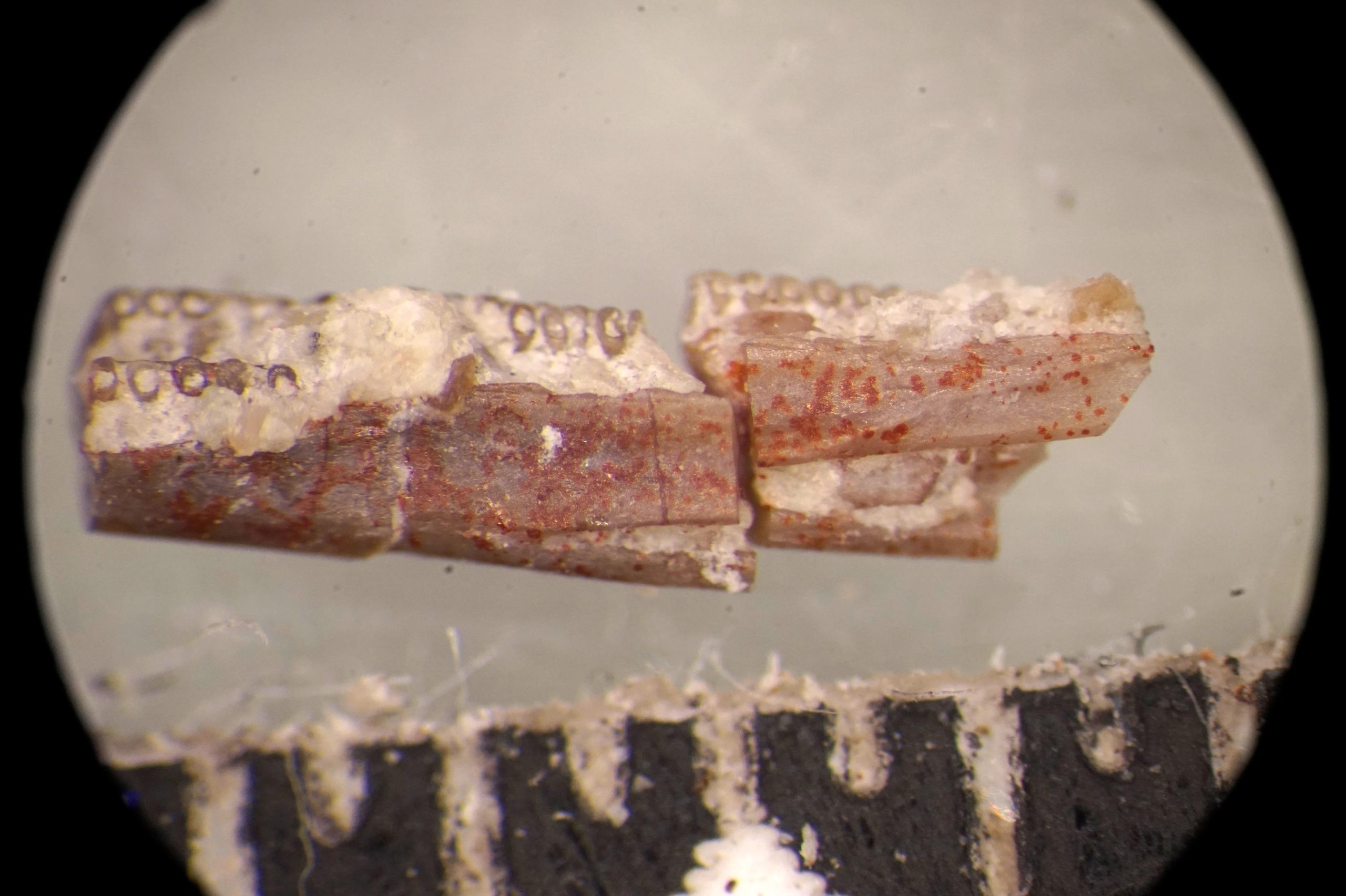
“Seeing the first jaw under the microscope, with its distinctive double row of teeth, sent chills down my back,” Kligman said. “We immediately knew it was a caecilian, the oldest caecilian fossil ever found, and a once-in-a-lifetime discovery.”
Previous to this find, the 87-million-year gap in the fossil record hid the early evolutionary history of caecilians, leading to a decades-long debate amongst scientists over the relationships of caecilians to their amphibian relatives, frogs and salamanders.
“Funcusvermis extends the humid equatorial pattern of occurrence seen in all known fossil and living caecilians, suggesting that the biogeographic history of caecilians has been guided by restriction to these ecological settings, likely due to physiological constraints linked to humidity, and constrained by the drift of continental plates into and out of the humid-equatorial zone after the fragmentation of Pangaea,” Kligman said.
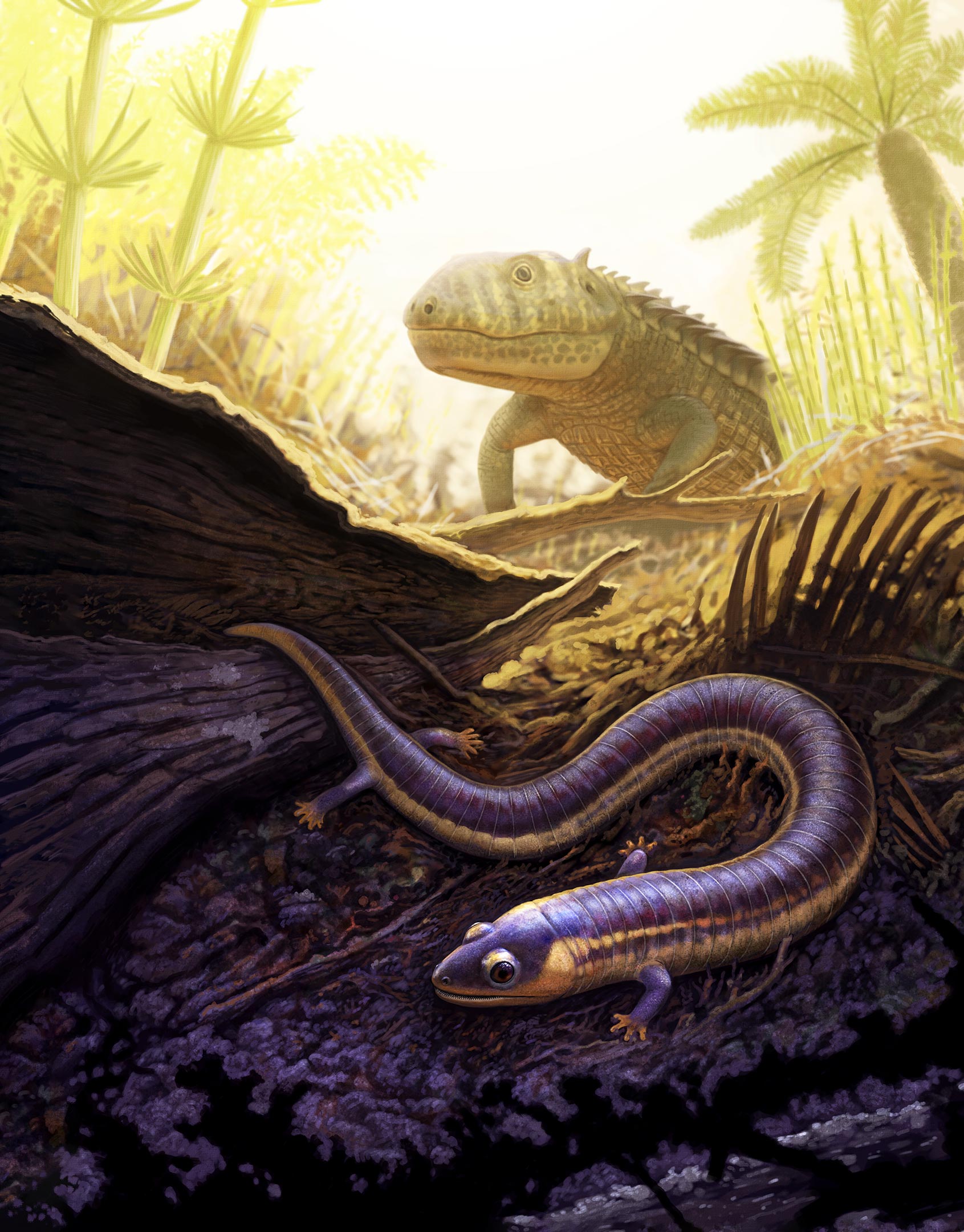
Modern caecilians are limbless amphibians with cylindrical bodies with a compact, bullet-shaped skull that helps them burrow underground. Now exclusively home to South and Central America, Africa, and southern Asia, caecilians spend their lives burrowing in leaf-litter or soil searching for prey such as worms and insects. This underground existence has made studying caecilians difficult for scientists. Kligman, tongue in cheek, describes modern caecilians as an “eyeless sock puppet with the body of a worm.”
Funcusvermis actually shares skeletal features related more with early frog and salamander fossils, strengthening evidence for a shared origin and close evolutionary relationship between caecilians and these two groups. Funcusvermis also shares skeletal features with an ancient group of amphibians known to paleontologists as dissorophoid temnospondyls. Kligman adds, “Unlike living caecilians, Funcusvermis lacks many adaptations associated with burrowing underground, indicating a slower acquisition of features associated with an underground lifestyle in the early stages of caecilian evolution.”
Name That Tune
Now, here’s the fun part: The genus name ‘Funcusvermis’ was inspired by the Ohio Players’ 1972 song “Funky Worm” from their album Pleasure, a favorite song of the authors that was often played while excavating fossils at Thunderstorm Ridge. ‘Funcus’ is derived from the Latinized form of the English word Funky for the upbeat, rhythmic form of dance music, while ‘vermis’ is derived from the Latin word for worm. (It’s an excellent song, by the way. Instant earworm, so to speak.)
The species name, gilmorei, honors Ned Gilmore, the collections manager at the Academy of Natural Sciences of Philadelphia’s Drexel University. (Kligman is from Philadelphia and volunteered with Gilmore’s herpetology wet collection as an undergraduate student. “He was an important mentor who helped inspire my interest in fossils and amphibians,” Kligman said.)
Co-authors on the study include Michelle Stocker, an assistant professor, and Sterling Nesbitt, an associate professor, in the Virginia Tech Department of Geosciences and members of the Global Change Center that is part of the Fralin Life Sciences Institute. Other authors include Adam Marsh, lead paleontologist; Matthew Smith, museum curator; and William Parker, chief of science and resource management, all at the Petrified Forest National Park; and Bryan Gee, postdoctoral fellow at the University of Washington’s Burke Museum and Department of Biology.
“As the eponymous song says, it’s the funkiest worm in the world,” Marsh quipped.
Stocker added, “What we collect really determines what we can say about which animals that were present, how many of them there were, and what they looked like. Without using these methods for fossil collection and analysis we would be missing out on knowing so many important aspects of this Triassic ecosystem. Now that we have a search image of what bones to look for and how to look for them, it will be exciting to see what other fossil localities preserve these early lissamphibians.”
Nesbitt said finds such as this can reset the game board on paleontology, in the best sense of the phrase. “This find clearly demonstrates that some fossils that you can barely see can greatly change our understanding of entire groups that you can see today,” he said.
What’s Happened Since 2019
At the Petrified Forest National Park, where the initial discovery was found in 2019, the lower jaws of at least 70 individuals of Funcusvermis have been recovered as of summer 2022, making the area “the most abundant fossil caecilian-producing bonebed ever discovered,” Kligman said.
Only a handful of bones of Funcusvermis have been found, including upper and lower jaws, a vertebra, and part of a hind-limb, Kligman said. All of the found bones were disarticulated, not as complete skeletons. Without complete skeletons, Kligman and his fellow researchers cannot exactly determine the body length of Funcusvermis, but inferences from isolated elements, such as the lower jaw being less than a quarter of an inch long, indicate that Funcusvermis was a tiny animal.
“Since its discovery in 2017, the Thunderstorm Ridge site has produced a diverse assemblage of over 60 animals ranging from freshwater sharks to dinosaurs,” Kligman said. “Several other new species discovered at this site have been recently described. Many other new species from this site are currently under study and will be published in upcoming years.”
In other words, fully expect more upending of what paleontologists know about the history of fossils.
Reference: “Triassic stem caecilian supports dissorophoid origin of living amphibians” by Ben T. Kligman, Bryan M. Gee, Adam D. Marsh, Sterling J. Nesbitt, Matthew E. Smith, William G. Parker and Michelle R. Stocker, 25 January 2023, Nature.
DOI: 10.1038/s41586-022-05646-5
Never miss a breakthrough: Join the SciTechDaily newsletter.
Follow us on Google and Google News.