
A new electrochemical test can recover fingerprints from fired ammunition, even after extreme heat exposure. The method could greatly expand forensic capabilities.
A groundbreaking technique that can recover fingerprints from fired ammunition casings—something long considered nearly impossible—has been created by two scientists in Ireland.
Dr. Eithne Dempsey and her former PhD student, Dr. Colm McKeever, from the Department of Chemistry at Maynooth University, developed an innovative electrochemical approach that can reveal fingerprints on brass casings even after they have been subjected to the extreme heat generated when a gun is fired.
For decades, forensic experts have faced major challenges in retrieving usable prints from firearms because the high temperatures, friction, and gases produced during firing typically destroy any biological traces. As a result, offenders have often felt confident that leaving behind casings would not link them to a crime scene.
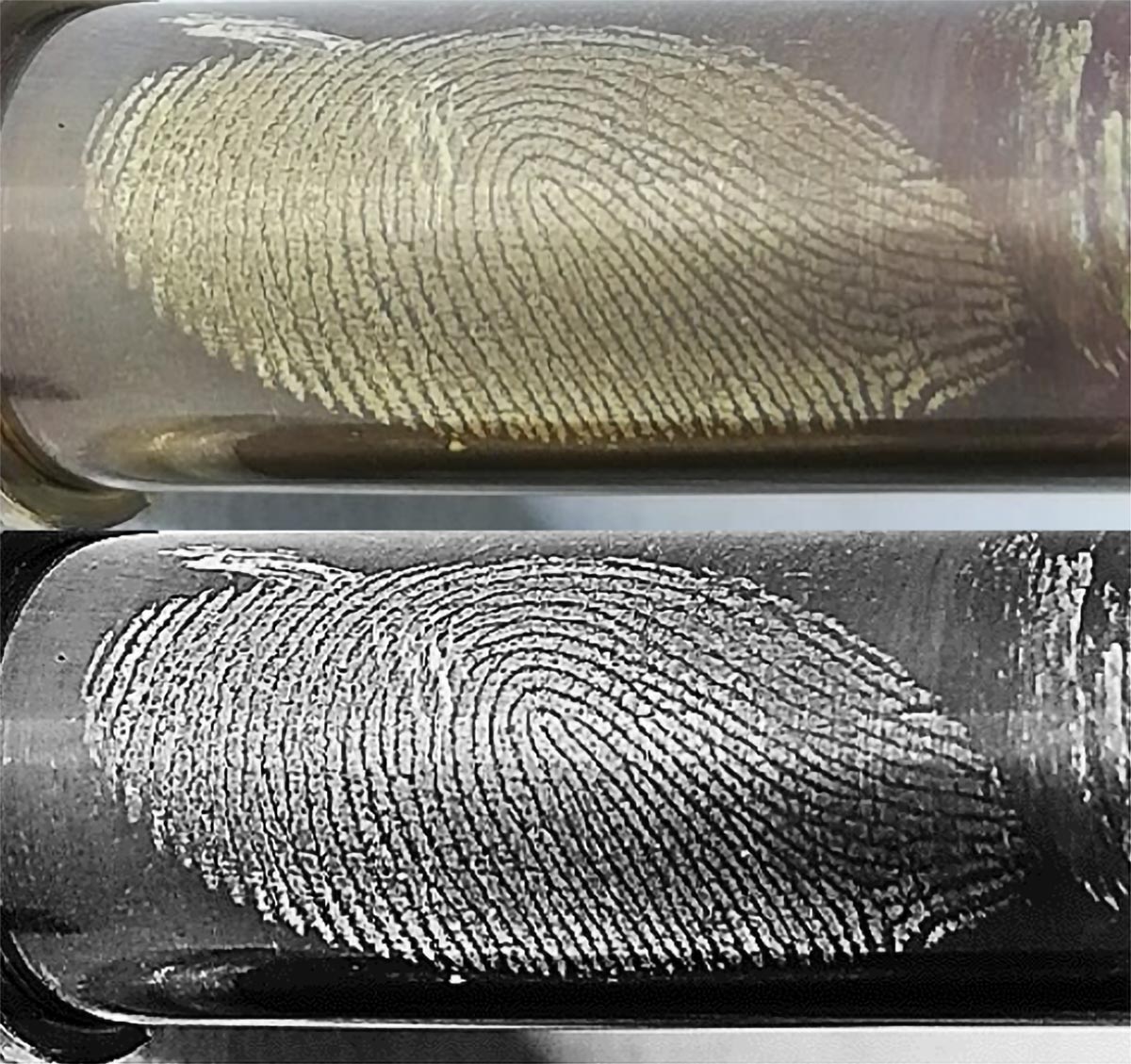
“The Holy Grail in forensic investigation has always been retrieving prints from fired ammunition casings,” said Dr. Dempsey. “Traditionally, the intense heat of firing destroys any biological residue. However, our technique has been able to reveal fingerprint ridges that would otherwise remain imperceptible.”
How the electrochemical method works
The researchers discovered that by coating brass casings with a thin layer of specialized materials, they could expose hidden fingerprint ridges. Unlike traditional methods that rely on harsh chemicals or complex equipment, this new technique uses safe, easily accessible polymers and very little energy to produce visible prints within seconds.

The process involves immersing the casing in an electrochemical cell containing specific chemical compounds. When a small voltage is applied, the chemicals in the solution are drawn to the surface, depositing material between the fingerprint ridges and forming a sharp, high-contrast image. The print emerges rapidly, appearing almost instantly as if by magic.
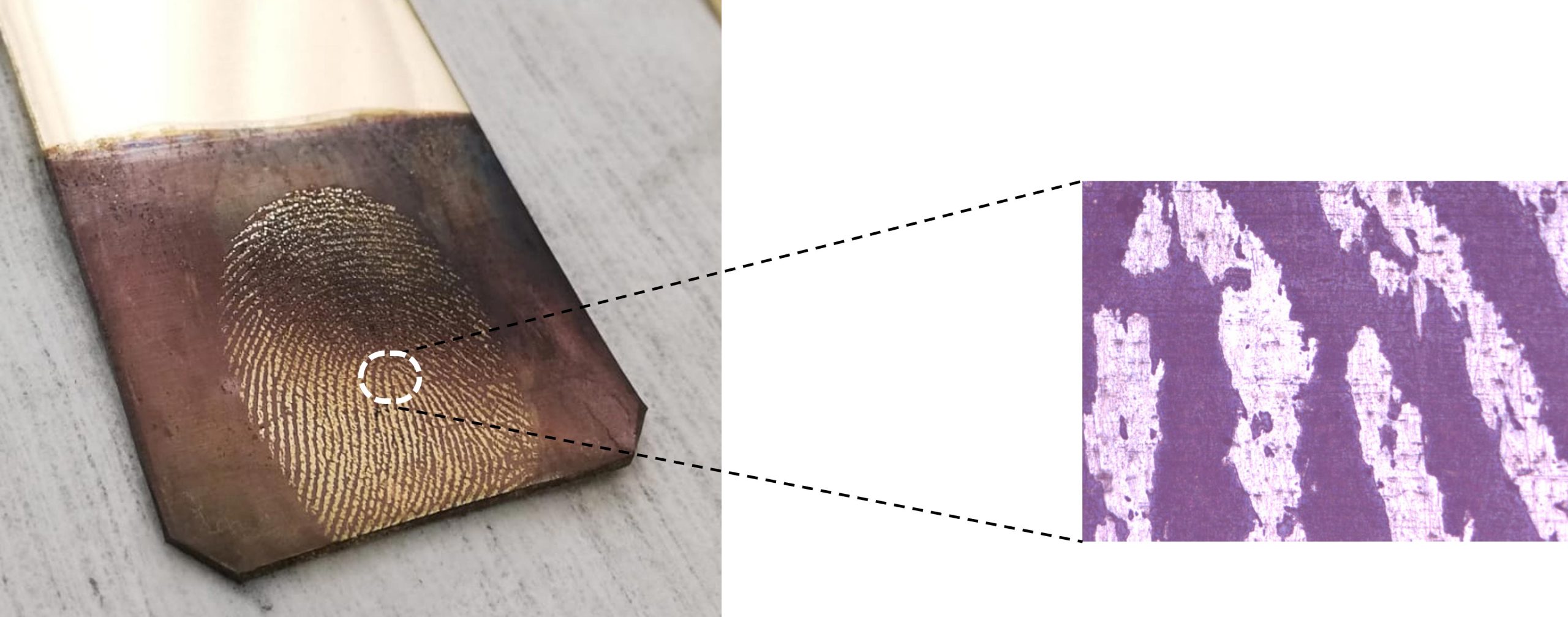
“Using the burnt material that remains on the surface of the casing as a stencil, we can deposit specific materials in between the gaps, allowing for the visualization,” said Dr. McKeever.
Tests showed that this technique also worked on samples aged up to 16 months, demonstrating remarkable durability.
Transforming forensic identification and investigation
The research has significant implications for criminal investigations, where the current assumption is that firing a gun eliminates fingerprint residues on casings.
“Currently, the best case of forensic analysis of ammunition casings is to match it to the gun that fired it,” said Dr. McKeever. “But we hope a method like this could match it back to the actual person who loaded the gun.”
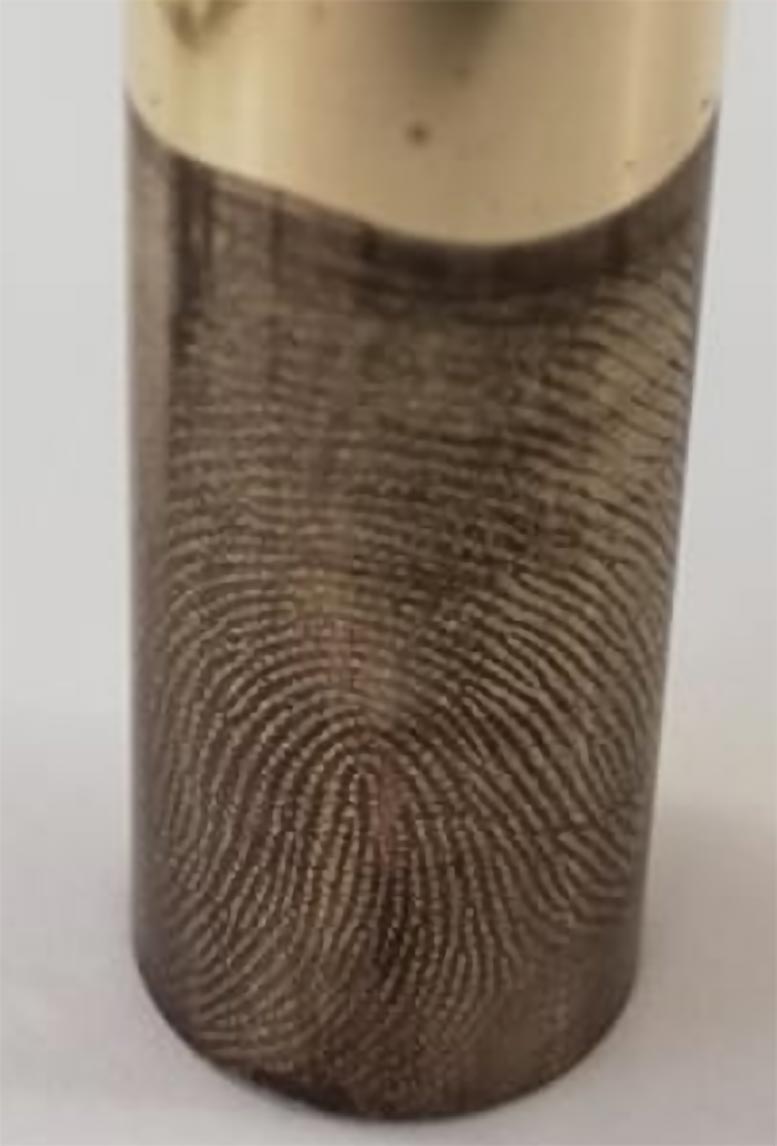
The team focused specifically on brass ammunition casings, a substance that has been traditionally resistant to fingerprint detection and is the most common type of material used globally.
The researchers believe that the test for fingerprints on brass they have developed could be adapted for other metallic surfaces, expanding its range of potential forensic applications, from firearm-related crimes to arson.
Toward portable forensic technology
This technique uses a device called a potentiostat, which controls voltage and can be as portable as a mobile phone, making it possible to create a compact forensic testing kit.
“With this method, we have turned the ammunition casing into an electrode, allowing us to drive chemical reactions at the surface of the casing,” said Dr. McKeever.
While promising, the new technology faces rigorous testing and validation before it could potentially be adopted by law enforcement agencies worldwide
Reference: “Electrodeposition of redox materials with potential for enhanced visualisation of latent finger-marks on brass substrates and ammunition casings,” by Colm McKeever and Eithne Dempsey, 19 April 2025, Forensic Chemistry.
DOI: 10.1016/j.forc.2025.100663
The authors would like to acknowledge the Dept. Chemistry PhD Teaching Fellowship, Maynooth University and Irish Research Council PhD Scholarship GOIPG/2021/250 for funding this work.
Never miss a breakthrough: Join the SciTechDaily newsletter.
Follow us on Google and Google News.
4 Comments
Rarely are fired shell cases hot enough to destroy fingerprints.
Bottle of alcohol from a pharmacy rubber gloves from a dollar tree cotton balls wipe down the brass before you load the gun no finger prints and no DNA
I always thought they could recover finger prints from shell casings.
Check the bain cartridges the old man loaded that magazines from the Mark’s on his thumb