
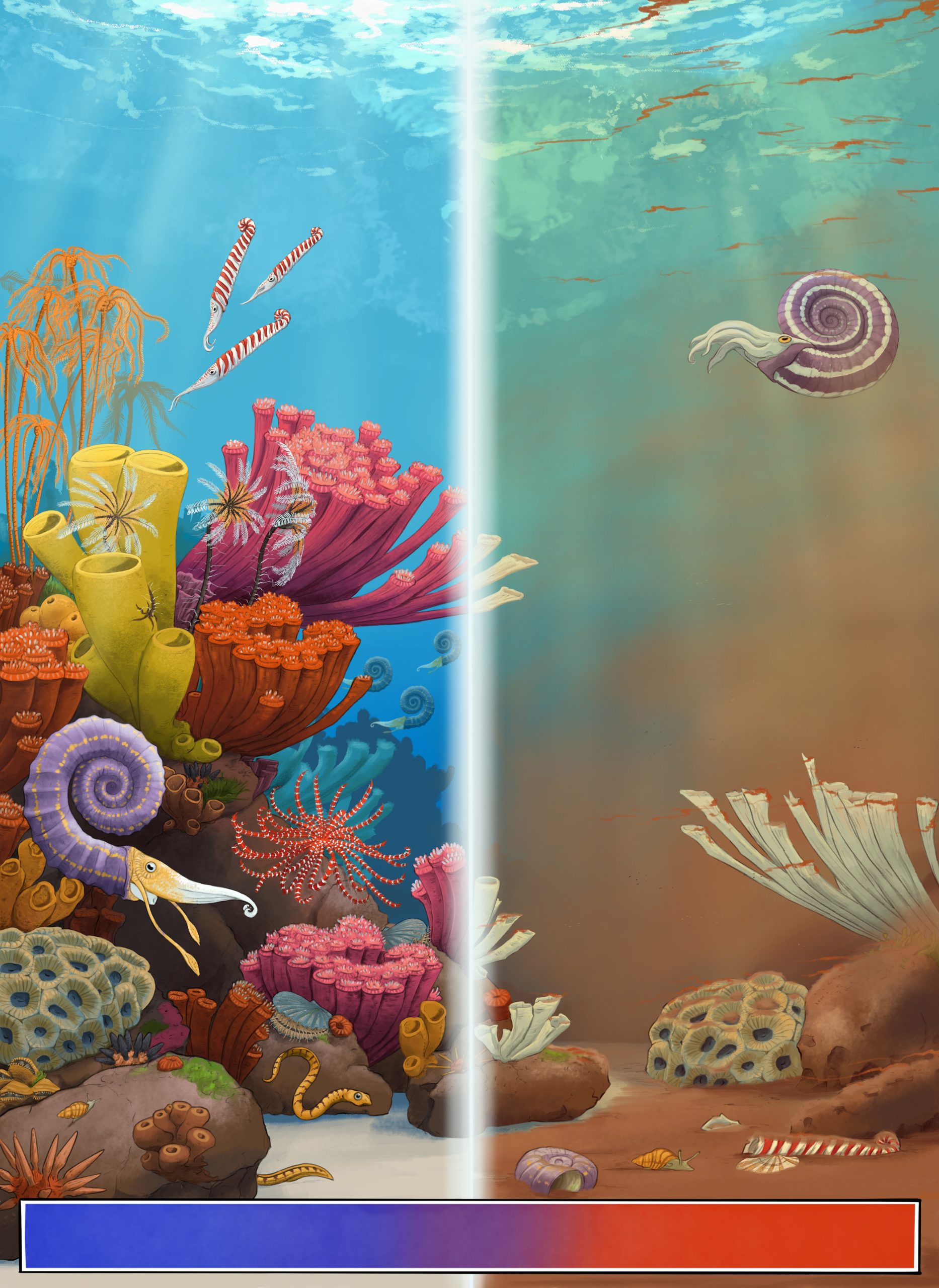
A recent study has leveraged the fossil record to gain insights into the characteristics that render animals more susceptible to extinction due to climate change. This research aims to pinpoint the species currently most endangered by anthropogenic climate change. The findings have recently been published in the journal Science.
Past climate change (often caused by natural changes in greenhouse gases due to volcanic activity) has been responsible for countless species’ extinctions during the history of life on Earth. But, to date, it has not been clear what factors cause species to be more or less resilient to such change, and how the magnitude of climate change affects extinction risk.
Led by researchers at the University of Oxford, this new study sought to answer this question by analyzing the fossil record for marine invertebrates (such as sea urchins, snails, and shellfish) over the past 485 million years. Marine invertebrates have a rich and well-studied fossil record, making it possible to identify when, and potentially why, species become extinct.
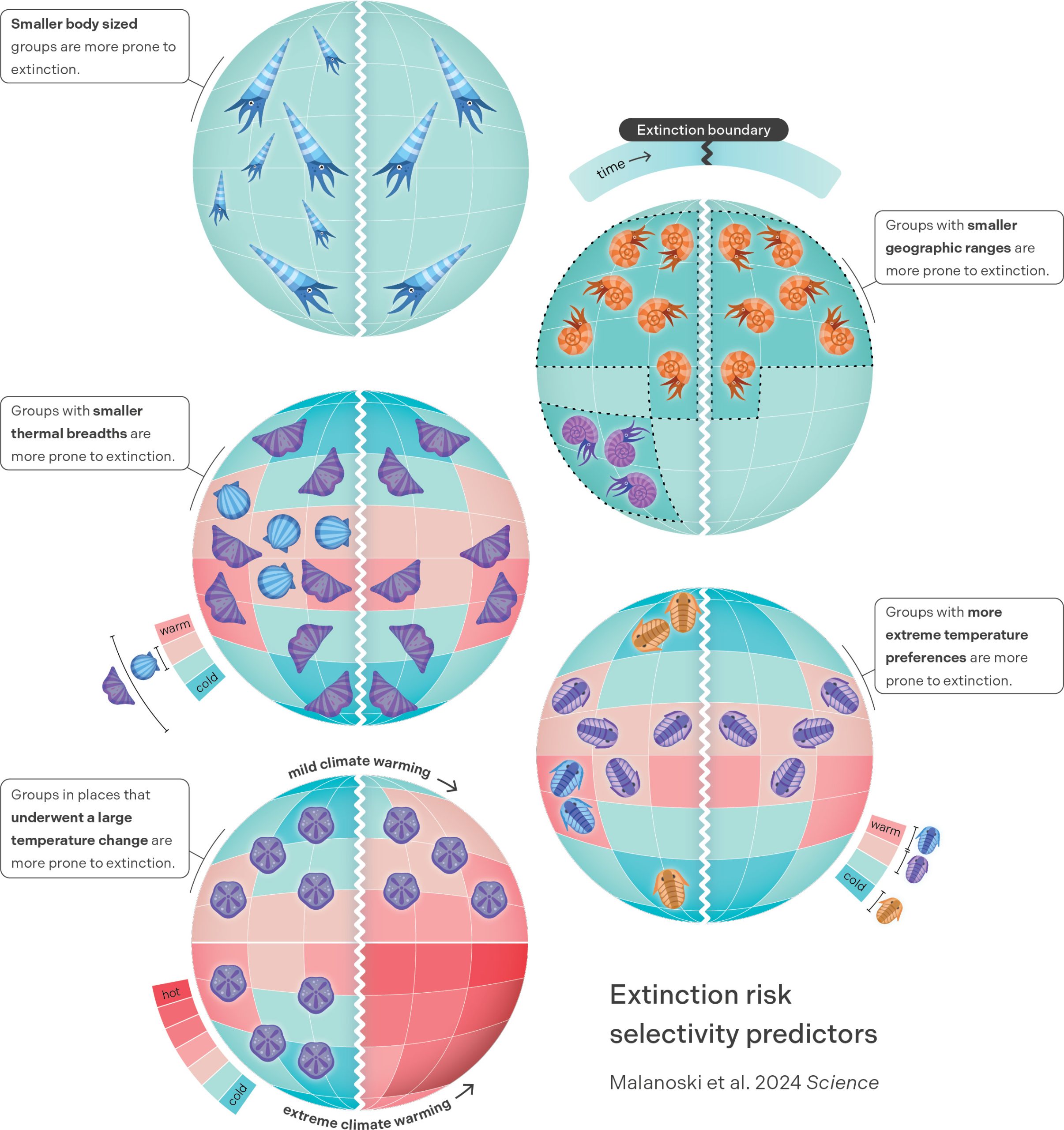
Using over 290,000 fossil records covering more than 9,200 genera, the researchers collated a dataset of key traits that may affect resilience to extinction, including traits not studied in depth previously, such as preferred temperature. This trait information was integrated with climate simulation data to develop a model to understand which factors were most important in determining the risk of extinction during climate change.
Key findings:
- The authors found that species exposed to greater climate change were more likely to become extinct. In particular, species that experienced temperature changes of 7°C or more across geological stages were significantly more vulnerable to extinction.
- The authors also found that species occupying climatic extremes (for instance in polar regions) were disproportionately vulnerable to extinction, and animals that could only live in a narrow range of temperatures (especially ranges less than 15°C) were significantly more likely to become extinct.
- However, geographic range size was the strongest predictor of extinction risk. Species with larger geographic ranges were significantly less likely to go extinct. Body size was also important, with smaller-bodied species more likely to become extinct.
- All of the traits studied had a cumulative impact on extinction risk. For instance, species with both small geographic ranges and narrow thermal ranges were even more susceptible to extinction than species that had only one of these traits.
Cooper Malanoski (Department of Earth Sciences, University of Oxford), first author of the study, said: ‘Our study revealed that geographic range was the strongest predictor of extinction risk for marine invertebrates, but that the magnitude of climate change is also an important predictor of extinction, which has implications for biodiversity today in the face of climate change.’
With current human-driven climate change already pushing many species up to and beyond the brink of extinction, these results could help identify the animals that are most at risk, and inform strategies to protect them.
Lead author Professor Erin Saupe (Department of Earth Sciences, University of Oxford) said: ‘The evidence from the geological past suggests that global biodiversity faces a harrowing future, given projected climate change estimates. In particular, our model suggests that species with restricted thermal ranges of less than 15°C, living in the poles or tropics, are likely to be at the greatest risk of extinction. However, if the localized climate change is large enough, it could lead to significant extinction globally, potentially pushing us closer to a sixth mass extinction.’
According to the research team, future work should explore how climate change interacts with other potential drivers of extinction, such as ocean acidification and anoxia (where seawater becomes depleted of oxygen).
The study also involved researchers from the School of Geographical Sciences, University of Bristol. Professor Dan Lunt, from the University of Bristol, said: ‘This study shows that over the course of Earth’s history, the extinction risk of marine life has been inextricably linked to climate change. This should act as a stark warning to humanity as we recklessly continue to cause climate change ourselves through burning fossil fuels.’
Reference: “Climate change is an important predictor of extinction risk on macroevolutionary timescales” by Cooper M. Malanoski, Alex Farnsworth, Daniel J. Lunt, Paul J. Valdes and Erin E. Saupe, 7 March 2024, Science.
DOI: 10.1126/science.adj5763
Never miss a breakthrough: Join the SciTechDaily newsletter.
Follow us on Google and Google News.