
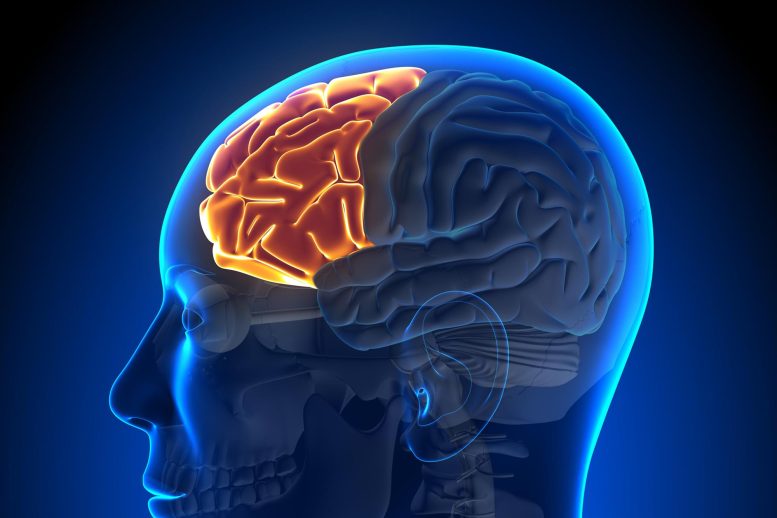
Researchers find a link between reduced grey matter in specific brain areas and the inclination to start smoking during adolescence, potentially escalating nicotine addiction.
A recent study has revealed that the levels of grey matter in two areas of the brain might be associated with an inclination to start smoking during adolescence and the strengthening of nicotine addiction.
Conducted by researchers from the universities of Cambridge and Warwick in the UK and Fudan University in China, the scientists analyzed brain imaging and behavioral data from over 800 youths aged 14, 19, and 23. Results showed that teenagers who began smoking by the age of 14 had notably reduced grey matter in a part of the left frontal lobe associated with decision-making and rule-breaking.
Grey Matter and Its Implications
Grey matter is the brain tissue that processes information, and contains all of the organ’s neurons. Its growth peaks before adolescence, even though brain development persists into adulthood.
Researchers suggest that a diminished volume of grey matter in the left side of the ventromedial prefrontal cortex could serve as an “inheritable biomarker” for nicotine dependence, offering insights for prevention and treatment.
Additionally, it was discovered that the opposite, right part of this brain region also exhibited reduced grey matter among smokers. Interestingly, the decline in grey matter in the right prefrontal cortex seems to accelerate only after the initiation of smoking. This region is linked to the seeking of sensations.
Behavioral Impact and Substance Use
The team argues hypothesizes that the decreased grey matter in the left forebrain could lower cognitive function and lead to “disinhibition”: impulsive, rule-breaking behavior arising from a limited ability to consider consequences. This may increase the chances of smoking at a young age.
Once a nicotine habit takes hold, grey matter in the right frontal lobe shrinks, which may weaken control over smoking by affecting “hedonic motivation”: the way pleasure is sought and managed. Excessive loss of grey matter in the right brain was also linked to binge drinking and marijuana use.
Taken together, the findings point to a damaged “neurobehavioural mechanism” that can lead to nicotine use starting early and becoming locked into long-term addiction, say researchers. The study used data from the IMAGEN project and is published today (August 15) in the journal Nature Communications.
Importance of Findings
“Smoking is perhaps the most common addictive behavior in the world, and a leading cause of adult mortality,” said Prof Trevor Robbins, co-senior author from Cambridge’s Department of Psychology.
“The initiation of a smoking habit is most likely to occur during adolescence. Any way of detecting an increased chance of this, so we can target interventions, could help save millions of lives.”
Annual deaths from cigarettes are expected to reach eight million worldwide by the end of the decade. Currently, one in five adult deaths each year is attributed to smoking in the US alone.
“In our study, reduced grey matter in the left prefrontal cortex is associated with increased rule-breaking behavior as well as early smoking experiences. It could be that this rule-breaking leads to the violation of anti-smoking norms,” said Robbins.
Co-author Prof Barbara Sahakian from Cambridge’s Department of Psychiatry said: “The ventromedial prefrontal cortex is a key region for dopamine, the brain’s pleasure chemical. As well as a role in rewarding experiences, dopamine has long been believed to affect self-control.
“Less grey matter across this brain region may limit cognitive function, leading to lower self-control and a propensity for risky behavior, such as smoking.”
Study Insights and Conclusions
The study used data gathered by the IMAGEN project from sites in four European countries: UK, Germany, France, and Ireland. The researchers compared brain imaging data for those who had smoked by age 14 with those who had not, and repeated this for the same participants at ages 19 and 23.
Those with smoking experience by 14 years of age had significantly less grey matter in the left prefrontal cortex, on average. Additionally, those who started smoking by age 19 also had less grey matter in their left prefrontal cortex at 14, indicating a potential causal influence.
The scientists also looked at the right ventromedial prefrontal cortex. Grey matter loss occurs in everyone as they age. However, those who smoked from age 14 as well as those smoking from age 19 both ended up with excessive grey matter loss in the right frontal lobe.
For the right prefrontal cortex, 19-year-old smokers who did not start during adolescence had similar grey matter levels at age 14 to those who never smoked at all. This suggests a rapid reduction in the right ventromedial prefrontal cortex only begins with the onset of smoking.
Data at age 23 showed that grey matter volume in the right prefrontal cortex shrank at a faster pace in those who continued to smoke, suggesting an influence of smoking itself on prefrontal function.
Researchers also analyzed data from two questionnaires completed by participants to investigate the personality traits of novelty seeking and sensation seeking.
“Both questionnaires examine the pursuit of thrilling experiences, but they measure distinct behaviors,” said Robbins. “The sensation seeking scale focuses on pleasurable experiences, while the novelty-seeking questionnaire includes items on impulsiveness and rule-breaking.”
Less grey matter in the left prefrontal cortex was associated with novelty seeking, particularly disorderly and rule-breaking behavior, while reduced grey matter volume in the right prefrontal cortex was linked to sensation seeking only.
Lead author Prof Tianye Jia from Fudan University added: “Less grey matter in the left frontal lobes is linked to behaviors that increase the likelihood of smoking in adolescence.
“Smokers then experience excessive loss of grey matter in the right frontal lobes, which is linked to behaviors that reinforce substance use. This may provide a causal account of how smoking is initiated in young people, and how it turns into dependence.”
Reference: “Association between vmPFC gray matter volume and smoking initiation in adolescents” by Shitong Xiang, Tianye Jia, Chao Xie, Wei Cheng, Bader Chaarani, Tobias Banaschewski, Gareth J. Barker, Arun L. W. Bokde, Christian Büchel, Sylvane Desrivières, Herta Flor, Antoine Grigis, Penny A. Gowland, Rüdiger Brühl, Jean-Luc Martinot, Marie-Laure Paillère Martinot, Frauke Nees, Dimitri Papadopoulos Orfanos, Luise Poustka, Sarah Hohmann, Juliane H. Fröhner, Michael N. Smolka, Nilakshi Vaidya, Henrik Walter, Robert Whelan, Hugh Garavan, Gunter Schumann, Barbara J. Sahakian, Trevor W. Robbins, Jianfeng Feng and IMAGEN Consortium, 15 August 2023, Nature Communications.
DOI: 10.1038/s41467-023-40079-2
Never miss a breakthrough: Join the SciTechDaily newsletter.
Follow us on Google and Google News.
1 Comment
Are they seriously suggesting that brain damage causes smoking?
Interpreting research this way is dangerous, clinicalizing people’s choices then judging them physically and mentally inferior. People’s brains are different, sometimes leading to sub-optimal choices, and that freedom is a good thing — diversity, remember? The Cambridge and Warwick researchers should scan their own brains for authoritarian eugenicist inclinations, or at least consider why China’s universities are working with them.