
Close Menu
    Facebook X (Twitter) Instagram
    SciTechDaily
    • Biology
    • Chemistry
    • Earth
    • Health
    • Physics
    • Science
    • Space
    • Technology
    Facebook X (Twitter) Pinterest YouTube RSS
    SciTechDaily
    Home»Chemistry»From Plastic to Pure Water: Scientists Turn Trash Into a Super Catalyst
    Chemistry

    From Plastic to Pure Water: Scientists Turn Trash Into a Super Catalyst

    By Nagoya Institute of TechnologyNovember 13, 2025No Comments3 Mins Read
    Facebook Twitter Pinterest Telegram LinkedIn WhatsApp Email Reddit
    Share
    Facebook Twitter LinkedIn Pinterest Telegram Email Reddit
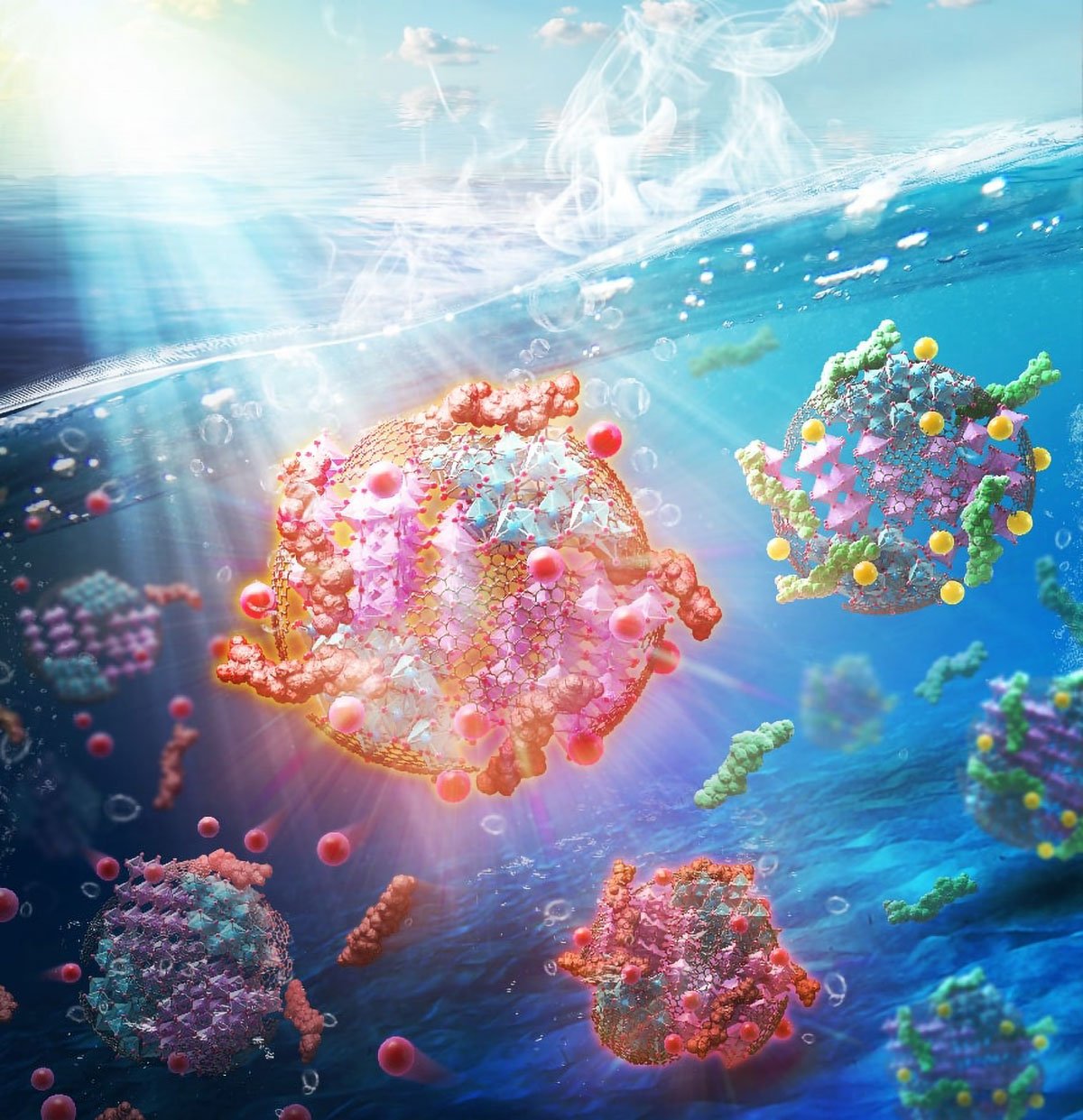
    Multifunctional Composite Catalysts for Highly Efficient Water Remediation
    These novel hydrogen molybdenum bronze-molybdenum dioxide/carbon composite particles exhibit exceptional photothermal interface evaporation rate, wide-spectrum photocatalytic activity for the elimination of water pollutants, and sufficient adsorption capacities for heavy metal ions even in darkness. They could form the basis of large-scale, affordable water remediation technologies. Credit: Takashi Shirai from Nagoya Institute of Technology

    An optimized mechanochemical process produces multifunctional composite particles that remove pollutants from water.

    Scientists are increasingly turning to sunlight as a powerful ally in cleaning up polluted water. Photocatalysts can harness solar energy to break down harmful contaminants, while photothermal evaporation uses that same energy to rapidly heat and vaporize dirty water, which then condenses into clean, drinkable liquid. Despite their promise, both methods often rely on expensive or difficult-to-manufacture materials that limit their large-scale use. This has sparked a global effort to create a single, affordable, and efficient material capable of performing multiple purification tasks—ideally one made from resources that would otherwise go to waste.

    In a groundbreaking development, researchers at the Nagoya Institute of Technology (NITech) in Japan have found a way to turn common plastic waste into a powerful new tool for producing clean water. Led by Associate Professor Takashi Shirai, the team—consisting of Dr. Kunihiko Kato, Dr. Yunzi Xin, and Mr. Yuping Xu—has created multifunctional composite particles that can both purify and desalinate water using sunlight.

    Their work was recently published in ACS Applied Materials & Interfaces.

    Mechanochemical Synthesis Using a Planetary Ball Mill

    To create this innovative material, the researchers used a planetary ball mill and carefully optimized the milling process. They began with a simple mixture of molybdenum trioxide (MoO3) and polypropylene, a common plastic found in packaging and household goods.

    Through precise mechanical processing, they converted this waste-derived mixture into composite particles containing hydrogen molybdenum bronze (HxMoO3–y), molybdenum dioxide (MoO2), and activated carbon—materials that work together to capture sunlight and drive multiple purification reactions.

    “The proposed mechanochemical process surpasses other current approaches in terms of both energy efficiency and cost-effectiveness,” highlights Dr. Shirai.

    Through extensive experimentation, the research team demonstrated the many remarkable capabilities of their composites. First, these particles exhibited broad light absorption over the entire near-infrared–visible–ultraviolet range, allowing the photocatalytic degradation of a model organic pollutant. Interestingly, the composites also functioned as Brønsted acid catalysts and removed water pollutants even in the absence of light.

    Harnessing Plasmonic and Photothermal Effects

    Additionally, the proposed catalyst exhibited plasmonic properties leading to a marked photothermal effect that enabled rapid heating using sunlight. This could be leveraged to drive the fast evaporation of water with exceptional photothermal conversion efficiency. Finally, oxygen-containing carbons that remained as milling byproducts could adsorb and remove heavy metal ions from wastewater.

    The research team plans to refine their ball milling process to produce similar all-in-one catalysts for water remediation and other applications. “Our developed technology has the potential to be applied to a wide range of oxides and plastics, and we anticipate that it will have varied applications, including enhancing the functionality of existing materials and upcycling waste plastics, to secure the availability of drinking water,” concludes Dr. Shirai.

    Reference: “Multifunctional HxMoO3–y–MoO2/Carbon Composite Particles for Water Remediation” by Kunihiko Kato, Yunzi Xin, Yuping Xu and Takashi Shirai, 1 October 2024, ACS Applied Materials & Interfaces.
    DOI: 10.1021/acsami.4c09169

    Never miss a breakthrough: Join the SciTechDaily newsletter.
    Follow us on Google and Google News.

    Catalysts Materials Science Nagoya University Renewable Energy
    Share. Facebook Twitter Pinterest LinkedIn Email Reddit

    Related Articles

    Researchers Discover Efficient New Way To Split Hydrogen From Water for Energy

    Korean Scientists Develop World’s Most Efficient Hydrogen Catalyst Using 1/3 the Precious Metal

    Breakthrough: Catalyzing a Zero-Carbon World by Harvesting Energy From Living Cells

    New Catalyst Promotes Carbon Dioxide Conversion into Fuels

    Nanocatalyst Tolerates Carbon Monoxide in Fuel Cells, Transforms Impure Hydrogen into Electricity

    Researchers Identify a New Form of Carbon: Grossly Warped ‘Nanographene’

    Dempsey’s Mechanism, Pathway that Catalysts Use to Generate Hydrogen

    Scientists Examine Platinum-Based Catalyst Design

    Using X-Ray Imaging to Help Improve Lithium-Sulfur Battery Technology

    Leave A Reply Cancel Reply

    • Facebook
    • Twitter
    • Pinterest
    • YouTube

    Don't Miss a Discovery

    Subscribe for the Latest in Science & Tech!

    Trending News

    Breakthrough Parkinson’s Drug Targets Disease at Its Genetic Roots

    Just 4 Weeks of Simple Diet Changes Reversed Signs of Aging in Older Adults

    Scientists May Have Finally Solved Why Humans Are Right-Handed

    NASA’s Hubble Accidentally Witnesses a Comet Shattering in Space

    Researchers Discover the Body’s Hidden “Off Switch” for Inflammation

    Scientists Discover Metformin Doesn’t Work the Way We Thought

    Tea or Coffee? Your Daily Choice Could Affect Osteoporosis Risk

    Vitamin C May Fight Cancer in a Surprising Way

    Follow SciTechDaily
    • Facebook
    • Twitter
    • YouTube
    • Pinterest
    • Newsletter
    • RSS
    SciTech News
    • Biology News
    • Chemistry News
    • Earth News
    • Health News
    • Physics News
    • Science News
    • Space News
    • Technology News
    Recent Posts
    • Scientists Unravel the Mystery of Angola’s Giant “Ghost Elephants”
    • Ancient DNA Shatters the Simple Story of Europe’s Origins
    • Scientists Say a 59,000-Year-Old Neanderthal Tooth Shows Evidence of Surgery
    • Scientists Stunned by Hybrid California Bees That Beat Deadly Mites
    • Scientists Discover Terrifying Giant Crocodile That Hunted Human Ancestors
    Copyright © 1998 - 2026 SciTechDaily. All Rights Reserved.
    • Science News
    • About
    • Contact
    • Editorial Board
    • Privacy Policy
    • Terms of Use

    Type above and press Enter to search. Press Esc to cancel.