

University of Illinois researchers turned waste pomelo peels into self-powered devices that generate electricity and monitor body movements, offering sustainable solutions for energy harvesting and healthcare.
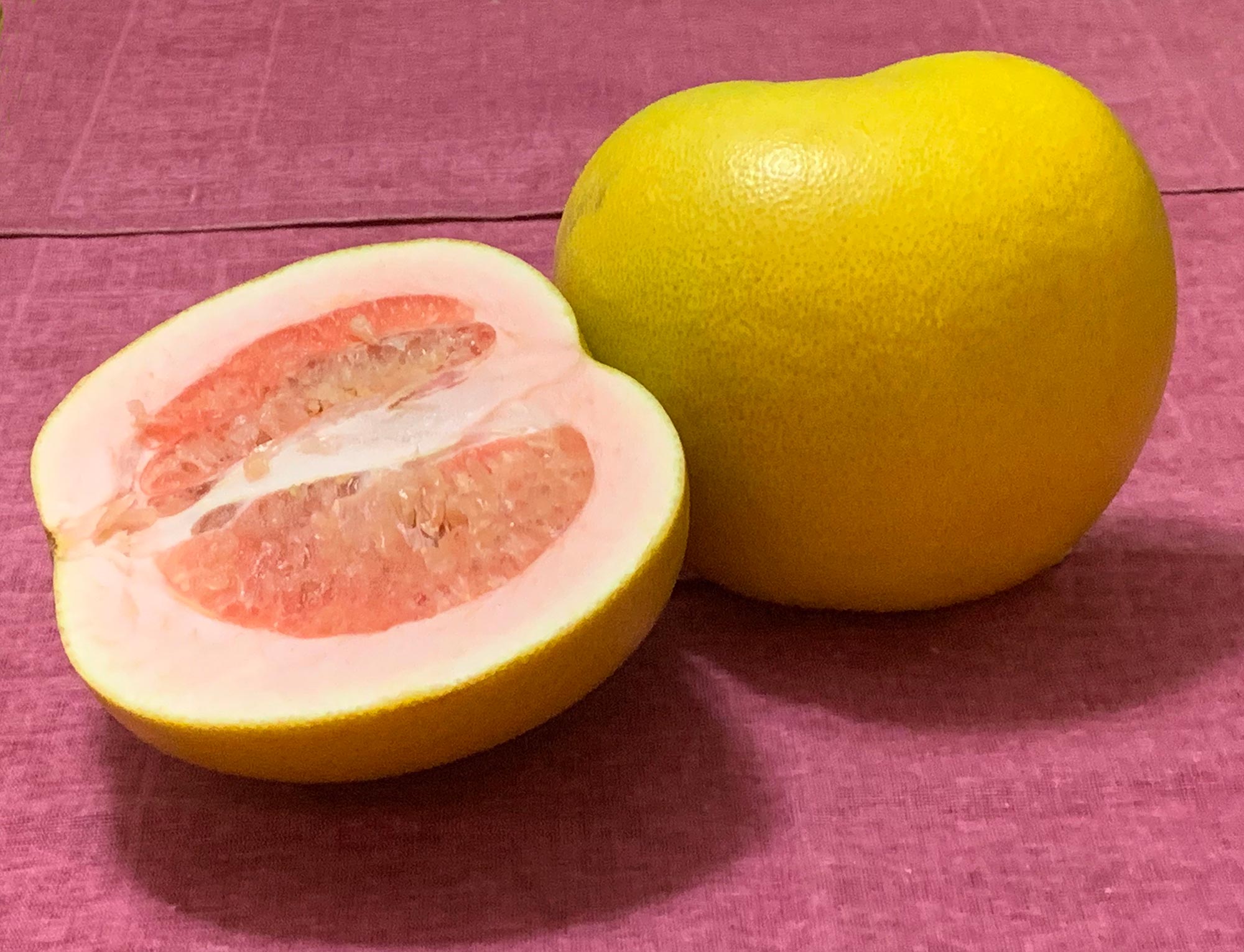
Pomelo, a large citrus fruit widely cultivated in Southeast and East Asia, has a notably thick peel that is typically discarded, contributing to significant food waste. In a recent study, researchers at the University of Illinois Urbana-Champaign investigated methods to repurpose this pomelo peel biomass to develop tools capable of powering small electronic devices and monitoring biomechanical movements.
“There are two main parts of the pomelo peel – a thin outer layer and a thick, white inner layer. The white part is soft and feels like a sponge when you push on it. Some people have used pomelo peels to extract compounds for essential oils or pectin, but we wanted to take advantage of the natural porous, spongy structure of the peel. If we can upcycle the peel to higher-value products instead of simply throwing it away, we can not only reduce waste from pomelo production, consumption, and juice making, but also create more value from food and agricultural waste,” said study co-author Yi-Cheng Wang, an assistant professor in the Department of Food Science and Human Nutrition, part of the College of Agricultural, Consumer and Environmental Sciences at Illinois.
A typical pomelo weighs between 1 and 2 kilograms (2 to 4.5 pounds), with the peel comprising 30% to 50% of the total weight. In their study, the researchers separated the peel from the fruit, removed the outermost layer, and then processed the thick white inner peel. They cut it into smaller pieces and freeze-dried it to preserve its unique three-dimensional porous architecture. These samples were then stored under varying humidity conditions for further analysis.
By examining the chemical composition and mechanical properties of the peel, the research team successfully engineered devices that convert mechanical energy into electricity. These devices also functioned as self-powered motion sensors.
Harnessing Contact Electrification
“These devices leverage the principle of contact electrification. That may sound complex, but it’s actually pretty simple and we experience it all the time. For example, when we touch a doorknob, especially in the winter, sometimes we feel a shock. The fundamental mechanism is contact electrification, or triboelectrification – ‘tribo’ means rubbing. When two materials are rubbed against each other, static electricity can form due to the transfer of charges between them. We wanted to explore if we could collect and utilize that electricity,” Wang said.
The researchers used pomelo-peel biomass and a plastic (polyimide) film as two triboelectric layers that are brought into contact when external force is present. They attached a copper-foil electrode to each of these layers and evaluated how well the resulting device could convert external mechanical energy into electricity.
By simply tapping these pomelo-peel based triboelectric devices with a finger, they could light up about 20 light-emitting diodes (LEDs). They also demonstrated that a calculator or sports watch can be powered solely by these mechanical forces, without the need of external electricity, when the device is integrated with a power-management system that includes an energy-storage unit.
“This application has strong potential to convert otherwise wasted energy into useful electricity. We also found that, thanks to pomelo peel’s naturally porous structure, triboelectric devices based on it can be highly sensitive to force and force frequency. This inspired us to develop sensing devices that can be attached to the human body for biomechanical monitoring,” Wang explained.
Monitoring Human Motion and Future Implications
When attached to various body parts, the researchers’ proof-of-concept sensors were able to monitor biomechanical movement such as joint motions and gait patterns. This was because the movements of different body parts can lead to contact electrification between the triboelectric layers, generating distinct electrical signals corresponding to different motions. This capability has great potential to provide valuable insights for health care and physical rehabilitation professionals.
“This work highlights exciting opportunities to transform food waste into value-added devices and materials. By potentially replacing or supplementing non-renewable counterparts and reducing waste, it could contribute significantly towards long-term sustainability, and we will continue exploring more opportunities for upcycling food and agricultural waste,” Wang said.
The researchers have filed a provisional patent for their pomelo-peel based triboelectric devices.
Reference: “Valorization of Food Waste: Utilizing Natural Porous Materials Derived from Pomelo-Peel Biomass to Develop Triboelectric Nanogenerators for Energy Harvesting and Self-Powered Sensing” by Longwen Li, Zhenhui Jin, Chenxin Wang and Yi-Cheng Wang, 11 July 2024, ACS Applied Materials & Interfaces.
DOI: 10.1021/acsami.4c02319
Funding for the project was provided by the USDA-NIFA (ILLU-698-930 and ILLU-698-994).
Never miss a breakthrough: Join the SciTechDaily newsletter.
Follow us on Google and Google News.