
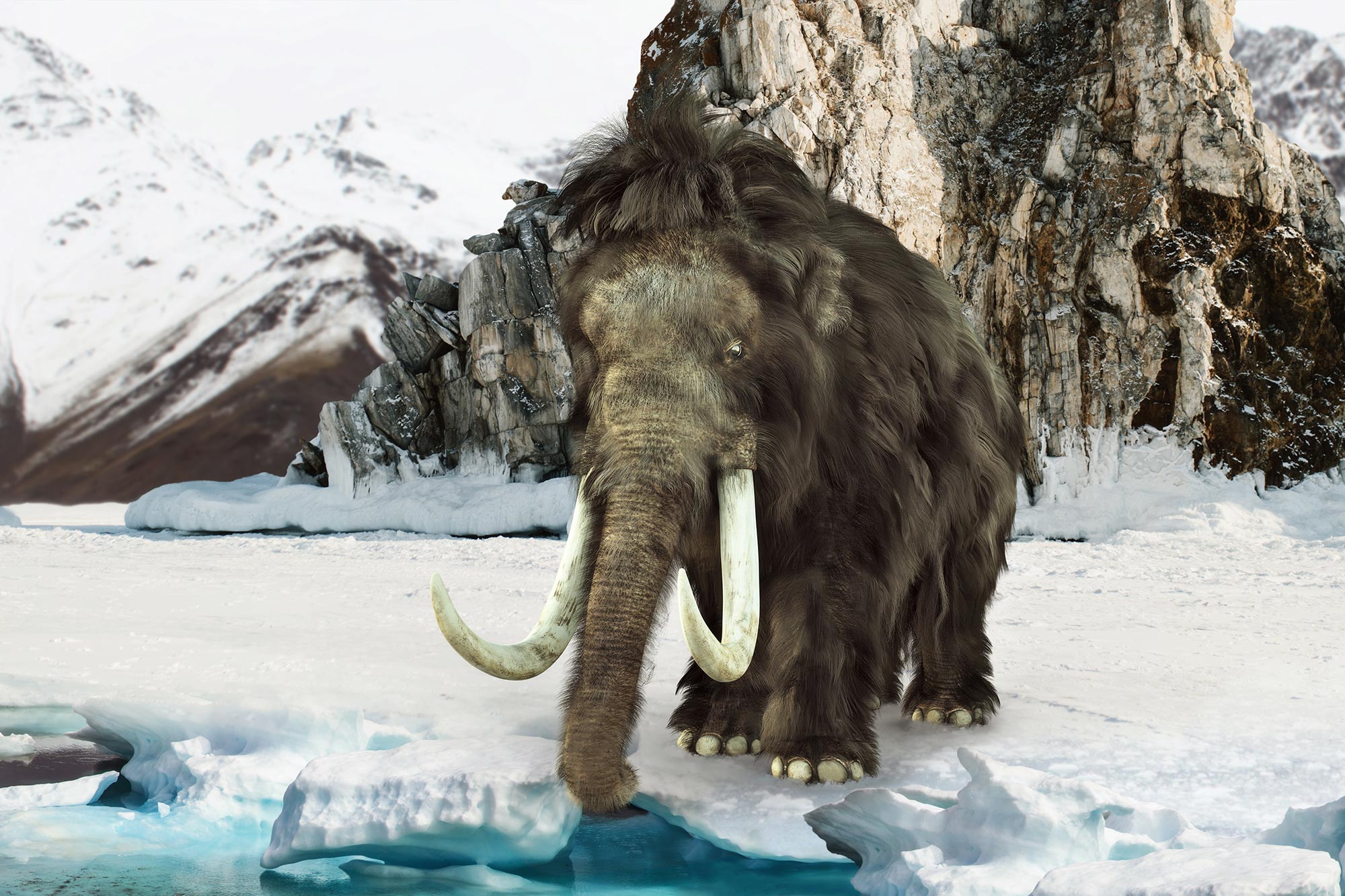
For the first time, researchers have uncovered Ice Age RNA preserved within permafrost mammoth tissue, offering a rare glimpse into real-time gene activity from tens of millennia ago.
Researchers at Stockholm University have, for the first time ever, isolated and sequenced RNA molecules from woolly mammoths that lived during the Ice Age. The team analyzed RNA preserved for nearly 40,000 years in mammoth tissue recovered from the Siberian permafrost, making these the oldest RNA sequences ever identified. According to the study published in the journal Cell, the results show that RNA, like DNA and proteins, can remain intact for far longer than expected and can offer new insights into the biology of long-extinct species.

“With RNA, we can obtain direct evidence of which genes are ‘turned on’, offering a glimpse into the final moments of life of a mammoth that walked the Earth during the last Ice Age. This is information that cannot be obtained from DNA alone,” says Emilio Mármol, lead author of the study. Formerly a postdoctoral researcher at Stockholm University, he is now based at the Globe Institute in Copenhagen. During his time at Stockholm University, he teamed up with researchers at SciLifeLab and the Centre for Palaeogenetics, a joint initiative between Stockholm University and the Swedish Museum of Natural History.
Understanding how prehistoric genes functioned is essential for learning more about the biology and evolution of species that no longer exist. Scientists have spent many years analyzing mammoth DNA to reconstruct their genomes and trace their lineage. However, RNA, which reveals which genes are active, has remained inaccessible. The idea that RNA breaks down within hours after death has likely prevented researchers from attempting to study these valuable molecules in mammoths and other ancient animals.
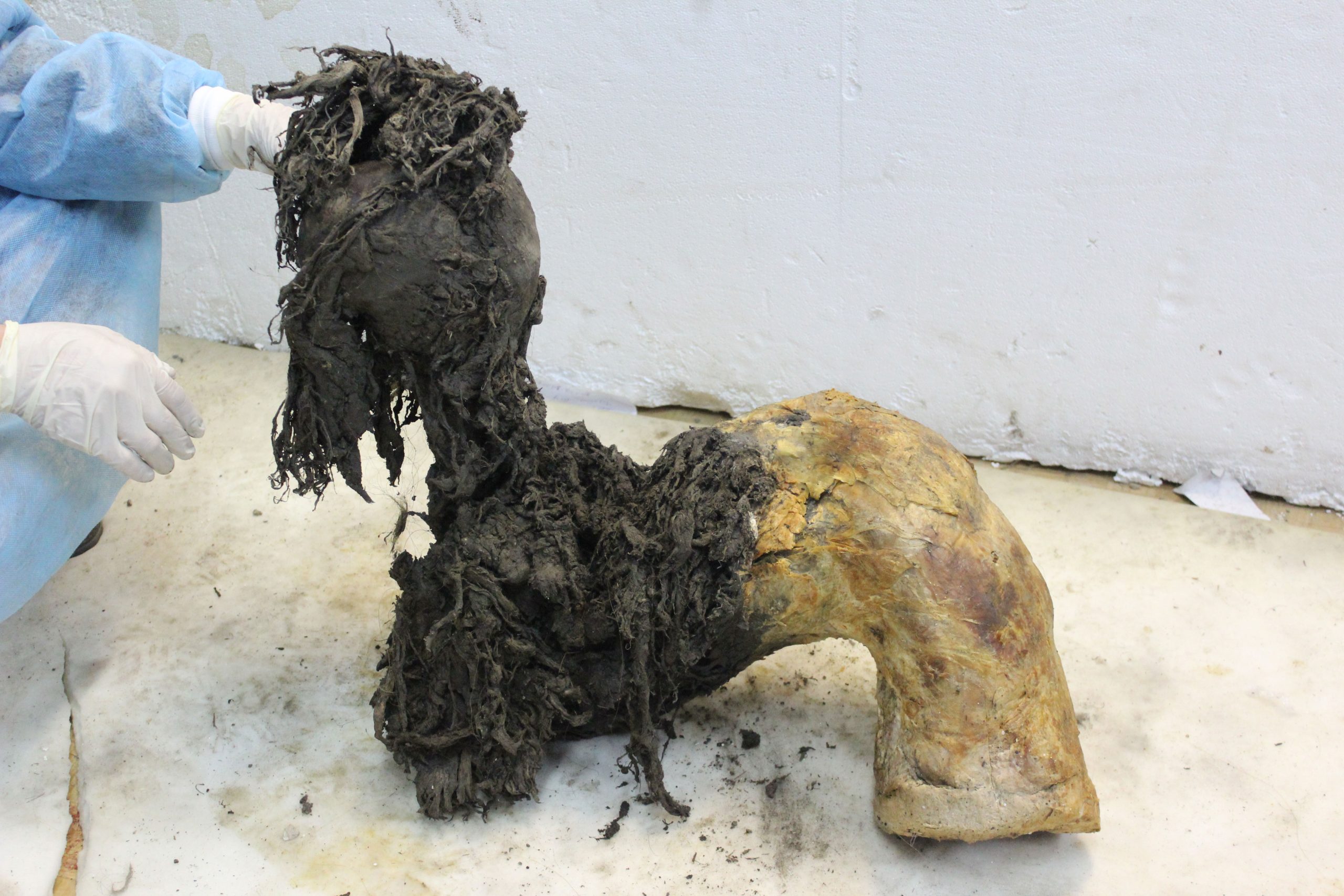
“We gained access to exceptionally well-preserved mammoth tissues unearthed from the Siberian permafrost, which we hoped would still contain RNA molecules frozen in time,” adds Emilio Mármol.
“We have previously pushed the limits of DNA recovery past a million years. Now, we wanted to explore whether we could expand RNA sequencing further back in time than done in previous studies,” says Love Dalén, professor of Evolutionary Genomics at Stockholm University and the Centre for Palaeogenetics.
The oldest RNA ever sequenced
The team uncovered distinct gene activity patterns in frozen muscle tissue from Yuka, a young mammoth that lived nearly 40,000 years ago. Although the mammoth genome contains more than 20,000 protein-coding genes, only a portion of them showed signs of being active. The RNA they recovered corresponded to proteins involved in essential processes such as muscle contraction and managing metabolic stress.

“We found signs of cell stress, which is perhaps not surprising since previous research suggested that Yuka was attacked by cave lions shortly before his death,” says Emilio Mármol.
The researchers also found a myriad of RNA molecules that regulate the activity of genes in the mammoth muscle samples.
“RNAs that do not encode for proteins, such as microRNAs, were among the most exciting findings we got,” says Marc Friedländer, associate professor at the Department of Molecular Biosciences, The Wenner-Gren Institute at Stockholm University and SciLifeLab.
“The muscle-specific microRNAs we found in mammoth tissues are direct evidence of gene regulation happening in real time in ancient times. It is the first time something like this has been achieved,” he says.
The microRNAs that were identified also helped the researchers confirm that the findings really came from mammoths.
“We found rare mutations in certain microRNAs that provided a smoking-gun demonstration of their mammoth origin. We even detected novel genes solely based on RNA evidence, something never before attempted in such ancient remains,” notes Bastian Fromm, associate professor at the Arctic University Museum of Norway (UiT).

“RNA molecules can survive much longer than previously thought”
“Our results demonstrate that RNA molecules can survive much longer than previously thought. This means that we will not only be able to study which genes are ‘turned on’ in different extinct animals, but it will also be possible to sequence RNA viruses, such as influenza and coronaviruses, preserved in Ice Age remains,” says Love Dalén.
In the future, the researchers hope to conduct studies that combine prehistoric RNA with DNA, proteins, and other preserved biomolecules.
“Such studies could fundamentally reshape our understanding of extinct megafauna as well as other species, revealing the many hidden layers of biology that have remained frozen in time until now,” finishes Emilio Mármol.
About woolly mammoths
Woolly mammoths once roamed the icy plains of Eurasia and North America, perfectly adapted to life during the last Ice Age (approximately 115,000–11,500 years ago). With their thick coats, curved tusks, and towering size, they grazed the vast steppes that stretched across the northern hemisphere. But as the climate warmed, the woolly mammoths gradually vanished, with the last small herds surviving on remote Arctic islands until just 4,000 years ago.
Reference: “Ancient RNA expression profiles from the extinct woolly mammoth” by Emilio Mármol-Sánchez, Bastian Fromm, Nikolay Oskolkov, Zoé Pochon, Marianne Dehasque, Morteza Aslanzadeh, Elif Bozlak, Katherine Brown, Tom van der Valk, Panagiotis Kalogeropoulos, J. Camilo Chacón-Duque, Inna Biryukova, Peter D. Heintzman, Cecilia Furugård, Valeri Plotnikov, Albert Protopopov, Björn Andersson, Erik Ersmark, Kevin J. Peterson, Marc R. Friedländer and Love Dalén, 14 November 2025, Cell.
DOI: 10.1016/j.cell.2025.10.025
Funding: Villum Fonden, Swedish Research Council, European Research Council, Tromsø Forskningsstiftelse, Knut och Alice Wallenbergs Stiftelse, Austrian Science Fund, European Molecular Biology Organization, Marie Sklodowska-Curie Actions
Never miss a breakthrough: Join the SciTechDaily newsletter.
Follow us on Google and Google News.