
Ancient DNA shows that hunter-gatherers in northwestern Europe endured for millennia, with women driving a gradual cultural shift toward farming.
Researchers at the University of Huddersfield have analyzed ancient DNA to show that hunter-gatherer communities in one region of Europe endured for thousands of years longer than elsewhere on the continent. Their findings also highlight the central role women played during this extended transition.
The project formed part of a broader international collaboration of geneticists and archaeologists led by David Reich at Harvard University. The results have been published in the journal Nature.
At Huddersfield, the research was conducted by doctoral researcher Alessandro Fichera and postdoctoral fellow Dr. Francesca Gandini, working under the supervision of Dr. Maria Pala, Professor Martin B. Richards, and Dr. Ceiridwen Edwards from the Archaeogenetics Research Group in the School of Applied Sciences.
Funding came through a Doctoral Scholarship awarded by the Leverhulme Trust to Professor Richards and Dr. Pala. The team also worked closely with paleoecologist Professor John Stewart at Bournemouth University and archaeologists from the Université de Liège in Belgium, who were responsible for excavating and curating the ancient human remains used in the study.
Ancient DNA redraws Europe’s prehistory
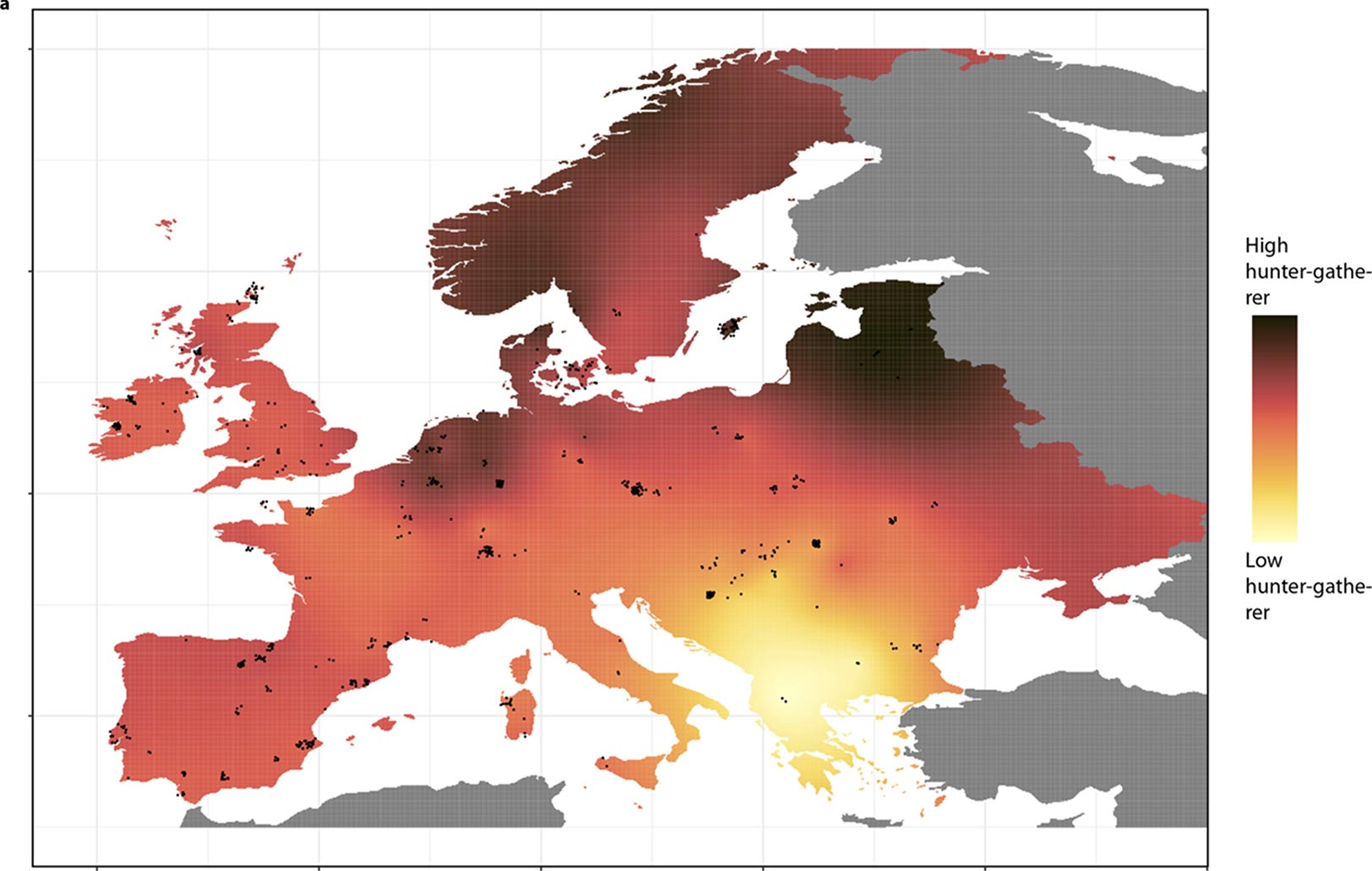
To reconstruct this chapter of Europe’s past, the researchers sequenced complete human genomes from individuals who lived between 8500 and 1700 BCE in a region that today includes Belgium, Germany, and the Netherlands.
This period marked a transformative era in European prehistory, defined by sweeping population movements and cultural change. Long before modern borders existed, communities traveled widely across the continent. As new groups arrived, they mixed with local populations, reshaping the genetic landscape and introducing new languages, traditions, and lifeways that would leave a lasting imprint on modern European ancestry.

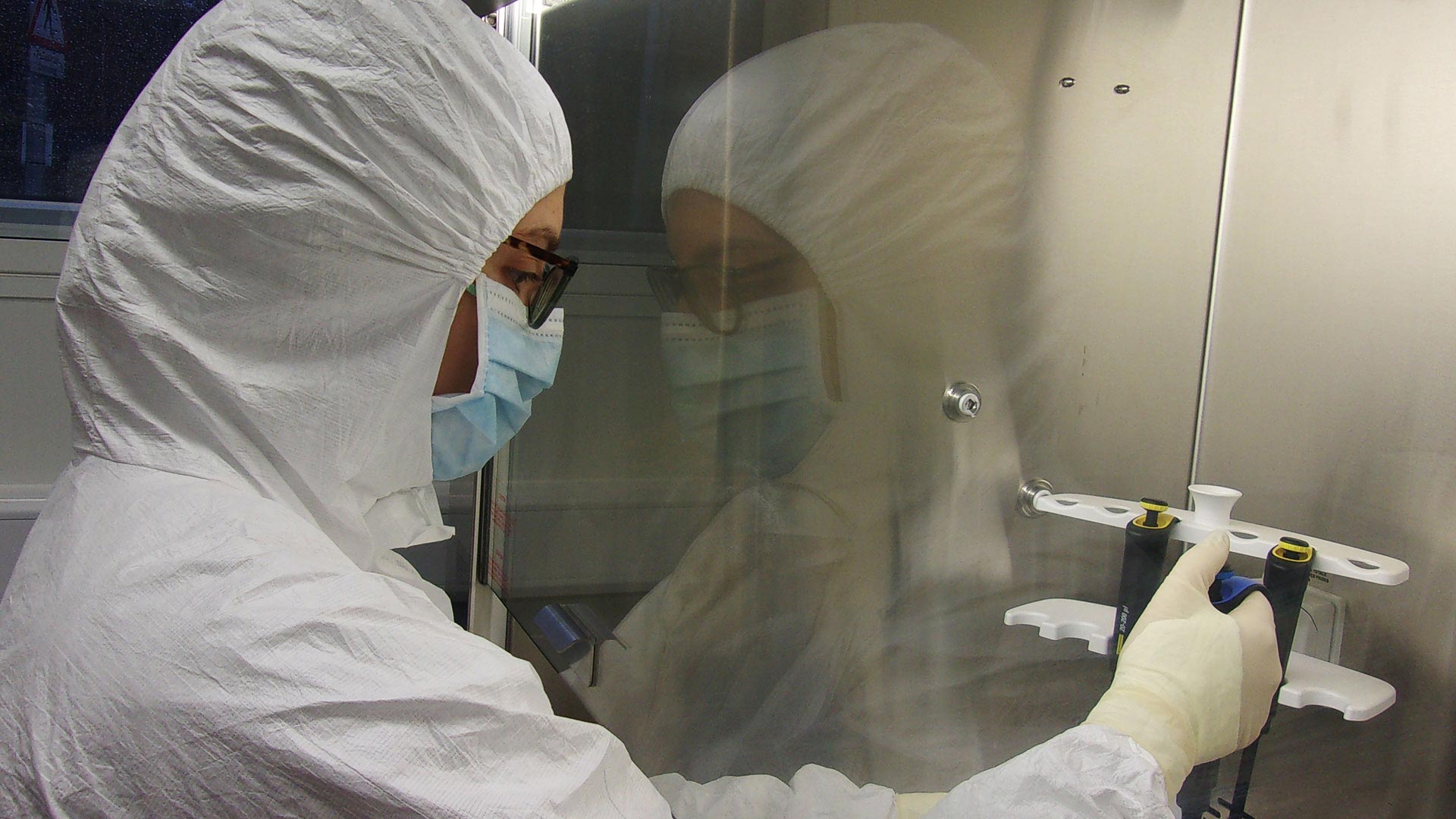
School of Applied Sciences. Credit: University of Huddersfield
The impact of these changes was so profound and expansive that virtually all modern-day European populations carry evidence of three ancestral components: a hunter-gatherer component, a Neolithic component brought by the first farmers from the Near East, and a third component associated with pastoralists from Russia.
Farming arrived without genetic turnover
This latest research reveals that the arrival of farming in the area in question, around ~4500 BCE, did not result in anything like the major shift in genetic composition that took place across the rest of Europe. Instead, it involved the uneven acquisition of farming-related practices by local hunter-gatherer communities with only minimal genetic input from the incoming farmers.
Strikingly, genomic data from the study suggest that this farmer influx was mostly from women marrying into the local hunter-gatherer communities, bringing with them their know-how as well as their genes. This pattern was limited to the riverine wetlands and coastal areas across the region. The wealth of natural resources seems to have allowed the local people to selectively embrace some aspects of farming while also preserving many hunter-gatherer practices, and therefore genes.
The high levels of hunter-gatherer ancestry persisted across the region (modern-day Belgium and the Netherlands) until the end of the Neolithic, around 2500 BCE, when new people spread across Europe. The new incomers this time arrived and mixed fully with local communities, so that the genomic trajectory of the area finally realigned with the neighboring regions.
Women drove knowledge transfer
Professor Stewart commented: “We expected a clear change between the older hunter-gatherer populations and the newer agriculturalists, but apparently in the lowlands and along the rivers of the Netherlands and Belgium, the change was less immediate. It’s like a Waterworld where time stood still.”
Dr. Pala said, “Ancient DNA studies often bring to light unexpected pages of our past. We might anticipate finding the unexpected when analyzing samples from unexplored or peripheral regions of the globe. But here we are looking at the heartland of Europe, making these results even more striking. It’s a testament to the power of ancient DNA studies that findings like these can still surprise us.”
She added: “This study has also brought to light the crucial role played by women in the transmission of knowledge from the incoming farming communities to the local hunter-gatherers. Thanks to ancient DNA studies, we can not only uncover the past but also give voice to the invaluable but often overlooked role played by women in shaping human evolution.”
Reference: “Lasting Lower Rhine–Meuse forager ancestry shaped Bell Beaker expansion” by Iñigo Olalde, Eveline Altena, Quentin Bourgeois, Harry Fokkens, Luc Amkreutz, Steffen Baetsen, Marie-France Deguilloux, Alessandro Fichera, Damien Flas, Francesca Gandini, Jan F. Kegler, Lisette M. Kootker, Judith van der Leije, Kirsten Leijnse, Constance van der Linde, Leendert Louwe Kooijmans, Roel Lauwerier, Rebecca Miller, Helle Molthof, Pierre Noiret, Daan C. M. Raemaekers, Maïté Rivollat, Liesbeth Smits, John R. Stewart, Theo ten Anscher, Michel Toussaint, Kim Callan, Olivia Cheronet, Trudi Frost, Lora Iliev, Matthew Mah, Adam Micco, Jonas Oppenheimer, Iris Patterson, Lijun Qiu, Gregory Soos, J. Noah Workman, Ceiridwen J. Edwards, Iosif Lazaridis, Swapan Mallick, Nick Patterson, Nadin Rohland, Martin B. Richards, Ron Pinhasi, Wolfgang Haak, Maria Pala and David Reich, 11 February 2026, Nature.
DOI: 10.1038/s41586-026-10111-8
Funded as part of a Doctoral Scholarship scheme awarded by the Leverhulme Trust to Professor Richards and Dr. Pala.
Never miss a breakthrough: Join the SciTechDaily newsletter.
Follow us on Google and Google News.
7 Comments
Technically, the only populations that stopped hunting and gathering to supplement their grain and vegetables were those that had Kings or other landlords who announced that wildlife belonged to them, and they still poached.
There is an explanation given on my radio show which features a call-in from an Olympic Boxing Champion from Ireland who explains details of a DNA test taken and a documentary he made about the original natives of Ireland and hunter/gathers thereof. It will not allow me to copy the link here, but you can Google WGXC Monday Morning Show and go back to the date of March 16th, 2020.
As u know by now the:
Y-Chromosome i2a2 dna
Mitochondrial U5b1 dna
blue eyed, dark brown-skin to black-skin Black English, Black Irish, Black Scottish, Black French, Black Spanish, and Black Portuguese wer the original inhabitants of wut u call Western Europe.
Google:
(1) Cheddar Man
(2) The Historical Cheddar Man
(3) Trinity professor says the original Irish wer Black people with blue eyes
(4) Major Upheaval In Europe After Last Ice Age
(5) Neolithic Establishment of R1b in Europe
Thousands of years later, the present day pale-face, dark hair & dark eyed:
Y-Chromosome R1b dna
Mitochondrial H dna
sub-Arctic white Caucazoid Mountain Aboriginals invaded, killed the men, raped the women, and stole the land, just like they hav done all over the world.
Accordingly, all white people with blue eyes, like actress Goldee Hawn, hav regressed U5 dna from the original Black U5b1 dna.
The above is the exact reason sub-Arctic white Caucazoid Mountain Aboriginals descend from 3 ancestral components and a 4th isolate.
Numpty
Genetics are all very well but how do genetics explain how people think? Granted that women lacking contraception in those days were more likely to be home-bodies and therefore could well prefer more settled communities, but perhaps the men got a bit weary of running after wild animals all year round and decided that farming was the preferable option, especially when there were more people living in a smaller area?
Like any time, it’s not a whim but a socio-economic decision. As soon as they have communities larger than the local wildlife will permit they must either migrate or farm *something*.
Don’t suppose they tested the Basque?
Since they speak one of these oldest known languages in the world and appear to be a group that missed the last migration in 5000 years ago