
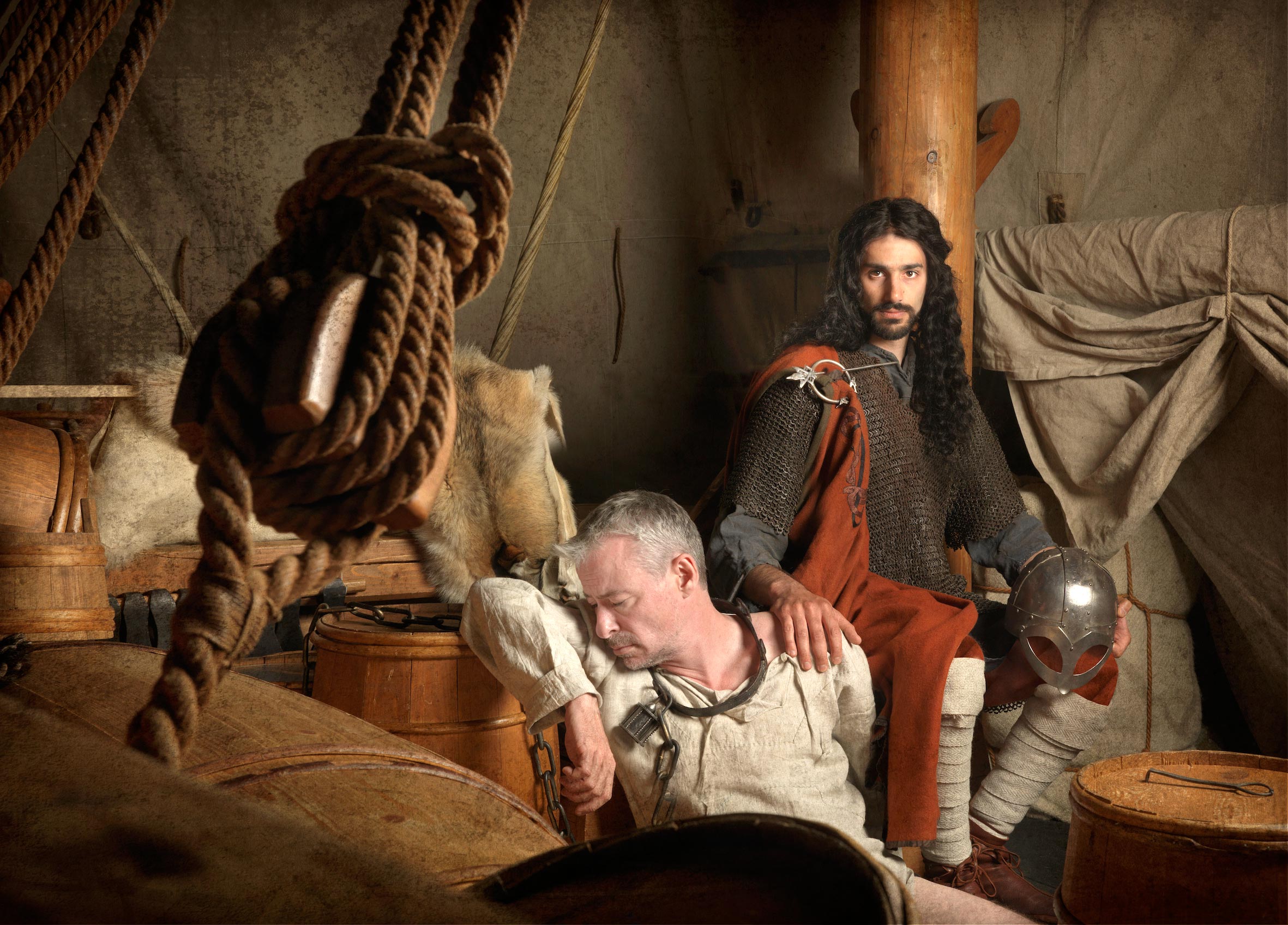
In the popular imagination, Vikings were fearsome blonde-haired warriors from Scandinavia who used longboats to carry out raids across Europe in a brief but bloody reign of terror. But the reality is more complex, says Simon Fraser University Archaeology Professor Mark Collard.
Collard is a member of an international team of researchers that has just published the results of the world’s largest DNA sequencing of Viking skeletons, in the journal Nature.
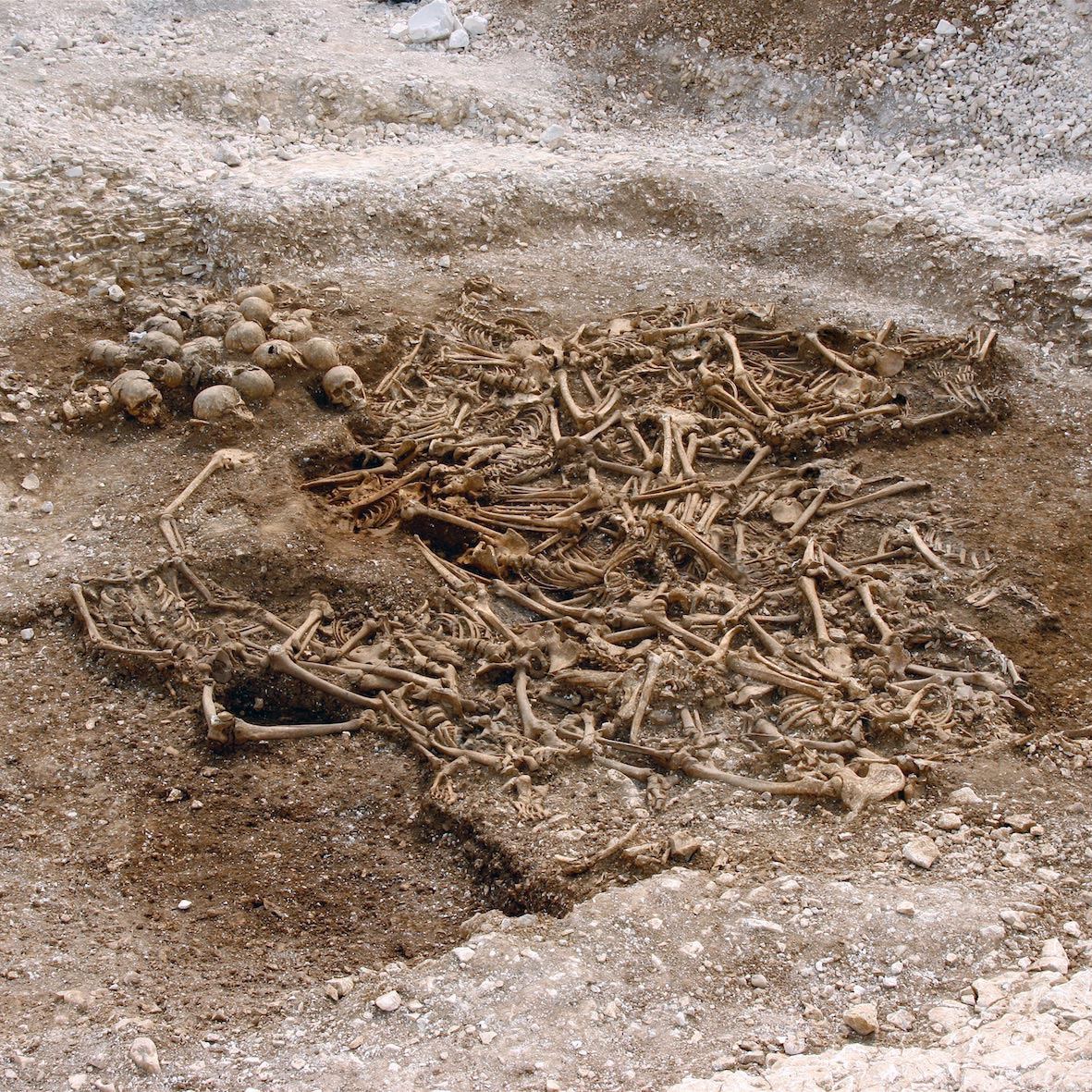
Led by Prof. Eske Willerslev of the Universities of Cambridge and Copenhagen, the research team extracted and analyzed DNA from the remains of 442 men, women, and children.
The remains were recovered from archaeological sites in Scandinavia, the U.K., Ireland, Iceland, Greenland, Estonia, Ukraine, Poland, and Russia, and mostly date to the Viking Age (ca. 750-1050 AD).
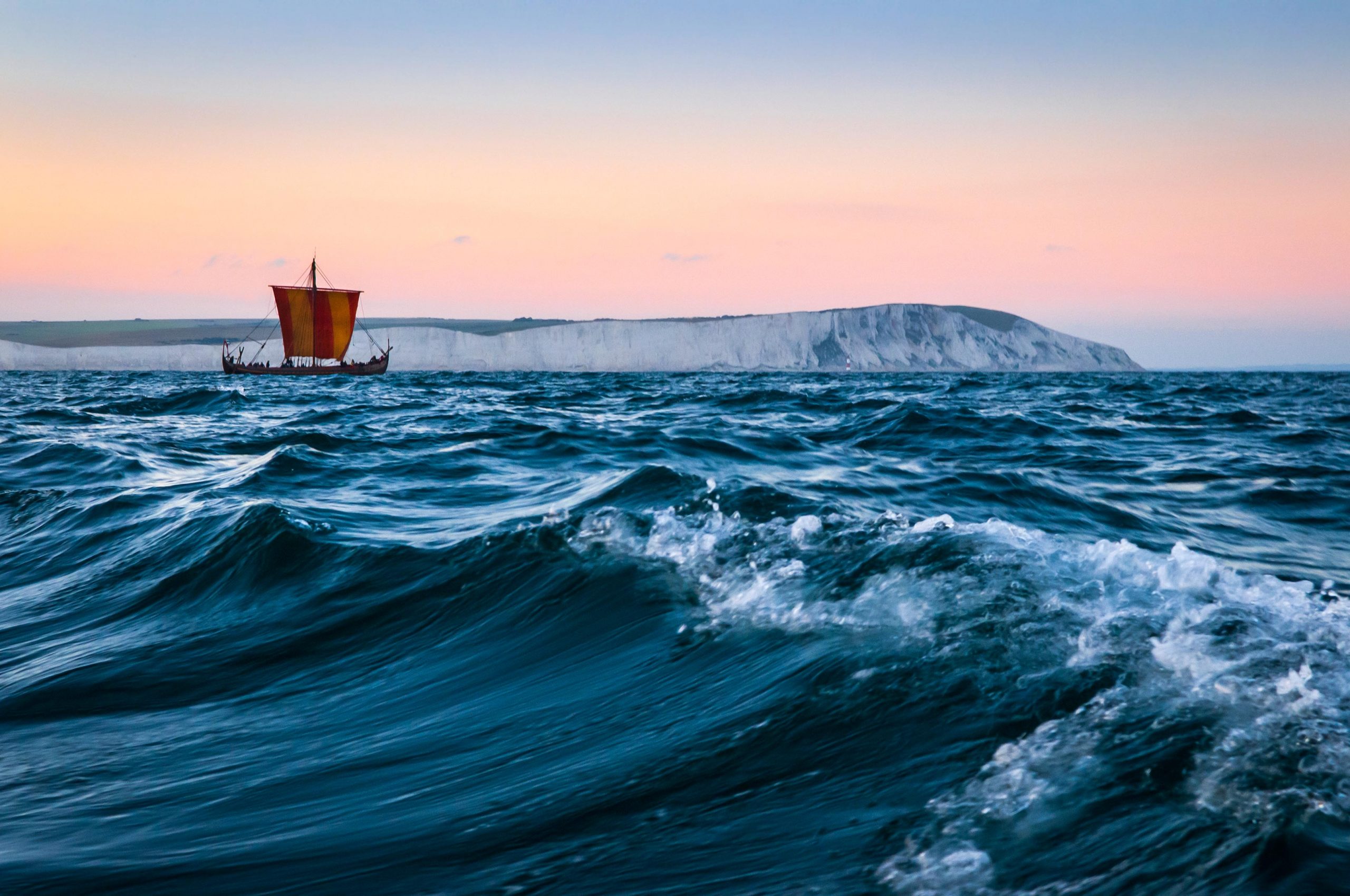
The team’s analyses yielded a number of findings. One of the most noteworthy is that contrary to what has often been assumed, Viking identity was not limited to people of Scandinavian ancestry—the team discovered that two skeletons from a Viking burial site in the Orkney Islands were of Scottish ancestry.
They also found evidence that there was significant gene flow into Scandinavia from the British Isles, Southern Europe, and Asia before and during the Viking Age, which further undermines the image of the Vikings as ‘pure’ Scandinavians.
Another discovery that runs counter to the standard image of the Vikings is that many had brown hair, not blonde hair.

The analyses’ results also shed light on the Vikings’ activities. For example, consistent with patterns documented by historians and archaeologists, the team found that Vikings who traveled to England generally had Danish ancestry, while the majority of Vikings who traveled to Scotland, Ireland, Iceland, and Greenland had Norwegian ancestry. In contrast, Vikings who headed east were mostly from Sweden.
Interestingly, says Collard, data revealed a number of close kin among the 442 individuals. Four members of a Viking raiding party interred in a boat burial in Estonia were found to be brothers, while two individuals buried 300 to 400 kilometers (185 to 250 miles) apart in Sweden were found to be cousins. Perhaps even more strikingly, the team identified a pair of second-degree male relatives (i.e. half-brothers, nephew-uncle, or grandson-grandfather) from two sites, one in Denmark and one in England.
“We have this image of well-connected Vikings mixing with each other, trading and going on raiding parties to fight Kings across Europe because this is what we see on television and read in books – but genetically we have shown for the first time that it wasn’t that kind of world. This study changes the perception of who a Viking actually was,” says Willerslev. “No one could have predicted these significant gene flows into Scandinavia from Southern Europe and Asia happened before and during the Viking Age.”
Of all the team’s discoveries, Collard is most intrigued by the identification of close kin.
“While the ‘big picture’ discoveries are great, I was blown away by the fact that the analyses revealed the presence of four brothers in the Estonian boat burial, and a possible nephew and uncle on either side of the North Sea.”
“These findings have important implications for social life in the Viking world, but we would’ve remained ignorant of them without ancient DNA. They really underscore the power of the approach for understanding history.”
Reference: “Population genomics of the Viking world” by Ashot Margaryan, Daniel J. Lawson, Martin Sikora, Fernando Racimo, Simon Rasmussen, Ida Moltke, Lara M. Cassidy, Emil Jørsboe, Andrés Ingason, Mikkel W. Pedersen, Thorfinn Korneliussen, Helene Wilhelmson, Magdalena M. Buś, Peter de Barros Damgaard, Rui Martiniano, Gabriel Renaud, Claude Bhérer, J. Víctor Moreno-Mayar, Anna K. Fotakis, Marie Allen, Raili Allmäe, Martyna Molak, Enrico Cappellini, Gabriele Scorrano, Hugh McColl, Alexandra Buzhilova, Allison Fox, Anders Albrechtsen, Berit Schütz, Birgitte Skar, Caroline Arcini, Ceri Falys, Charlotte Hedenstierna Jonson, Dariusz Błaszczyk, Denis Pezhemsky, Gordon Turner-Walker, Hildur Gestsdóttir, Inge Lundstrøm, Ingrid Gustin, Ingrid Mainland, Inna Potekhina, Italo M. Muntoni, Jade Cheng, Jesper Stenderup, Jilong Ma, Julie Gibson, Jüri Peets, Jörgen Gustafsson, Katrine H. Iversen, Linzi Simpson, Lisa Strand, Louise Loe, Maeve Sikora, Marek Florek, Maria Vretemark, Mark Redknap, Monika Bajka, Tamara Pushkina, Morten Søvsø, Natalia Grigoreva, Tom Christensen, Ole Kastholm, Otto Uldum, Pasquale Favia, Per Holck, Sabine Sten, Símun V. Arge, Sturla Ellingvåg, Vayacheslav Moiseyev, Wiesław Bogdanowicz, Yvonne Magnusson, Ludovic Orlando, Peter Pentz, Mads Dengsø Jessen, Anne Pedersen, Mark Collard, Daniel G. Bradley, Marie Louise Jørkov, Jette Arneborg, Niels Lynnerup, Neil Price, M. Thomas P. Gilbert, Morten E. Allentoft, Jan Bill, Søren M. Sindbæk, Lotte Hedeager, Kristian Kristiansen, Rasmus Nielsen, Thomas Werge and Eske Willerslev, 17 September 2020, Nature.
DOI: 10.1038/s41586-020-2688-8
Never miss a breakthrough: Join the SciTechDaily newsletter.
Follow us on Google and Google News.
10 Comments
Wow
why it would be suprising that 4 brothers would have been on a raid together and died and buried together
My heritage in Britain for at least 400years DNA results 40% Scandinavian, old achieves referred to negroid in colour of local people’s.They all lived in Northamtonshire or near by. Christian records from church records all local area.
“No one could have predicted these significant gene flows into Scandinavia from Southern Europe and Asia happened before and during the Viking Age.”
How can you say that when it has been long established that there was Moorish migration from Spain and they intermixed with the Norweigians?
My husband is of “dark Norwegian” decent and he has black hair and olive skin and has had immediate family mistaken for Persians. I believe the “black Irish” are of similar ancestry.
Britain was country of the moors.my heritage DNA indicates 40% plus Scandinavian they all lived in Britian for hundreds of years in Northamptonshire .Described as negroid colour in 1600’s. My paternal grandmother family tails come from Norway heritage, she has cooper/red hair white skin.my father skin was olive. Family surname referred to as Newcomen. Means newcomer to the land. origin from other lands.
We had relatives referred to as “black Swedes. Just meant they weren’t blond or red, but dark haired. Nothing derogatory.
It is my understanding that when the Spanish Armada was sunk off the coast of Ireland the Spanish sailors who swam to the Irish shore later intermarried with Irish women. Hence the Black Irish.
I can see why one would think that. However, it’s not likely because even if a Spaniard made it to shore alive, the local population would dispose of them.
The slave trade to Constantinople was not just north to south, but also south to north. Many Arabic women were taken to viking countries because just as moors wanted exotic blonds, vikings wanted exotic dark skinned women. Opposites attract.
I’ve done my family tree and some places back a thousand years. Studied history and all of the basics my entire 45 years of life. I thought this was common sense. It seems like every internet article I read acts like every discovery is an amazing thing that nobody knew when 50 years ago everybody knew it. I think it’s just the selling point to get you to read the article.
Obviously they traveled all over the world. The Vikings and their DNA are some of the most well-traveled. Woden was there original founder coming out of East asia. Then they land and Scandinavia, they found russia, they land not once not twice but three different times in Europe and Britain. The gothic people around the 300s the Saxons around the 500s, and the Vikings around the 700s. You have the jutlands and then you have the varangian guard. You have the ones that intermixed with the Muslims. And there was constant iron and tin trade coming out of England that made it all the way to the Mediterranean going back 2,000 years or more. Even when the sea peoples came the largest source of tin in the old world in antiquity came from Britain.
Even when doggerland was there 10,000 years ago people were migrating there. And it wasn’t the one-way trip. If people were coming then people were going. You can find Asian DNA there. If there was relatives home there was always a reason to go back home to visit relatives and if you conquered somebody or had kids for any reason or took a wife even by force then the children’s would have been related even if they didn’t know it. What is surprising about that?