
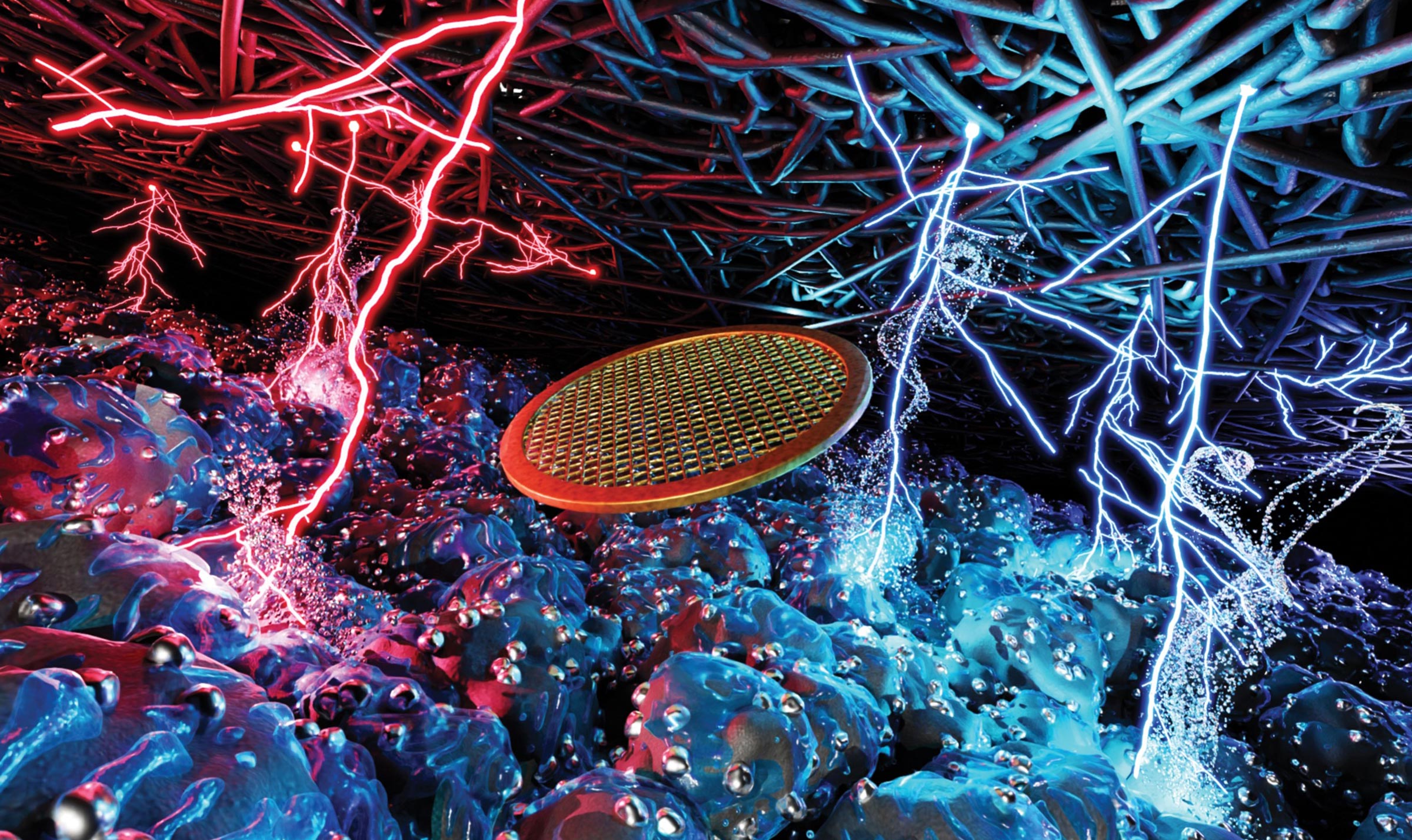
Chalmers University researchers have developed a method to study and understand the degradation processes within hydrogen fuel cells, potentially leading to advancements that could extend the lifespan of hydrogen-powered vehicles.
Hydrogen has become an appealing fuel alternative for heavy-duty vehicles. Hydrogen-powered vehicles only emit water vapor as exhaust, and when the hydrogen is produced using renewable energy, they are entirely free of carbon dioxide emissions. Unlike battery-powered electric vehicles, hydrogen-powered vehicles do not strain the electricity grid because hydrogen can be produced and stored when electricity is inexpensive.
In some hydrogen-powered vehicles, propulsion is provided by what is known as a fuel cell. Unfortunately, the lifespan of these hydrogen fuel-cell-powered vehicles is relatively short because fuel cell components, such as electrodes and membranes, degrade over time.
Facts: How a Fuel Cell Works
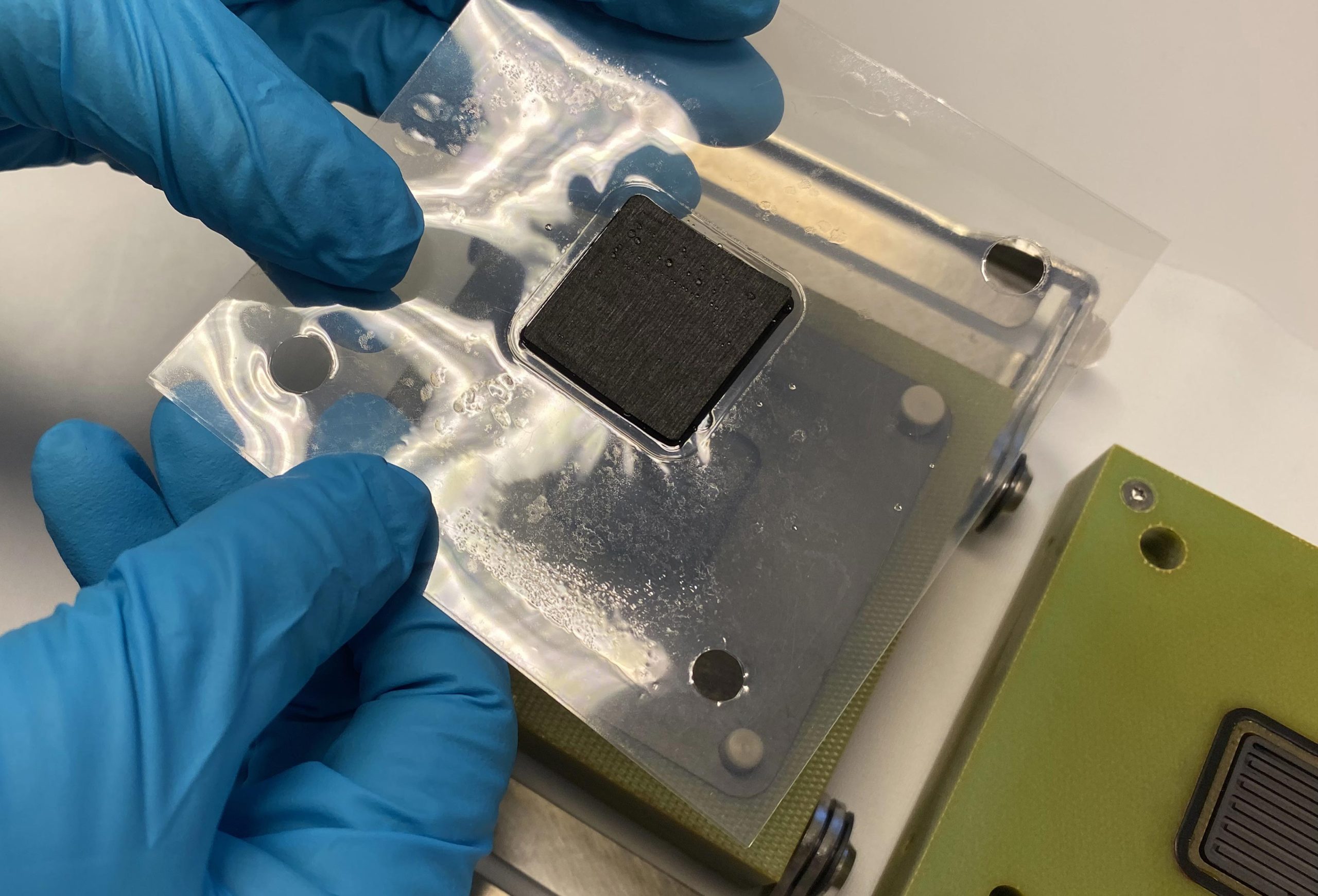
The core of a fuel cell consists of three active layers, two electrodes – anode and cathode respectively – with an ion-conducting membrane in the middle. Each individual cell provides a voltage of about 1 volt. The electrodes contain catalyst material, and hydrogen and oxygen are added to them. The resulting electrochemical process generates clean water and electricity that can be used to power a vehicle.
Advancements in Fuel Cell Durability Research
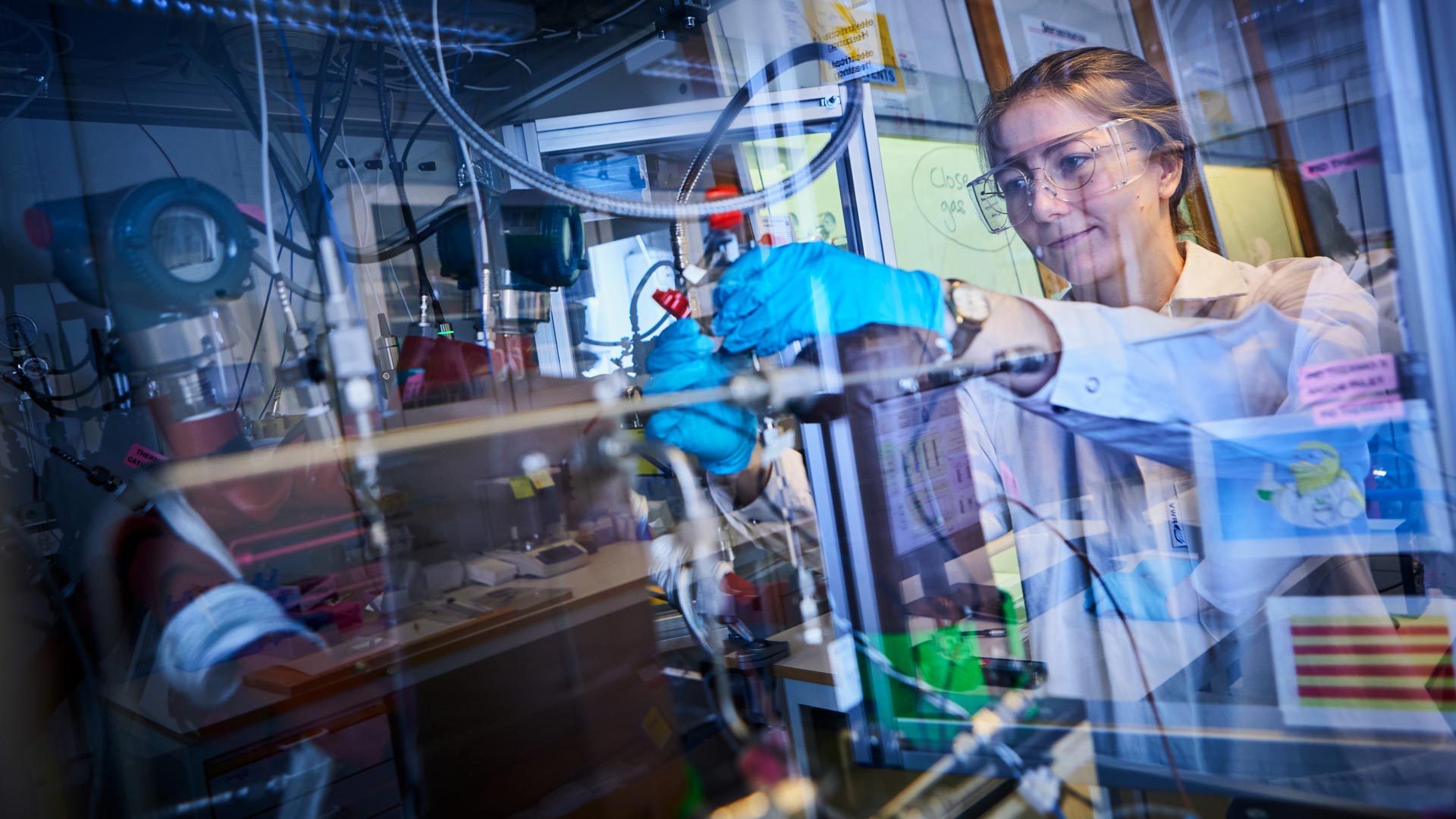
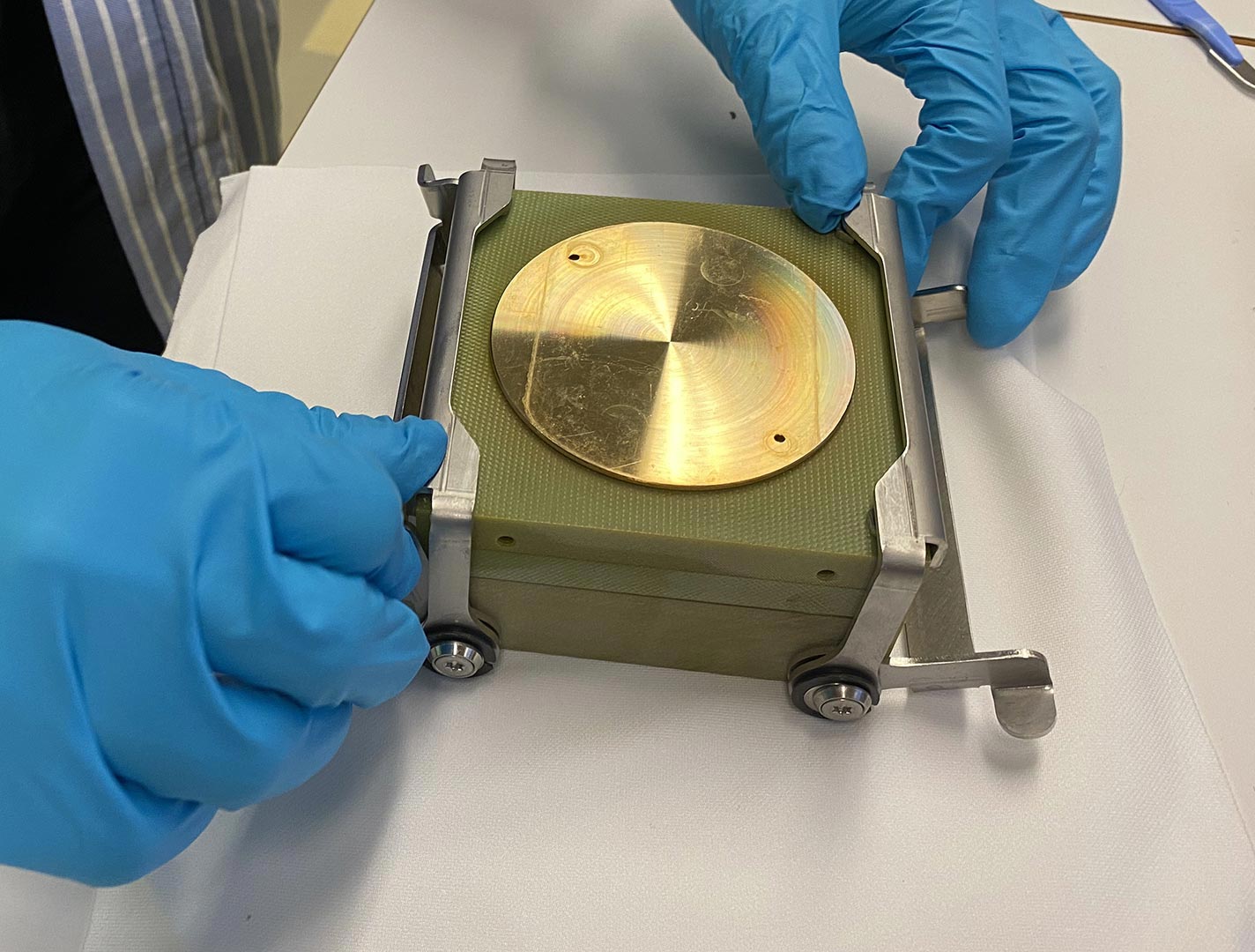
Now, researchers at Chalmers University of Technology, Sweden have developed a new method for studying what affects the aging of fuel cells by tracking a specific particle in the fuel cell during use. The researchers studied an entire fuel cell by taking it apart at regular intervals.
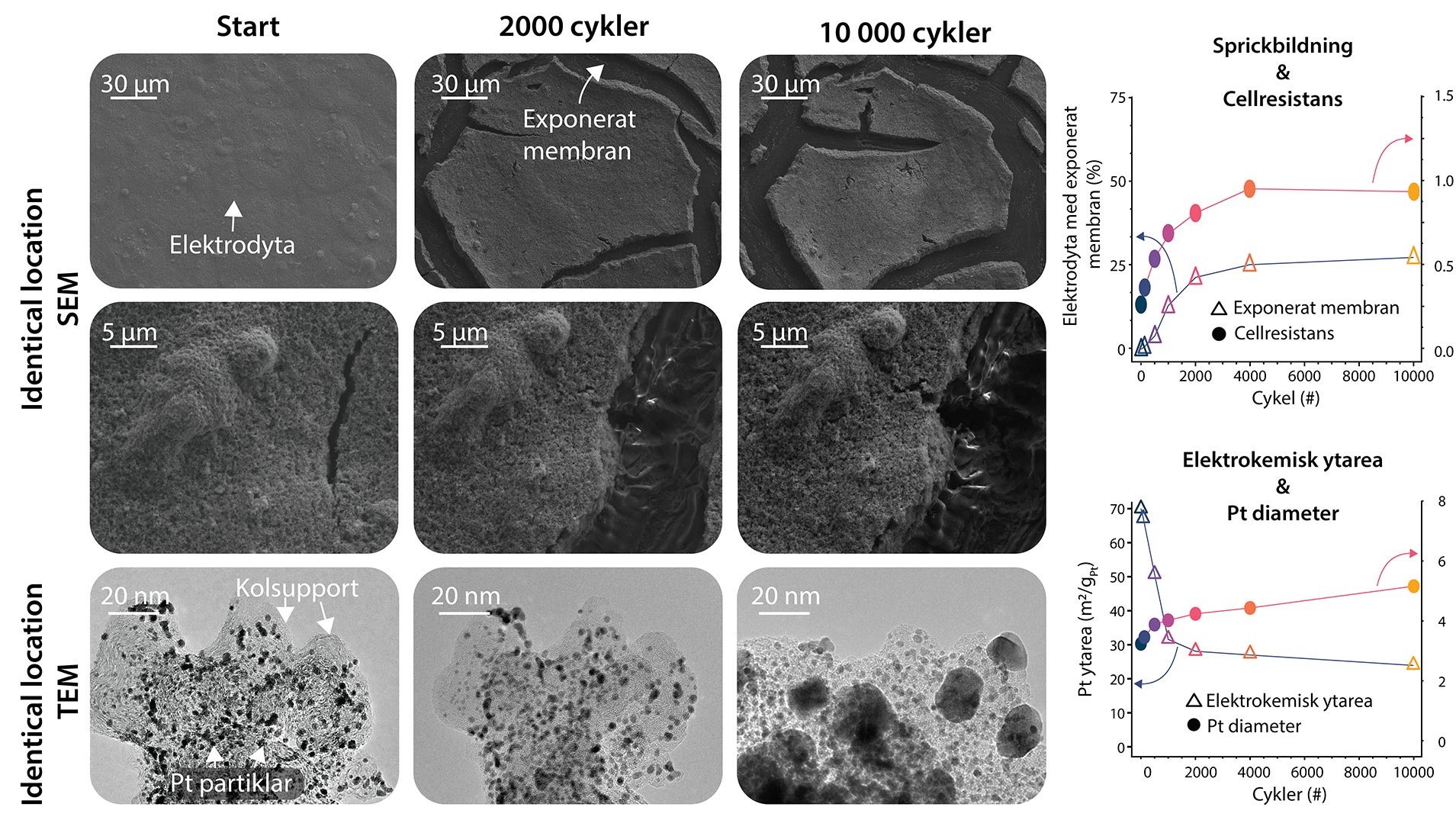
Using advanced electron microscopes, they have then been able to follow how the cathode electrode degrades in specific areas during the cycles of use. Previous studies have been done on so-called half-cells, which are similar (but not the same as) half of a fuel cell and are carried out under conditions that differ significantly from the real fuel cell.
Breakthrough in Fuel Cell Analysis
Lead researcher Björn Wickman, an Associate Professor at the Department of Physics at Chalmers, said: “It has previously been assumed that the performance would be affected by the fuel cell being disassembled and studied in the way we have done, but it turned out that this assumption is not correct, which is surprising.”
The team was able to explore how the material in the fuel cell degrades at both the nano and micro level and pinpoint exactly when and where the degradation occurs. This provides valuable information for the development of new and improved fuel cells with a longer lifespan.
“From previously only looking at how the fuel cell has aged after use, we have now been able to look into the middle stage,” says doctoral student Linnéa Strandberg at Chalmers. “Being able to follow a single, chosen particle within a specific area, provided a much better understanding of the degradation processes. Greater knowledge of these is an important step on the way to designing new materials for fuel cells or to adjust the control of the fuel cell.”
Future Directions for Hydrogen Fuel Cell Technology
The U.S. Department of Energy (DOE) has pointed out that the improved lifetime of fuel cells is one of the most important goals to reach before fuel cell-powered hydrogen vehicles can become commercially successful. According to the industry, a truck needs to be able to withstand 20,000 – 30,000 hours of driving over its lifetime, which a fuel cell-powered hydrogen truck cannot achieve today.
“We have now laid a foundation on which to build for the development of better fuel cells. Now we know more about the processes that take place in the fuel cell and at what point over the lifetime of the fuel cell they occur. In the future, the method will be used to develop and study new materials that can give the fuel cell a longer lifespan,” says Björn Wickman.

The research has been presented in three different scientific articles:
- “Carbon Support Corrosion in PEMFCs Followed by Identical Location Electron Microscopy” published in ACS Catalysis.
- “Fuel cell electrode degradation followed by identical location transmission electron microscopy” published in Journal of Material Chemistry.
- “Impact of Accelerated Stress Tests on the Cathodic Catalytic Layer in a Proton Exchange Membrane (PEM) Fuel Cell Studied by Identical Location Scanning Electron Microscopy” published in ACS Applied Energy Materials.
References:
“Carbon Support Corrosion in PEMFCs Followed by Identical Location Electron Microscopy” by Linnéa Strandberg, Victor Shokhen, Magnus Skoglundh and Björn Wickman, 16 May 2024, ACS Catalysis.
DOI: 10.1021/acscatal.4c00417
“Fuel cell electrode degradation followed by identical location transmission electron microscopy” by Victor Shokhen, Linnéa Strandberg, Magnus Skoglundh and Björn Wickman, 4 September 2023, Journal of Materials Chemistry A.
DOI: 10.1039/D3TA01303K
“Impact of Accelerated Stress Tests on the Cathodic Catalytic Layer in a Proton Exchange Membrane (PEM) Fuel Cell Studied by Identical Location Scanning Electron Microscopy” by Victor Shokhen, Linnéa Strandberg, Magnus Skoglundh and Björn Wickman, 18 August 2022, ACS Applied Energy Materials.
DOI: 10.1021/acsaem.2c01790
This project was financially supported by the Swedish Foundation for Strategic Research and the Swedish Research Council and performed within the Competence Centre for Catalysis, which is hosted by Chalmers University of Technology and financially supported by the Swedish Energy Agency and the member companies Johnson Matthey, Perstorp, Powercell, Preem, Scania CV, Umicore, and Volvo Group.
Never miss a breakthrough: Join the SciTechDaily newsletter.
Follow us on Google and Google News.