
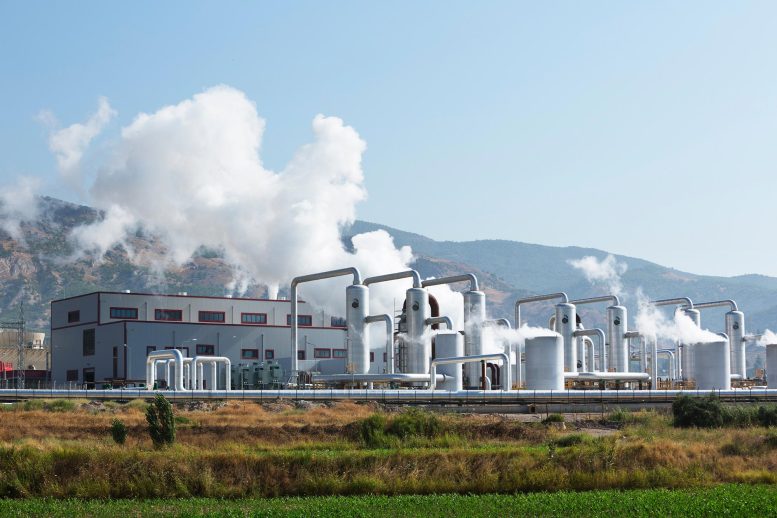
Penn State scientists propose a method to boost geothermal energy efficiency by controlling water flow with temperature-reactive materials, potentially increasing heat extraction by over 65% in 50 years.
Geothermal heat is a promising renewable energy source with nearly zero emissions. However, despite its potential, it remains a relatively costly option for generating electricity. Scientists from Penn State have introduced a technique that might prevent “short-circuits” in geothermal power plants, which can cause them to halt production, thereby potentially increasing their efficiency.
They published the work in the journal Energy.
“The public perception of geothermal is that since it’s renewable we should be able to produce from these resources infinitely,” said co-corresponding author Arash Dahi Taleghani, professor of petroleum engineering at Penn State. “In practice, it doesn’t work like that. Here we proposed a solution that could help overcome a major challenge in the field.”
Challenges and Innovations
Enhanced geothermal systems involve injecting cold water into hot dry rock deep underground. The water travels through fractures in the rock and heats up, and production wells then pump the heated liquid to the surface where a power plant turns it into electricity.
However, wide fractures may allow large volumes of water to move too quickly to sufficiently heat up before reaching the production wells. Cooler production liquid impacts the efficiency of the power plant and can compromise the economics of the project, the scientists said.
“With these projects, you can get cold-water breakthroughs,” Dahi Taleghani said. “Basically, the water takes a shortcut passing through the reservoir. And because the water doesn’t have a chance to heat up it can basically short-circuit the system.”
Producers try to prevent these shortcuts before they form by adjusting how much water circulates through the system or potentially shutting down production periodically, the scientists said. This means the plant cannot produce continuously, which would be a major benefit of geothermal heat over other sources of renewable energy like solar and wind.
The Proposed Solution
The researchers instead have proposed adding materials or chemicals to the liquid pumped into the reservoir that would autonomously control flow from inside the rock itself. The process, called the fracture conductivity tuning technique, involves adding materials that could change properties with the temperature, hindering cold water and allowing hot water to flow through the fractures.
“All these things are happening inside rock — we don’t have any access, and it’s so hot and the pressure is so high that you can’t have a valve or sensor there,” Dahi Taleghani said. “But with this method, we can add something that basically acts like an autonomous regulator, reducing the fluid passing through each fracture when some parts of the reservoir get cold and letting it go if it’s hot.”
The goal is to spread the flow more uniformly across the reservoir to sweep more heat from the rocks to the production wells and to prevent shortcuts that allow cooler water to rush to the production wells while heat remains in underutilized portions of the reservoir, the scientists said.
Modeling and Results
Using advanced modeling techniques, the team found the process could increase the cumulative heat extraction at an enhanced geothermal site by more than 65% over 50 years of production and could prevent early appearances of cold-water breakthroughs.
“These findings confirm significant improvements in energy that can be harvested by using this technique,” said co-author Qitao Zhang, a doctoral candidate in the John and Willie Leone Department of Energy and Mineral Engineering and co-author on the paper. “We are proposing an effective approach by controlling the flow deep inside the reservoir.”
Reservoirs with high fracture density and connectivity, like the complicated geologies found in real-world settings, could provide even better results, the scientists said.
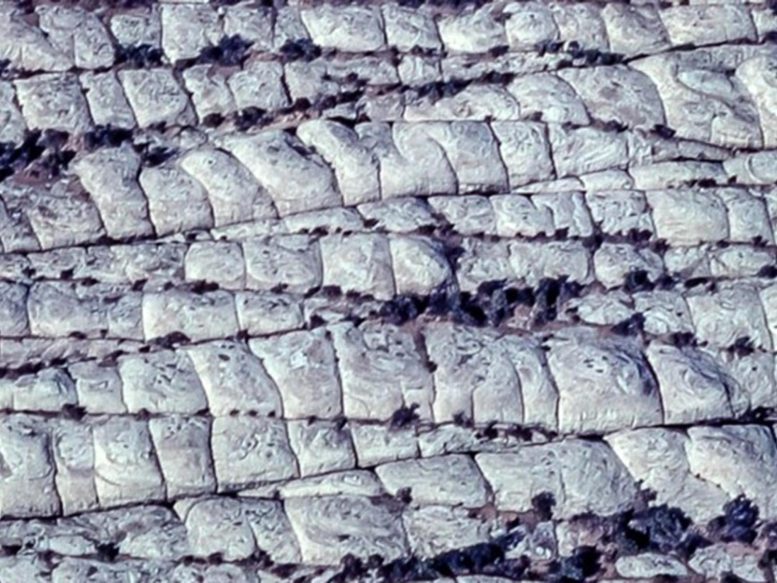
The team developed a field case by mapping the fracture networks from a rock outcrop in Arches National Park in Utah and found that if they applied their technique in this real-world geology, it would provide an extra heat extraction of 101% over 50 years of production.
“This technology could be used to make renewables cost-effective and competitive with other energy sources,” Dahi Taleghani said. “This shows there are still tremendous energy resources in the subsurface that we can use without damaging our environment.”
Reference: “Autonomous fracture flow tunning to enhance efficiency of fractured geothermal systems” by Qitao Zhang and Arash Dahi Taleghani, 22 June 2023, Energy.
DOI: 10.1016/j.energy.2023.128163
The U.S. Department of Energy supported this work.
Never miss a breakthrough: Join the SciTechDaily newsletter.
Follow us on Google and Google News.