
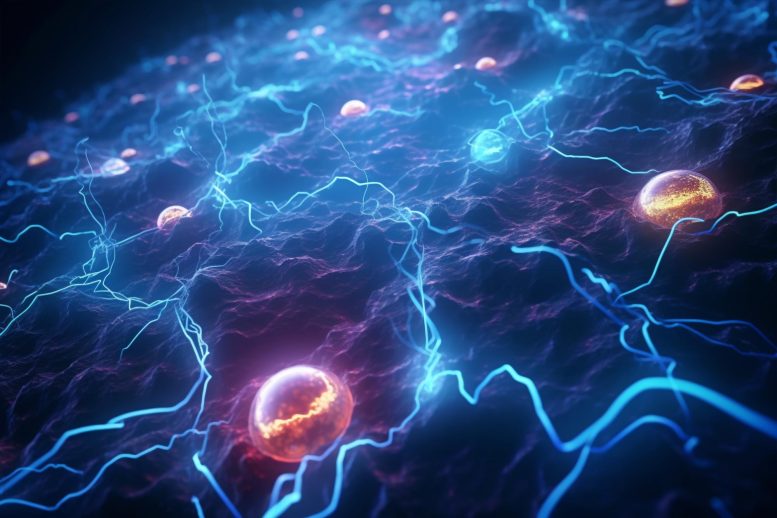
Scientists have successfully engineered E. coli bacteria to generate electricity, offering potential advancements in waste management, energy production, and other bioelectric applications.
“We engineered E. coli bacteria, the most widely studied microbe, to generate electricity,” says Professor Ardemis Boghossian at EPFL. “Though there are exotic microbes that naturally produce electricity, they can only do so in the presence of specific chemicals. E. coli can grow on a wide range of sources, which allowed us to produce electricity in a wide range of environments, including from wastewater.”
In a paper published on September 8 in the journal Joule, Boghossian’s team reported a groundbreaking achievement in bioelectronics, advancing the capabilities of common E. coli bacteria to generate electricity. The work outlines a novel approach that could revolutionize both waste management and energy production.
The Bioelectronic Breakthrough
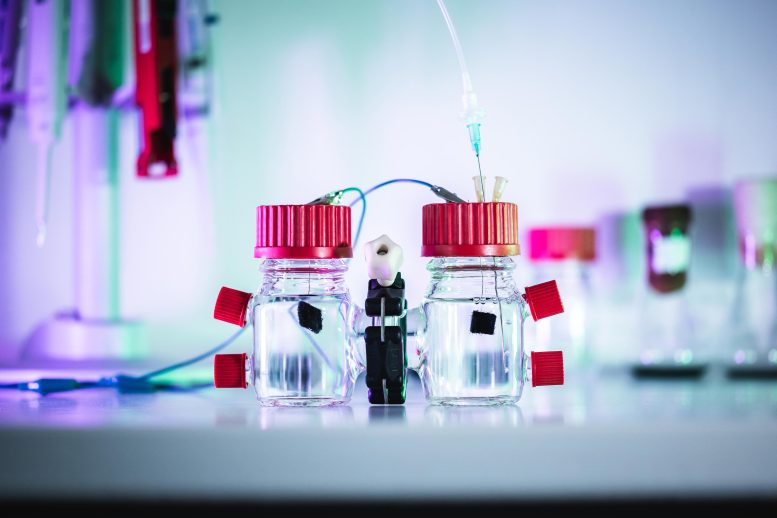
E. coli bacteria, a staple of biological research, have been harnessed to create electricity through a process known as extracellular electron transfer (EET). The EPFL researchers engineered E. coli bacteria to exhibit enhanced EET, making them highly efficient “electric microbes.” Unlike previous methods that required specific chemicals for electricity generation, the bioengineered E. coli can produce electricity while metabolizing a variety of organic substrates.
One of the study’s key innovations is the creation of a complete EET pathway within E. coli, a feat not achieved before. By integrating components from Shewanella oneidensis MR-1, a bacterium famous for generating electricity, the researchers successfully constructed an optimized pathway that spans the inner and outer membranes of the cell. This novel pathway surpassed previous partial approaches, and led to a three-fold increase in electrical current generation compared to conventional strategies.
Wastewater as a Playground
Importantly, the engineered E. coli exhibited remarkable performance in various environments, including wastewater collected from a brewery. While exotic electric microbes faltered, the modified E. coli thrived, showcasing its potential for large-scale waste treatment and energy production.
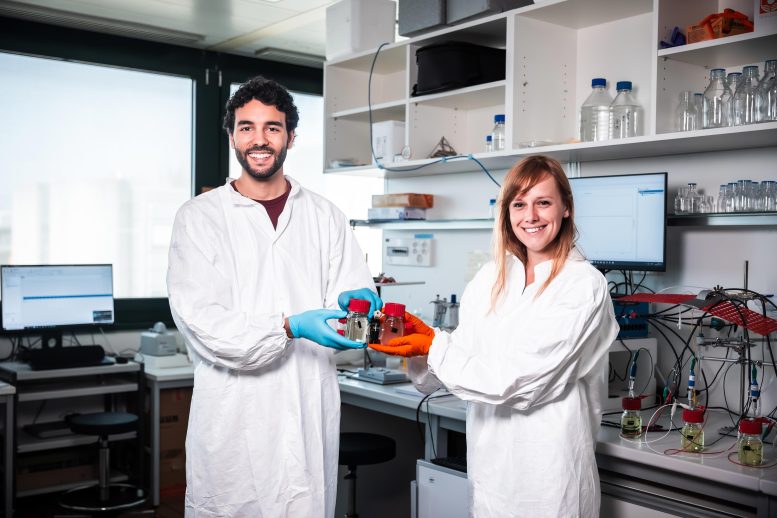
“Instead of putting energy into the system to process organic waste, we are producing electricity while processing organic waste at the same time – hitting two birds with one stone!” says Boghossian. “We even tested our technology directly on wastewater that we collected from Les Brasseurs, a local brewery in Lausanne. The exotic electric microbes weren’t even able to survive, whereas our bioengineered electric bacteria were able to flourish exponentially by feeding off this waste.”
The implications of the study extend beyond waste treatment. Being able to generate electricity from a wide range of sources, the engineered E. coli can be utilized in microbial fuel cells, electrosynthesis, and biosensing – to name a few applications. In addition, the bacterium’s genetic flexibility means that it can be tailored to adapt to specific environments and feedstocks, making it a versatile tool for sustainable technology development.
“Our work is quite timely, as engineered bioelectric microbes are pushing the boundaries in more and more real-world applications,” says Mouhib, the lead author of the manuscript. “We have set a new record compared to the previous state-of-the-art, which relied only on a partial pathway, and compared to the microbe that was used in one of the biggest papers recently published in the field. With all the current research efforts in the field, we are excited about the future of bioelectric bacteria, and can’t wait for us and others to push this technology into new scales.”
Reference: “Extracellular electron transfer pathways to enhance the electroactivity of modified Escherichia coli” by Mohammed Mouhib, Melania Reggente, Lin Li, Nils Schuergers and Ardemis A. Boghossian, 8 September 2023, Joule.
DOI: 10.1016/j.joule.2023.08.006
Never miss a breakthrough: Join the SciTechDaily newsletter.
Follow us on Google and Google News.
1 Comment
What would be the predictable environmental outcome be, if this modified bacterium were to escape into the environment? An ocean that would be lethal to the touch? No concerns whatsoever? Electric ells would love to swim in it? Certainly,not a serious concern of mine; but, they did the work; did they even give it any thought?