
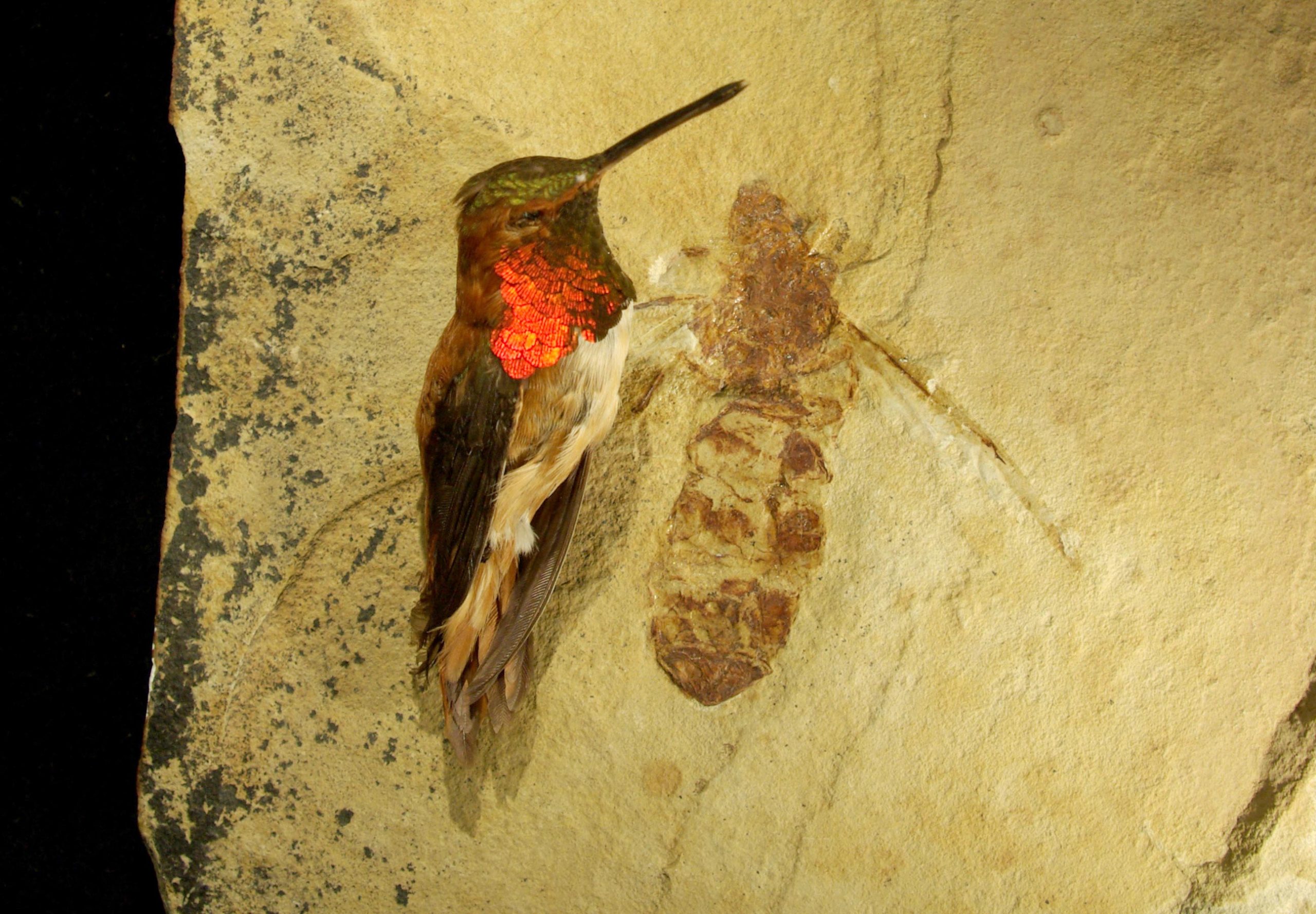
A giant Titanomyrma ant fossil in Canada questions previous assumptions about its preference for hot climates.
Simon Fraser University scientists say their research on the latest fossil find near Princeton, B.C. is raising questions about how the dispersal of animals and plants occurred across the Northern Hemisphere some 50 million years ago, including whether brief intervals of global warming were at play.
The fossil was discovered by Princeton resident Beverley Burlingame and made available to the researchers through the town’s museum. Researchers say it is the first Canadian specimen of the extinct ant Titanomyrma, whose biggest species was surprisingly gigantic, with the body mass of a wren and a wingspan of half a foot.
SFU paleontologists Bruce Archibald and Rolf Mathewes, together with Arvid Aase of Fossil Butte National Monument in Wyoming, have published their research on the fossil in the current edition of the scientific journal The Canadian Entomologist.
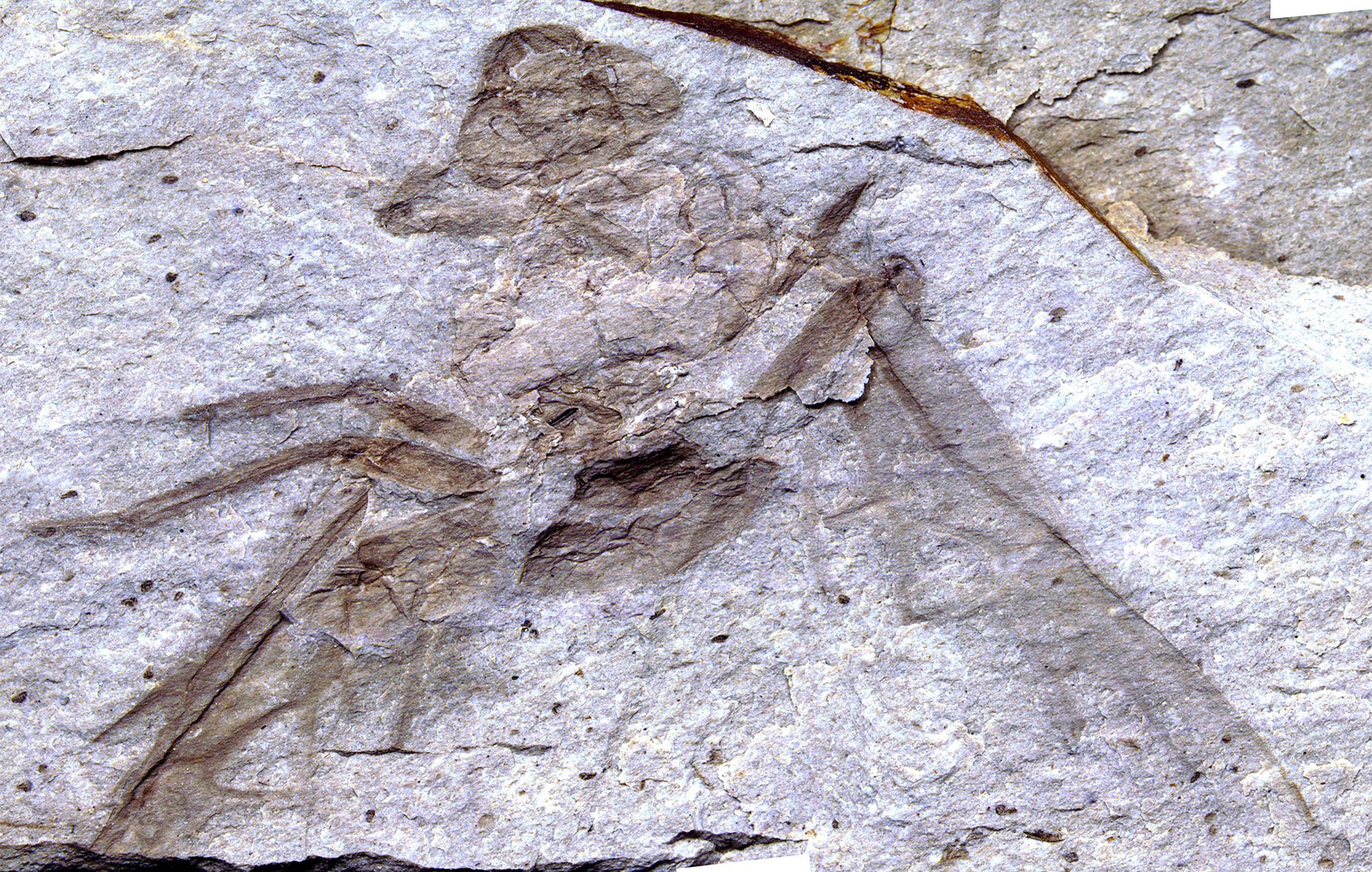
A decade earlier, Archibald and collaborators discovered a gigantic Titanomyrma fossil from Wyoming in a museum drawer in Denver. “This ant and the new fossil from British Columbia are close in age to other Titanomyrma fossils that have been long known in Germany and England,” says Archibald. “This raises the questions of how these ancient insects traveled between continents to appear on both sides of the Atlantic at nearly the same time.”
Europe and North America were connected by land across the Arctic then, as the North Atlantic had not yet opened enough by continental drift to fully separate them. But was the ancient far-northern climate suitable for their passage?
The scientists found that the ancient climates were hot where these ants lived in Wyoming and Europe. They further found that modern ants with the biggest queens also inhabit hot climates, leading them to associate large size in queen ants with high temperatures. This creates a problem, however, as although the ancient Arctic had a milder climate than today, it still wouldn’t have been hot enough to allow Titanomyrma to pass.
New Findings Build on Earlier Research
The researchers suggested in 2011 that this might be explained by geologically brief intervals of global warming around the time of Titanomyrma called “hyperthermals” creating short-term intervals of friendly conditions for them to cross.
They then predicted that Titanomyrma wouldn’t be found in the ancient temperate Canadian uplands, as it would have been cooler than Titanomyrma appears to have required. But now one has been discovered there.
The story becomes more complicated and interesting, as the new Canadian fossil was distorted by geological pressure during fossilization, so its true life size can’t be established. It might have been gigantic like some of the largest Titanomyrma queens, but it could equally be reconstructed as smaller.
“If it was a smaller species, was it adapted to this region of cooler climate by reduction in size and gigantic species were excluded as we predicted back in 2011?” says Archibald. “Or were they huge, and our idea of the climatic tolerance of gigantic ants, and so how they crossed the Arctic, was wrong?”
Archibald says the research is helping scientists better understand how B.C.’s community of animals and plants were forming when climate was much different. “Understanding how life dispersed among the northern continents in a very different climate 50 million years ago in part explains patterns of animal and plant distribution that we see today,” says Archibald.
“Titanomyrma may also help us better understand how global warming could affect how the distribution of life may change. To prepare for the future, it helps to understand the past.”
He adds: “We’ll need to find more fossils. Do our ideas of Titanomyrma’s ecology, and so of this ancient dispersal of life, need revision? For now, it remains a mystery.”
Reference: “Eocene giant ants, Arctic intercontinental dispersal, and hyperthermals revisited: discovery of fossil Titanomyrma (Hymenoptera: Formicidae: Formiciinae) in the cool uplands of British Columbia, Canada” by S. Bruce Archibald, Rolf W. Mathewes and Arvid Aase, 6 February 2023, The Canadian Entomologist.
DOI: 10.4039/tce.2022.49
Never miss a breakthrough: Join the SciTechDaily newsletter.
Follow us on Google and Google News.
3 Comments
I, for one, welcome our new giant ant overlords..
I will too, Paulyuk6:they can’t possibly be any worse than the current group of oxygen-thieves.
I found this article looking for clues about a fossil I found that looks to be a giant ant. Just looking for who I can contact.