
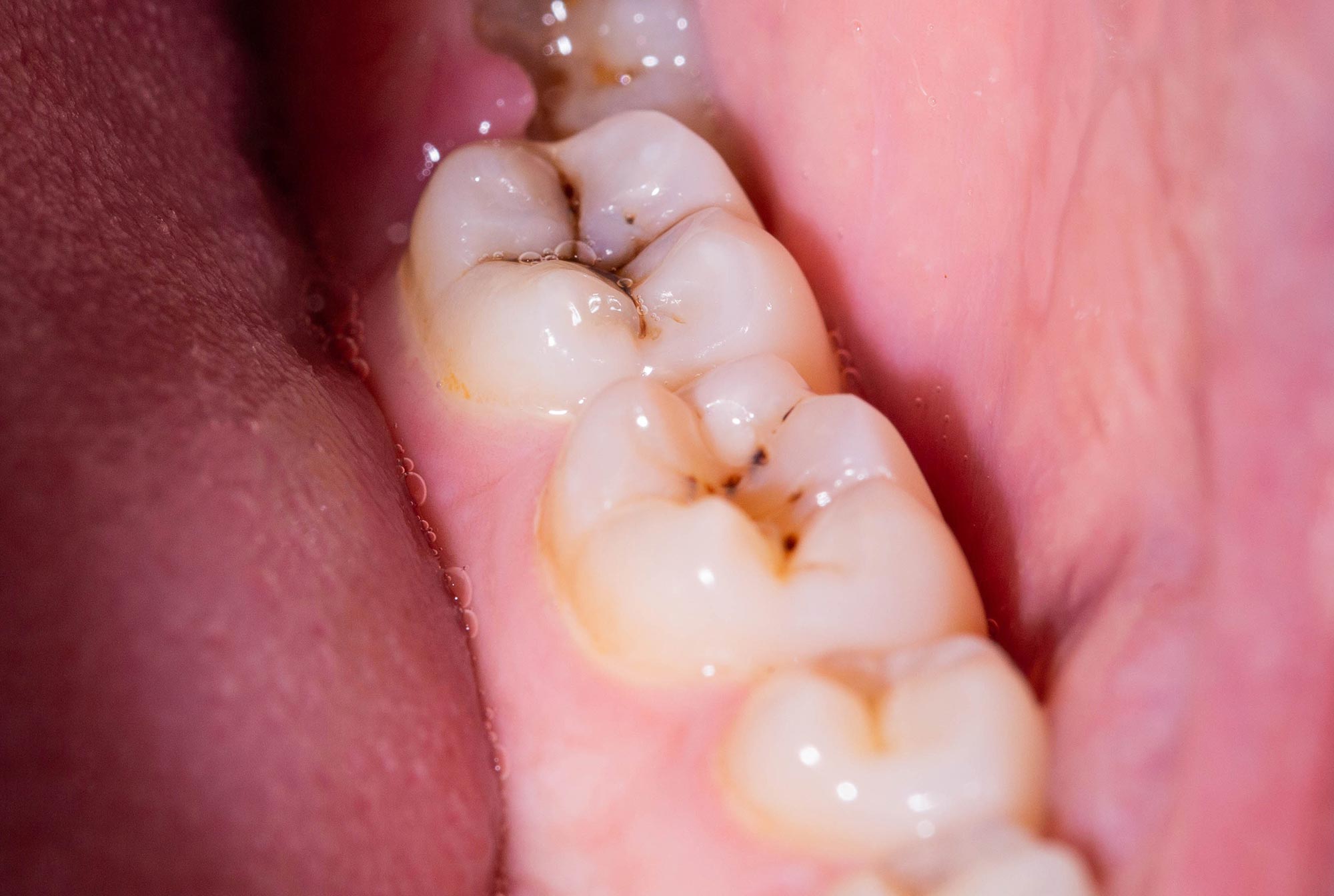
A new clinical study involving human participants shows that arginine, a naturally occurring amino acid, can change how dental plaque develops on teeth, helping to reduce the risk of tooth decay.
When sugars from food are broken down by the many bacteria living in the mouth, acids are produced that gradually damage tooth enamel and lead to cavities, also known as dental caries. These microorganisms do not exist in isolation but form structured, plaque-like communities called “dental biofilms”.
One natural defense against this process is arginine, an amino acid that is already present in saliva. Research has shown that arginine can help reduce the risk of tooth decay.
Certain beneficial oral bacteria contain an arginine deiminase system (ADS), which allows them to convert arginine into alkaline compounds that counteract harmful acids. When more arginine is available, these helpful bacteria are able to thrive, while acid-producing bacteria become less dominant. Laboratory studies conducted outside the human body have also demonstrated that arginine can alter the overall makeup of dental biofilms.
To confirm whether these effects occur inside the human mouth, a group of dentists and researchers led by Post.doc. Yumi C. Del Rey and Professor Sebastian Schlafer at Aarhus University in Denmark carried out a clinical trial. Their results were published in the International Journal of Oral Science.
Testing Arginine in the Human Mouth
The study involved 12 participants who had active dental caries. Each participant was fitted with specially designed dentures that allowed intact biofilms to grow on both sides of the jaw, making it possible to directly compare treatments.
During the experiment, participants immersed the dentures in a sugar solution for 5 minutes. This was followed by a 30-minute treatment with either distilled water (as placebo) or arginine, applied to opposite sides of the denture. This routine was repeated three times daily, with arginine consistently applied to the same side.
“The aim was to investigate the impact of arginine treatment on the acidity, type of bacteria, and the carbohydrate matrix of biofilms from patients with active caries,” explains Sebastian Schlafer, professor at the Department of Dentistry and Oral Health. After 4 days, when the biofilm was developed, the dentures were removed for detailed analysis.
Arginine Reduces Acid Formation
To assess acidity levels within the biofilms, the researchers used a pH-sensitive dye known as “C-SNARF-4,” which made it possible to measure pH at different points inside the biofilm structure. Biofilms exposed to arginine maintained a significantly higher pH, meaning lower acidity, at both 10 and 35 minutes after being exposed to sugar.
“Our results revealed differences in acidity of the biofilms, with the ones treated with arginine being significantly more protected against acidification caused by sugar metabolism,” says the first author, Yumi C. Del Rey.
Structural Changes in Biofilm Carbohydrates
Then, carbohydrate-binding proteins called lectins, tagged with a fluorescent dye, were used to stain two common carbohydrate components of the biofilms: fucose and galactose. These components make up a large portion of dental biofilms and may contribute to the creation of “acidic pockets” inside them.
With arginine treatment, an overall reduction was seen in the amount of fucose-based carbohydrates, possibly making the biofilm less harmful. In addition, there was a change in the structure of the biofilm, with galactose-containing carbohydrates decreasing at the bottom and increasing at the top.
Shifts in the Oral Microbiome
Further, to determine which bacteria were present in the biofilm, they sequenced all bacterial genomes using a technique called “16S rRNA gene sequencing.”
Though biofilms treated with arginine and placebo were predominantly dominated by Streptococcus and Veillonella species, arginine significantly reduced the mitis/oralis group of streptococci, which produce acid but are not strong producers of alkali, and slightly increased streptococci with considerable arginine metabolism, thereby improving the pH. Overall, arginine made the biofilms less harmful by reducing their acidity, altering their carbohydrate structure, and reshaping the microbiome within them.
Dental caries, being prevalent across all ages and regions, could be combated using strategies such as supplementation of arginine in toothpastes or oral rinses for people who are more susceptible to them. Arginine, being an amino acid naturally produced in our body and present in dietary proteins, is harmless and could find application even in children.
Reference: “Arginine modulates the pH, microbial composition, and matrix architecture of biofilms from caries-active patients” by Yumi C. Del Rey, Pernille D. Rikvold, Marie B. Lund, Eero J. Raittio, Andreas Schramm, Rikke L. Meyer and Sebastian Schlafer, 20 November 2025, International Journal of Oral Science.
DOI: 10.1038/s41368-025-00404-5
Never miss a breakthrough: Join the SciTechDaily newsletter.
Follow us on Google and Google News.
10 Comments
Would like to be a canid for your reach
I would like to be considered for your research
The study was done in Denmark. You would have to contact the researchers there.
Arginine has already proven to be a superior dental desensitizer when applied both clinically and at home.
I’ve been adding L-Arginine to my thrice weekly protein drinks during my gym workouts. It hasn’t prevented the formation of cavities.
Ingesting arginine is totally different from applying arginine directly to the teeth.
I wish the article specified how the arginine was applied…liquid? powder? gel? and can we make it ourselves using arginine capsules? Is it a product we can buy?
All the article says is that the arginine treatment was applied to the denture for 30 minutes 3 times a day. I can’t even visualize what that means. How can you keep something on your teeth for a half hour without saliva diluting it and washing it away to be swallowed or spit out?? My mouth is salivating just thinking about something like that being in my mouth.
You’re right
~Right!! …I thought the same thing! This whole article seems off! And so tired of reading articles that leave us hanging without solutions! Always comes down to buying from them!!
I volunteer as tribute
Arginine, like most amino acids, tastes decidedly awful (Leucine has a peanut-buttery tinged tone, too strong to be considered agreeable).
I can’t think of any practical treatment modality that will get around this.