
Close Menu
    Facebook X (Twitter) Instagram
    SciTechDaily
    • Biology
    • Chemistry
    • Earth
    • Health
    • Physics
    • Science
    • Space
    • Technology
    Facebook X (Twitter) Pinterest YouTube RSS
    SciTechDaily
    Home»Health»Hidden Peril in Your Mouth: Scientists Discover That a Common Oral Pathogen Increases Heart Attack Damage
    Health

    Hidden Peril in Your Mouth: Scientists Discover That a Common Oral Pathogen Increases Heart Attack Damage

    By Tokyo Medical and Dental UniversityDecember 9, 20231 Comment3 Mins Read
    Facebook Twitter Pinterest Telegram LinkedIn WhatsApp Email Reddit
    Share
    Facebook Twitter LinkedIn Pinterest Telegram Email Reddit
    Oral Pathogens
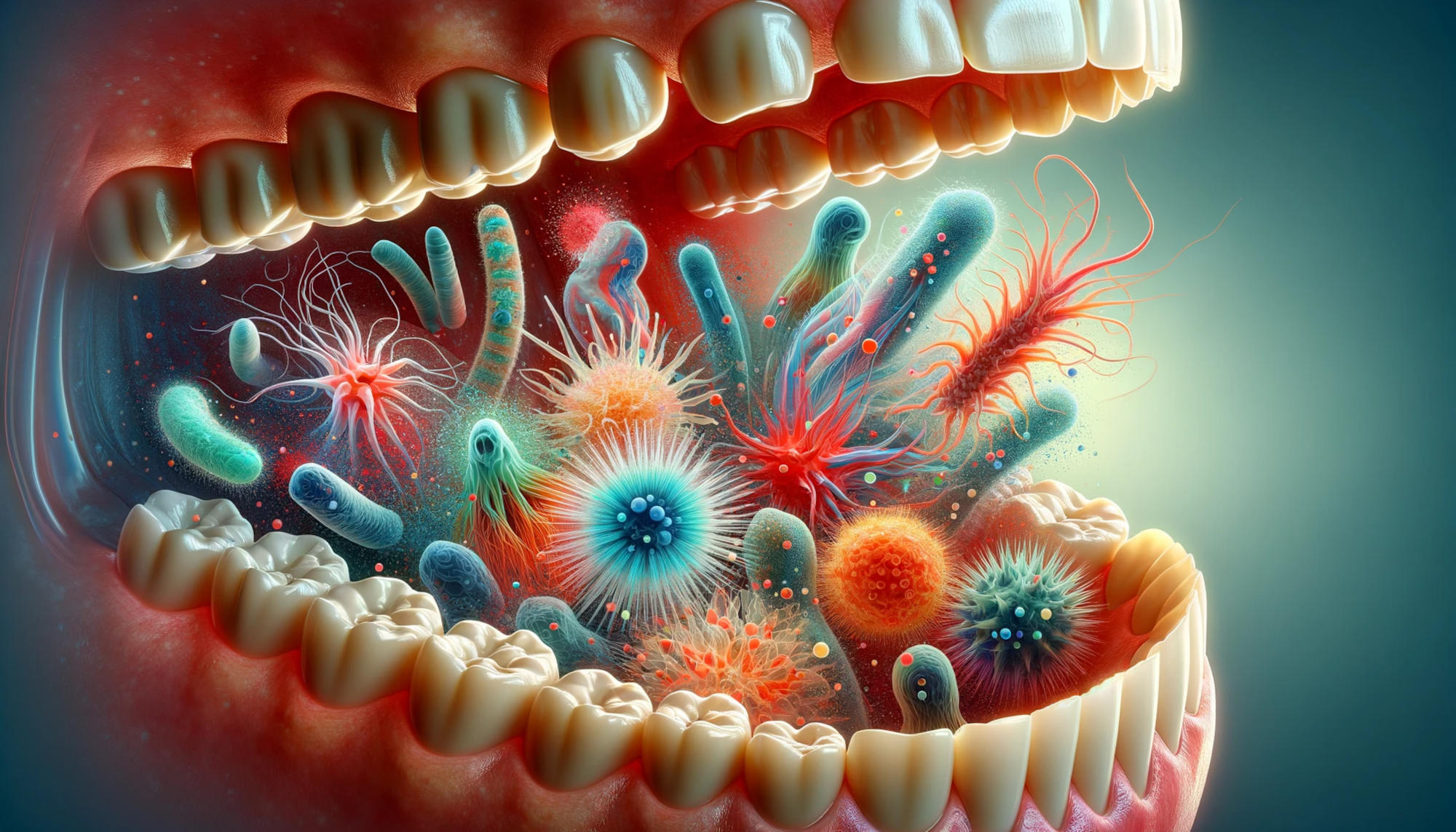
    A study from Tokyo Medical and Dental University reveals that the oral pathogen Porphyromonas gingivalis can hinder heart muscle repair after a heart attack, suggesting that treating oral infections may help prevent fatal heart attacks.

    Scientists at Tokyo Medical and Dental University have discovered that the gum disease-causing bacterium Porphyromonas gingivalis can disrupt the merging of autophagosomes and lysosomes. This interference aggravates heart tissue restructuring and increases the risk of heart rupture following a heart attack.

    Brushing and flossing regularly not only keeps your smile bright but did you know it could also help protect your heart? Researchers in Japan have recently reported that an infected mouth could lead to a broken heart.

    The study, recently published in the International Journal of Oral Science and conducted by Tokyo Medical and Dental University, reveals that a common oral pathogen can hinder the self-repair of cardiac myocytes following a heart attack due to coronary heart disease.

    Heart attacks occur when blood flow in the coronary arteries is blocked, resulting in an inadequate supply of nutrients and oxygen to the heart muscle, and ultimately death of cardiac myocytes. To prevent this, cardiac myocytes use a process known as autophagy to dispose of damaged cellular components, keeping them from causing cardiac dysfunction.
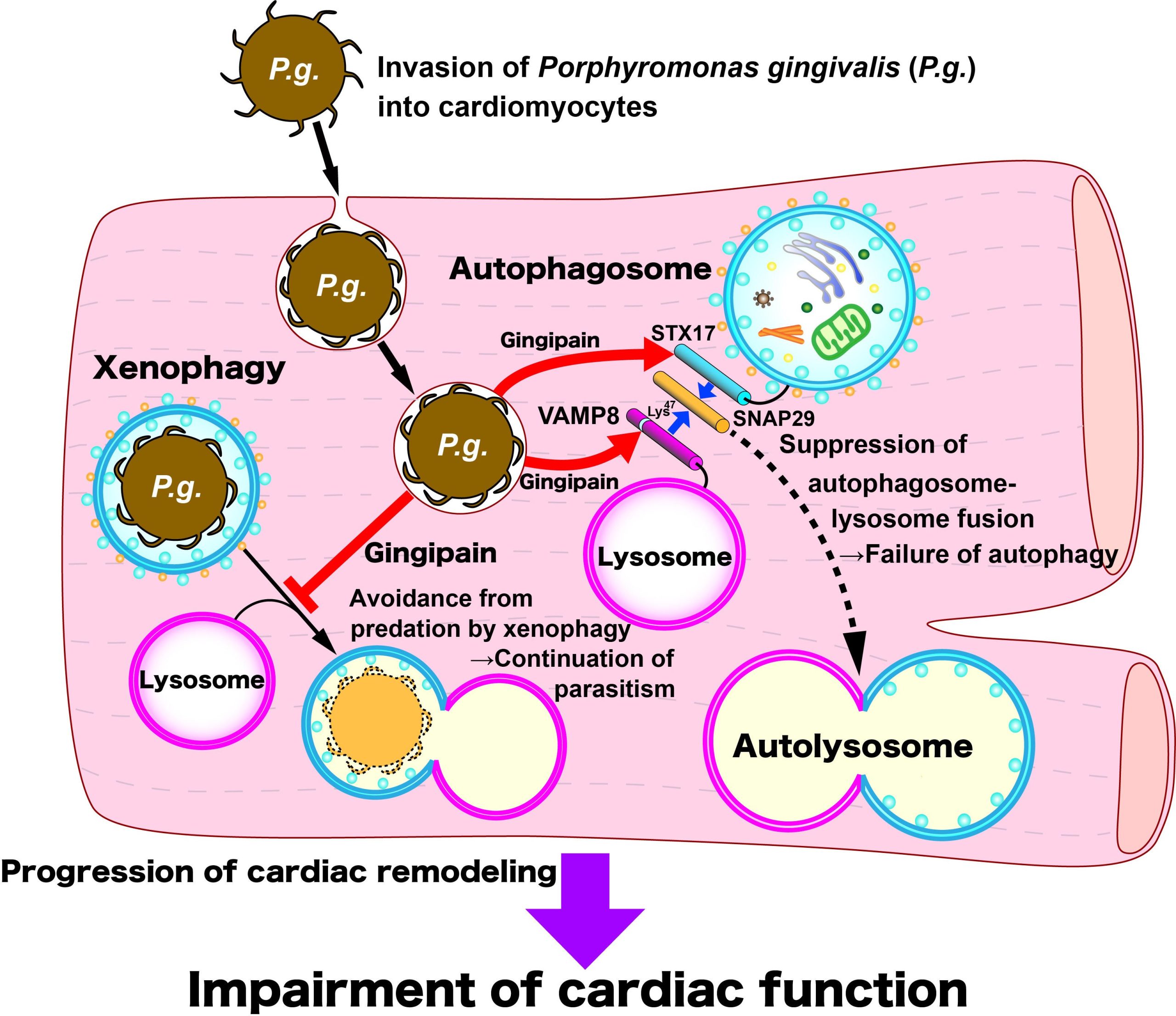
    The Dual Suppressive Effect of Gingipain on Both Xenophagy and Autophagy
    Gingipain released by P.g. cleaves VAMP8, thereby inhibiting autophagy through preventing autophagosomes-lysosome fusion, which causes cardiac dysfunction. Credit: Department of Cardiovascular Medicine, TMDU

    Key Findings About Porphyromonas gingivalis

    “Previous studies have shown that the periodontal pathogen Porphyromonas gingivalis, which has been detected at the site of occlusion in myocardial infarction, can exacerbate post-infarction myocardial fragility,” says lead author of the study Yuka Shiheido-Watanabe. “However, the mechanisms underlying this effect remained unknown.”

    To investigate this, the researchers created a version of P. gingivalis that does not express gingipain, its most potent virulence factor, which an earlier study showed can inhibit cells from undergoing programmed cell death in response to injury. They then used this bacterium to infect cardiac myocytes or mice.

    Autophagy Disruption and Cardiac Myocyte Dysfunction

    “The results were very clear,” explains Yasuhiro Maejima, corresponding author. “The viability of cells infected with the mutant bacterium lacking gingipain was much higher than that of cells infected with the wild-type bacterium. In addition, the effects of myocardial infarction were significantly more severe in mice infected with wild-type P. gingivalis than in those infected with the mutant P. gingivalis lacking gingipain.”

    More detailed investigation of this effect showed that gingipain interferes with a fusion of two cell components known as autophagosomes and lysosomes, a process that is crucial to autophagy. In mice, this resulted in an increase in the size of cardiac myocytes and an accumulation of proteins that would normally be cleared out of the cells to protect the cardiac muscle.

    “Our findings suggest that infection with P. gingivalis producing gingipain results in excessive autophagosome accumulation, which can lead to cellular dysfunction, cell death, and ultimately cardiac rupture,” says Shiheido-Watanabe.

    Given that P. gingivalis appears to have a substantial impact on the cardiac muscle’s ability to health itself after a heart attack, treating this common oral infection could help reduce the risk of fatal heart attack.

    Reference: “Porphyromonas gingivalis, a periodontal pathogen, impairs post-infarcted myocardium by inhibiting autophagosome–lysosome fusion” by Yuka Shiheido-Watanabe, Yasuhiro Maejima, Shun Nakagama, Qintao Fan, Natsuko Tamura and Tetsuo Sasano, 18 September 2023, International Journal of Oral Science.
    DOI: 10.1038/s41368-023-00251-2

    The study was funded by the Ministry of Education and the MSD Life Science Foundation.

    Never miss a breakthrough: Join the SciTechDaily newsletter.
    Follow us on Google and Google News.

    Dentistry Heart Pathogens Popular Teeth Tokyo Medical and Dental University
    Share. Facebook Twitter Pinterest LinkedIn Email Reddit

    Related Articles

    Two Simple Topical Treatments Halt Childhood Cavities for Years

    As Good as Dental Sealants – Scientists Discover Inexpensive Liquid That Prevents Tooth Decay

    90% Reduction: Scientists Discover Natural Molecule That Eradicates Plaques and Cavities

    No More Cavities? Organoids Pave the Way for Enamel Regeneration

    7 Worst Habits for Your Dental Health

    Research Shows Extensive Damage Caused by Common Teeth-Whitening Products

    Good News: Your Toothbrush Reflects You, Not Your Toilet

    “Tooth Worms”: Researchers Discover Why Cold Induces Tooth Pain – And How to Stop It

    Chewing Sugar-Free Gum Helps Reduce Tooth Decay in Adults and Children

    1 Comment

    1. Beverly [email protected] on December 16, 2023 9:54 am

      Very good articles.

      Reply
    Leave A Reply Cancel Reply

    • Facebook
    • Twitter
    • Pinterest
    • YouTube

    Don't Miss a Discovery

    Subscribe for the Latest in Science & Tech!

    Trending News

    The Universe Is Expanding Too Fast and Scientists Can’t Explain Why

    “Like Liquid Metal”: Scientists Create Strange Shape-Shifting Material

    Early Warning Signals of Esophageal Cancer May Be Hiding in Plain Sight

    Common Blood Pressure Drug Shows Surprising Power Against Deadly Antibiotic-Resistant Superbug

    Scientists Uncover Dangerous Connection Between Serotonin and Heart Valve Disease

    Scientists Discover a “Protector” Protein That Could Help Reverse Hair Loss

    Bone-Strengthening Discovery Could Reverse Osteoporosis

    Scientists Uncover Hidden Trigger Behind Stem Cell Aging

    Follow SciTechDaily
    • Facebook
    • Twitter
    • YouTube
    • Pinterest
    • Newsletter
    • RSS
    SciTech News
    • Biology News
    • Chemistry News
    • Earth News
    • Health News
    • Physics News
    • Science News
    • Space News
    • Technology News
    Recent Posts
    • Scientists Crack Alfalfa’s Chromosome Mystery After Decades of Debate
    • Ancient Ant-Plant Alliance Collapses As Predatory Wasps Move In
    • Scientists Discover Tiny New Spider That Hunts Prey 6x Its Size
    • Natural Component From Licorice Shows Promise for Treating Inflammatory Bowel Disease
    • New Research Finds Shocking Link Between Chili Peppers and Cancer
    Copyright © 1998 - 2026 SciTechDaily. All Rights Reserved.
    • Science News
    • About
    • Contact
    • Editorial Board
    • Privacy Policy
    • Terms of Use

    Type above and press Enter to search. Press Esc to cancel.