
Close Menu
    Facebook X (Twitter) Instagram
    SciTechDaily
    • Biology
    • Chemistry
    • Earth
    • Health
    • Physics
    • Science
    • Space
    • Technology
    Facebook X (Twitter) Pinterest YouTube RSS
    SciTechDaily
    Home»Science»Grammy Nominees Are a Brainy Bunch: Music Directly Benefits Brain Health
    Science

    Grammy Nominees Are a Brainy Bunch: Music Directly Benefits Brain Health

    By Oregon Health & Science UniversityFebruary 6, 2023No Comments3 Mins Read
    Facebook Twitter Pinterest Telegram LinkedIn WhatsApp Email Reddit
    Share
    Facebook Twitter LinkedIn Pinterest Telegram Email Reddit
    Music Brain
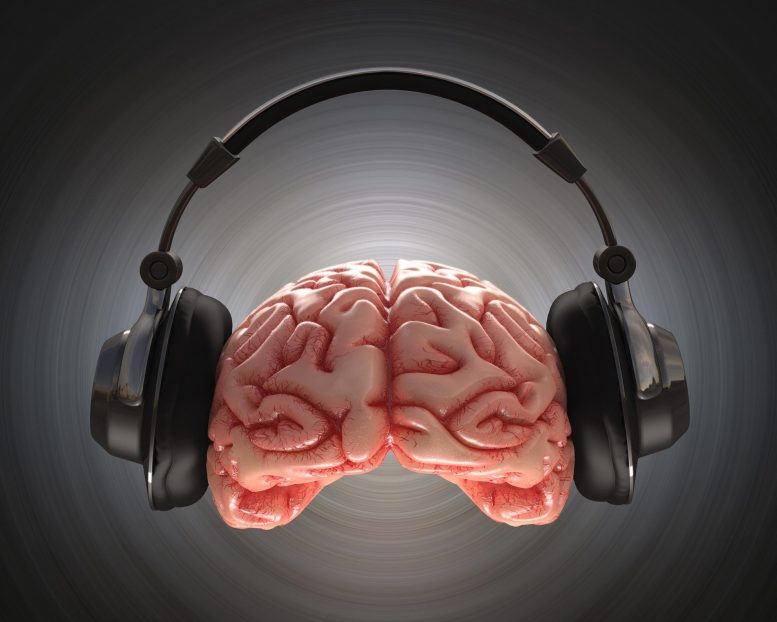
    Neuroscientist Larry Sherman says the act of practicing music can help generate neurons, strengthen the connections between brain cells called synapses, and rebuild the myelin sheaths that enable transmission of electrical signals between cells.

    Practicing — or Even Listening To — Music Directly Benefits Brain Health and Function

    The Grammy Awards on Sunday celebrated some of the most accomplished musicians of our time, although a neuroscientist at Oregon Health & Science University (OHSU) says music is a boon for virtually anyone who can carry a tune. In fact, he says our brains are hard-wired to the benefits of music.

    From that standpoint, Grammy Award nominees may be especially brainy.

    “It turns out that practicing a musical instrument might be the most difficult and challenging thing a human brain can do,” says Larry Sherman, Ph.D., a professor in the Division of Neuroscience at the Oregon National Primate Research Center at OHSU. “You’re integrating sensory and fine motor skills, gross motor skills. You’re holding your instrument, moving your fingers. You’re doing all these things, and it’s rewiring your brain to the point where you can actually become a Grammy-nominated musician.”


    The Grammy Awards highlight the benefits of music to brain health and function, says OHSU neuroscientist Larry Sherman, Ph.D. Credit: OHSU/Christine Torres Hicks

    Sherman, who has given presentations on the benefits of music and has co-authored a forthcoming book on the topic, says the act of practicing music can help generate neurons, strengthen the connections between brain cells called synapses, and rebuild the myelin sheaths that enable transmission of electrical signals between cells.

    “This is an amazing thing that our brain is doing,” he says. “It’s re-wiring itself and remaking itself every time we practice music.”

    The Power of Playing Music Together

    He says that playing music together in a group may be even more beneficial. Magnetic resonance imaging has shown that music triggers a cascade of neurotransmitters, such as endorphins and dopamine, which are associated with positive feelings. These neurotransmitters can relieve pain and also foster a feeling of communal belonging. The bigger the group, the bigger the effect.

    “I always tell people, if only we could get Congress to sing together,” Sherman says.

    Sherman says there’s a case to be made that the communal activity of playing music together has likely bound human communities together for thousands of years.

    “The fact that we’ve found flutes in Neanderthal caves means something,” he says.

    Bridging Neuroscience and Music

    Sherman’s own research focuses on neurodegeneration, especially in conditions such as multiple sclerosis in which myelin, the protective coating around the nerve fibers in the central nervous system, becomes damaged. He has also worked to popularize neuroscience through a series of public presentations involving his own personal interest in music.

    Since his initial joint appearance with Grammy-nominated vocalist Valerie Day and jazz pianist Darrell Grant in Portland in 2008, Sherman has spoken regularly on the neuroscience around music, love, chocolate, and even racism through venues such as Science on Tap. He has presented more than 300 times in seven countries, including Australia, the United Kingdom, New Zealand, Germany, Ireland, Canada, and the United States.

    Never miss a breakthrough: Join the SciTechDaily newsletter.
    Follow us on Google and Google News.

    Brain Music Neuroscience Oregon Health & Science University Popular
    Share. Facebook Twitter Pinterest LinkedIn Email Reddit

    Related Articles

    New Study: Everyday Pleasures Can Boost Cognitive Performance

    Neuroscientists Uncover Why the Brain Enjoys Music

    Dreams May Serve a Real Purpose: Preparing Us to Face Our Fears

    DMT Creates Vivid Waking Dream State in the Brain – “It’s Like Dreaming but With Your Eyes Open”

    The Science of a Hit Song – Unlocking the Secrets of Musical Pleasure

    Scientists Establish Functional Brain-to-Brain Interface between Human and Animal

    Photos of Einstein’s Brain Show Unique Features

    Listening to Mozart Can Make You Smarter but No More Than Justin Bieber

    Be Like Neo and Learn New Skills Matrix-Style

    Leave A Reply Cancel Reply

    • Facebook
    • Twitter
    • Pinterest
    • YouTube

    Don't Miss a Discovery

    Subscribe for the Latest in Science & Tech!

    Trending News

    Magnetic Fields May Solve a Longstanding Binary Star Mystery

    The Probiotic Breakthrough for Natural Anxiety Relief and Better Mental Health

    Animal vs. Plant Protein: Scientists Found a Surprising Nutritional Difference

    According to Scientists, This Simple Dietary Change Is Linked to Lower Depression Scores

    Researchers Discover a Hidden Vitamin D Problem That Persists Year-Round

    Interstellar Comet 3I/ATLAS Reveals Strange Chemistry Beyond Our Solar System

    A Newly Found Cellular Shift May Explain Why Aging Leads to Disease

    Scientists Discover Gut Signal That Turns Off Sugar Cravings

    Follow SciTechDaily
    • Facebook
    • Twitter
    • YouTube
    • Pinterest
    • Newsletter
    • RSS
    SciTech News
    • Biology News
    • Chemistry News
    • Earth News
    • Health News
    • Physics News
    • Science News
    • Space News
    • Technology News
    Recent Posts
    • Breakthrough for 800 Million Patients? Kidney Disease Drug Shows Powerful New Benefits
    • A Surprising Discovery Suggests Autism Is Not One Condition
    • New Alzheimer’s Discovery Could Change How Scientists Fight the Disease
    • This Quantum Detector Boosts Terahertz Sensitivity by 20 Times
    • A Universe Without Dark Energy? Mathematicians Challenge Standard Cosmology
    Copyright © 1998 - 2026 SciTechDaily. All Rights Reserved.
    • Science News
    • About
    • Contact
    • Editorial Board
    • Privacy Policy
    • Terms of Use

    Type above and press Enter to search. Press Esc to cancel.