
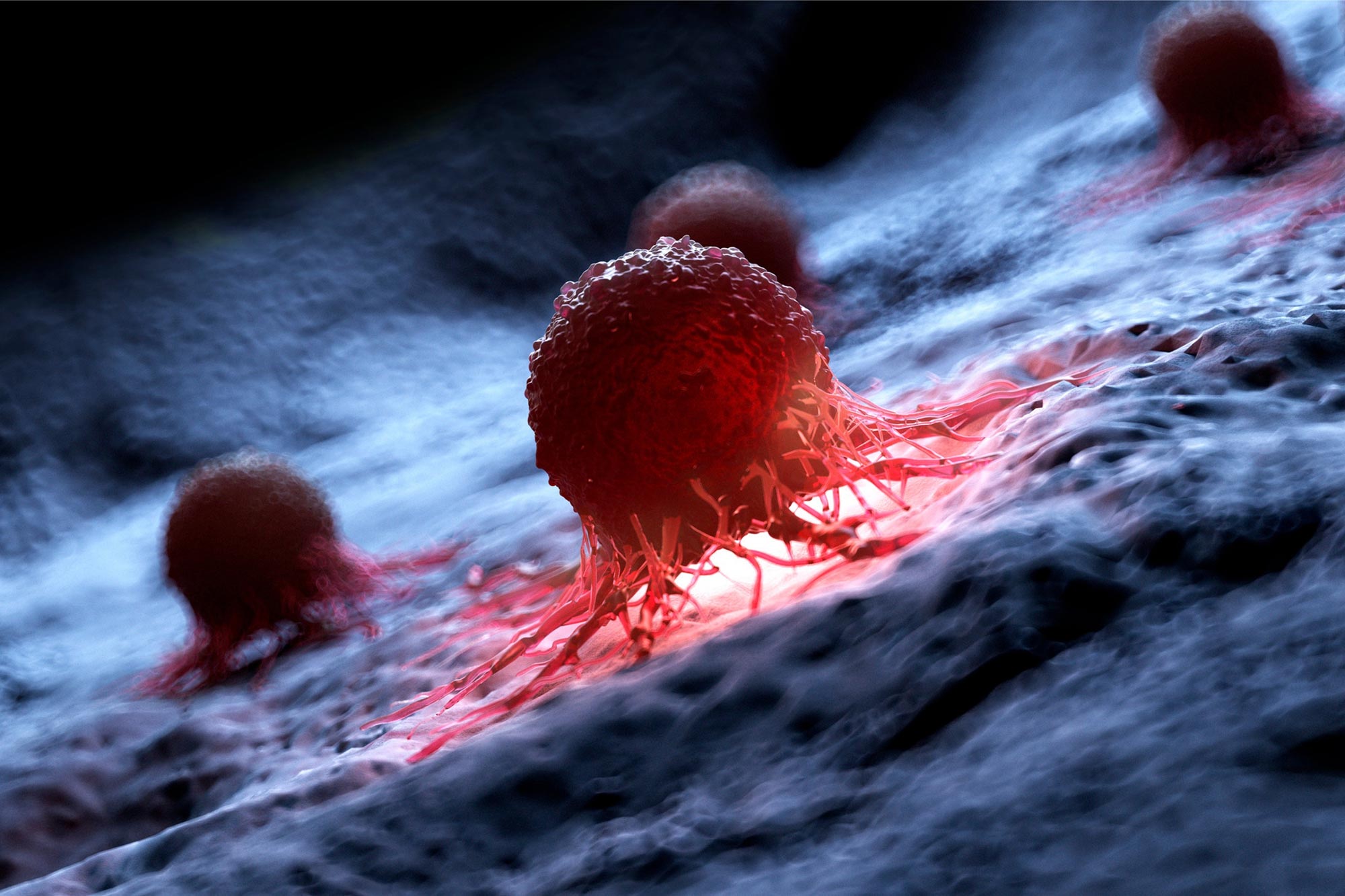
Research findings show that pitavastatin suppresses skin and pancreatic cancers by inhibiting interleukin-33.
A recent study conducted by researchers at Mass General Cancer Center has found that statins, which are widely used to reduce cholesterol, might inhibit a specific pathway linked to cancer development caused by chronic inflammation. These results were reported in Nature Communications.
“Chronic inflammation is a major cause of cancer worldwide,” said senior author Shawn Demehri, MD, PhD, a principal investigator at the Center for Cancer Immunology and Cutaneous Biology Research Center of Massachusetts General Hospital and an associate professor of Dermatology at Harvard Medical School. “We investigated the mechanism by which environmental toxins drive the initiation of cancer-prone chronic inflammation in the skin and pancreas,” says Demehri, who is also the Bob and Rita Davis Family MGH Research Scholar 2023-2028. “Furthermore, we examined safe and effective therapies to block this pathway in order to suppress chronic inflammation and its cancer aftermath.”
Research Methods and Findings
Demehri and his colleagues’ study relied on cell lines, animal models, human tissue samples, and epidemiological data. The group’s cell-based experiments demonstrated that environmental toxins (such as exposure to allergens and chemical irritants) activate two connected signaling pathways called the TLR3/4 and TBK1-IRF3 pathways. This activation leads to the production of the interleukin-33 (IL-33) protein, which stimulates inflammation in the skin and pancreas that can contribute to the development of cancer.
When they screened a library of U.S. Food and Drug Administration–approved drugs, the researchers found that a statin, pitavastatin, effectively suppresses IL-33 expression by blocking the activation of the TBK1-IRF3 signaling pathway. In mice, pitavastatin suppressed environmentally-induced inflammation in the skin and the pancreas and prevented the development of inflammation-related pancreatic cancers.
In human pancreas tissue samples, IL-33 was over-expressed in samples from patients with chronic pancreatitis (inflammation) and pancreatic cancer compared with normal pancreatic tissue. Also, in analyses of electronic health records data on more than 200 million people across North America and Europe, use of pitavastatin was linked to a significantly reduced risk of chronic pancreatitis and pancreatic cancer.
The findings demonstrate that blocking IL-33 production with pitavastatin may be a safe and effective preventive strategy to suppress chronic inflammation and the subsequent development of certain cancers.
“Next, we aim to further examine the impact of statins in preventing cancer development in chronic inflammation in the liver and gastrointestinal tract and to identify other novel, therapeutic approaches to suppress cancer-prone chronic inflammation,” said Demehri.
Reference: “Statin prevents cancer development in chronic inflammation by blocking interleukin 33 expression” by Jong Ho Park, Mahsa Mortaja, Heehwa G. Son, Xutu Zhao, Lauren M. Sloat, Marjan Azin, Jun Wang, Michael R. Collier, Krishna S. Tummala, Anna Mandinova, Nabeel Bardeesy, Yevgeniy R. Semenov, Mari Mino-Kenudson and Shadmehr Demehri, 30 May 2024, Nature Communications.
DOI: 10.1038/s41467-024-48441-8
Research support was provided by the Burroughs Wellcome Fund, the LEO Foundation, the Sidney Kimmel Foundation, and the National Institutes of Health.
Never miss a breakthrough: Join the SciTechDaily newsletter.
Follow us on Google and Google News.
1 Comment
This is highly controversial. For example, “The association of statin therapy and cancer: a meta-analysis” (Lipids Health Dis 22, 192 (2023)) “found that statin therapy does not reduce cancer incidence or mortality while protecting the cardiovascular system”. Preventing skin and pancreas cancers with a statin is an unlikely treatment, unless you have a patient with terrible cholesterol and a Fitzpatrick score of Transparent.
The study notes two authors “are coinventors on a filed patent for the use of IL-33 inhibition in treating cancer, fibrosis, and inflammation”. That is both a sign of expertise in the field, and a direct conflict of interest in a study on inhibiting IL-33 as cancer prevention.
My personal opinion, don’t take statins to prevent cancer from chronic inflammation, but prevent and treat chronic inflammation in the first place. Do not take my advice if you are allergic to my advice or its ideas, and ask your doctor if my advice is right for you, but don’t believe them either.