
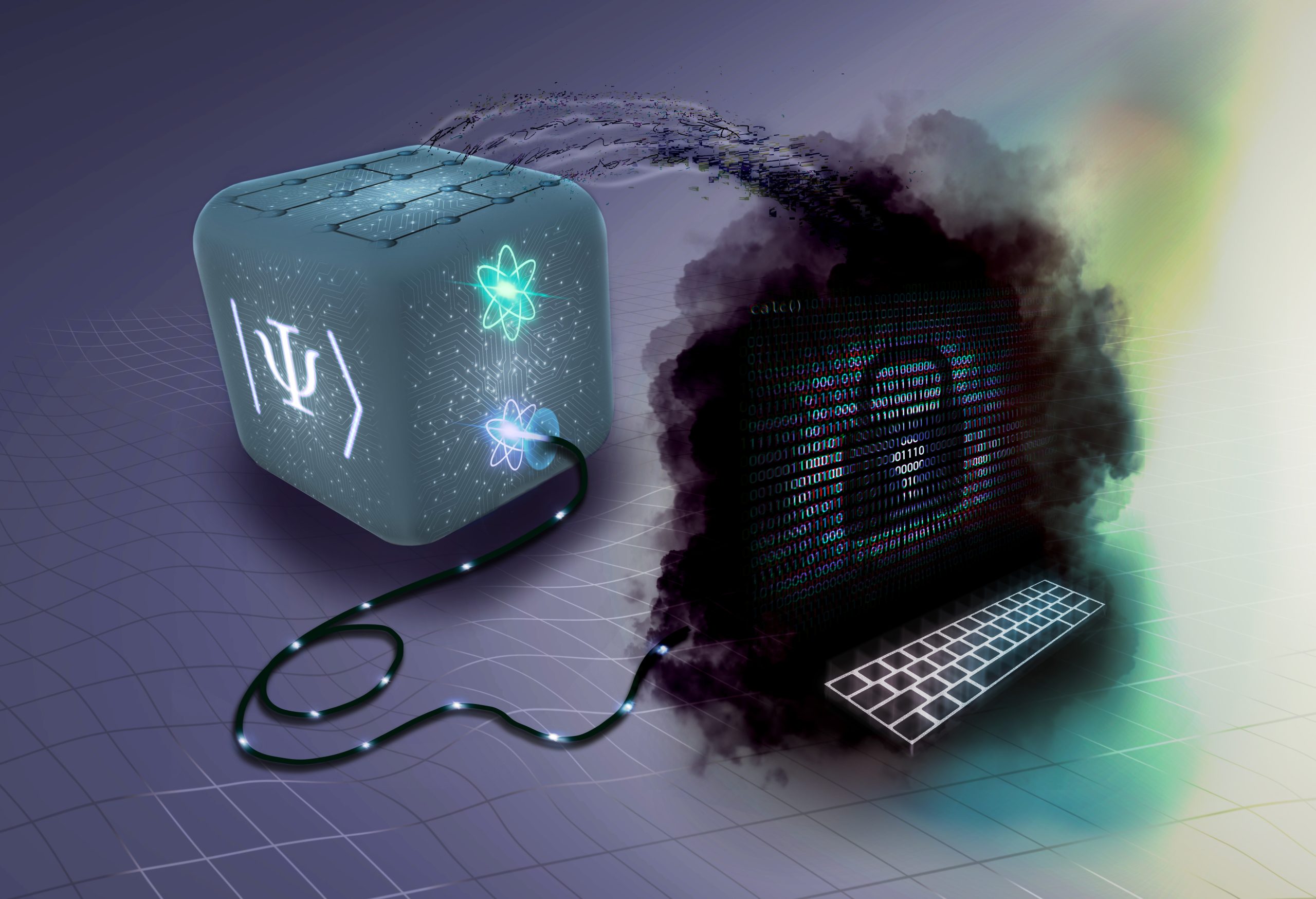
A recent breakthrough guaranteeing security and privacy by Oxford University physicists could enable millions of people and businesses to tap into the capabilities of next-generation quantum computing. This advance promises to unlock the transformative potential of cloud-based quantum computing and is detailed in a new study published in the influential U.S. scientific journal Physical Review Letters.

Quantum computing is developing rapidly, paving the way for new applications that could transform services in many areas like healthcare and financial services. It works in a fundamentally different way to conventional computing and is potentially far more powerful. However, it currently requires controlled conditions to remain stable and there are concerns around data authenticity and the effectiveness of current security and encryption systems.
Several leading providers of cloud-based services, like Google, Amazon, and IBM, already separately offer some elements of quantum computing. Safeguarding the privacy and security of customer data is a vital precursor to scaling up and expanding its use and for the development of new applications as the technology advances. The new study by researchers at Oxford University Physics addresses these challenges.
Breakthrough in Secure Quantum Computing
“We have shown for the first time that quantum computing in the cloud can be accessed in a scalable, practical way which will also give people complete security and privacy of data, plus the ability to verify its authenticity,” said Professor David Lucas, who co-heads the Oxford University Physics research team and is lead scientist at the UK Quantum Computing and Simulation Hub, led from Oxford University Physics.
In the new study, the researchers use an approach dubbed “blind quantum computing”, which connects two totally separate quantum computing entities – potentially an individual at home or in an office accessing a cloud server – in a completely secure way. Importantly, their new methods could be scaled up to large quantum computations.
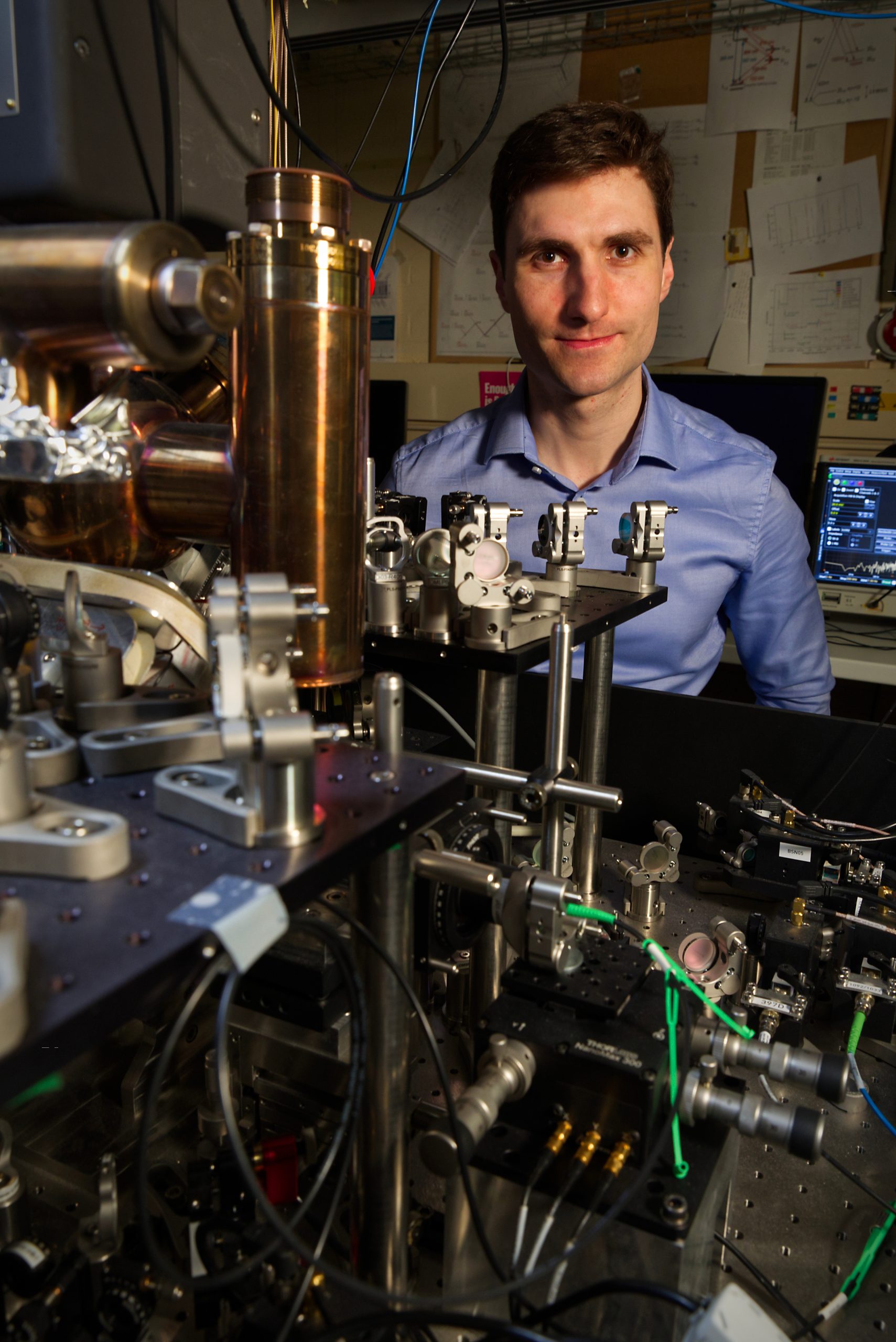
“Using blind quantum computing, clients can access remote quantum computers to process confidential data with secret algorithms and even verify the results are correct, without revealing any useful information. Realising this concept is a big step forward in both quantum computing and keeping our information safe online’’ said study lead Dr Peter Drmota, of Oxford University Physics.
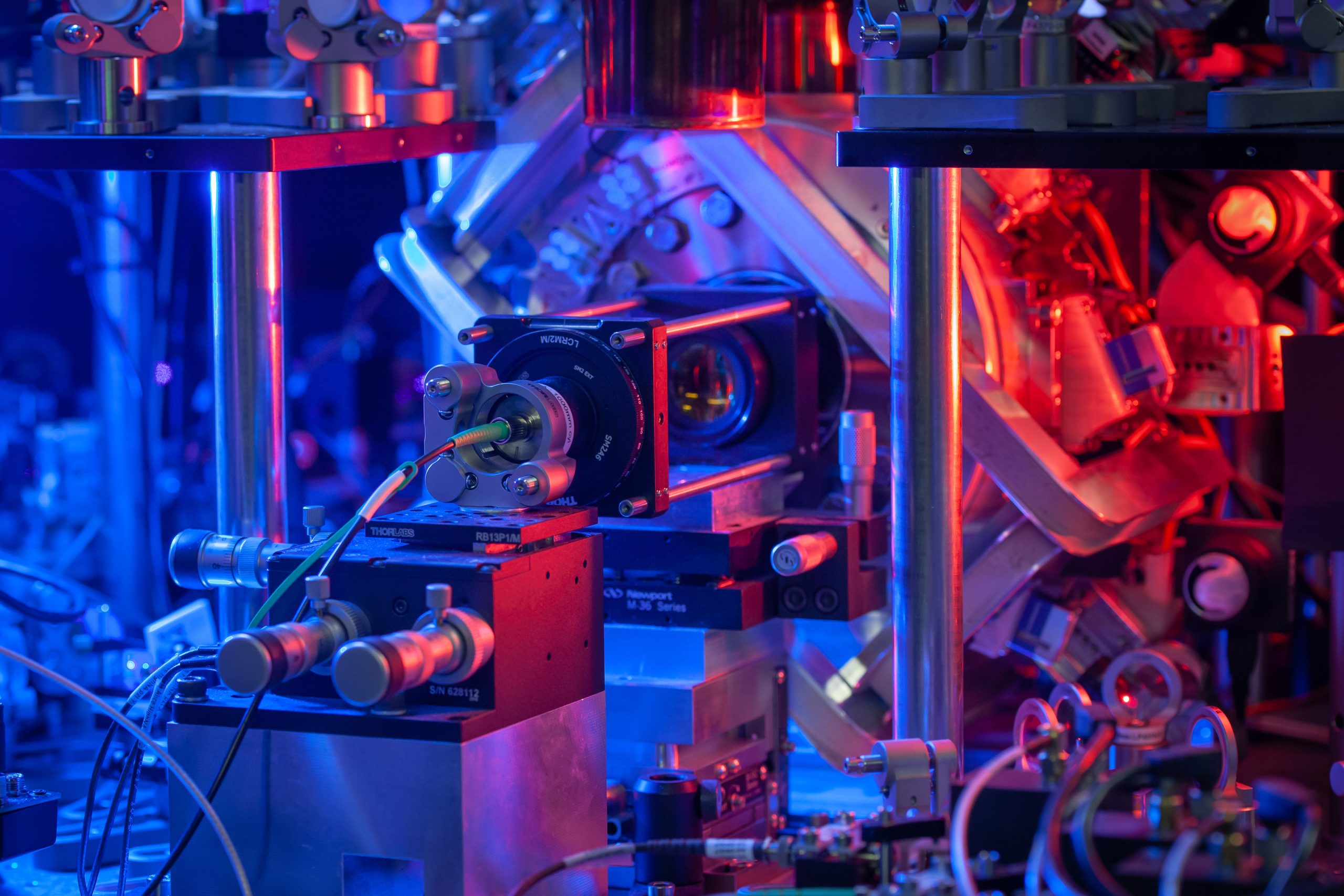
The researchers created a system comprising a fiber network link between a quantum computing server and a simple device detecting photons, or particles of light, at an independent computer remotely accessing its cloud services. This allows so-called blind quantum computing over a network. Every computation incurs a correction which must be applied to all that follow and needs real-time information to comply with the algorithm. The researchers used a unique combination of quantum memory and photons to achieve this.
“Never in history have the issues surrounding privacy of data and code been more urgently debated than in the present era of cloud computing and artificial intelligence,” said Professor David Lucas. “As quantum computers become more capable, people will seek to use them with complete security and privacy over networks, and our new results mark a step change in capability in this respect.”
The results could ultimately lead to commercial development of devices to plug into laptops, to safeguard data when people are using quantum cloud computing services.
Researchers exploring quantum computing and technologies at Oxford University Physics have access to the state-of-the-art Beecroft laboratory facility, specially constructed to create stable and secure conditions including eliminating vibration.
Reference: “Verifiable Blind Quantum Computing with Trapped Ions and Single Photons” by P. Drmota, D. P. Nadlinger, D. Main, B. C. Nichol, E. M. Ainley, D. Leichtle, A. Mantri, E. Kashefi, R. Srinivas, G. Araneda, C. J. Ballance and D. M. Lucas, 10 April 2024, Physical Review Letters.
DOI: 10.1103/PhysRevLett.132.150604
Funding for the research came from the UK Quantum Computing and Simulation (QCS) Hub, with scientists from the UK National Quantum Computing Centre, the Paris-Sorbonne University, the University of Edinburgh, and the University of Maryland, collaborating on the work.
Never miss a breakthrough: Join the SciTechDaily newsletter.
Follow us on Google and Google News.