
Roughly half of Earth’s ice-free land remains without significant human influence, according to a study from a team of international researchers led by the National Geographic Society and the University of California, Davis.
The study, published in the journal Global Change Biology, compared four recent global maps of the conversion of natural lands to anthropogenic land uses to reach its conclusions. The more impacted half of Earth’s lands includes cities, croplands, and places intensively ranched or mined.
“The encouraging takeaway from this study is that if we act quickly and decisively, there is a slim window in which we can still conserve roughly half of Earth’s land in a relatively intact state,” said lead author Jason Riggio, a postdoctoral scholar at the UC Davis Museum of Wildlife and Fish Biology.
The study, published June 5 on World Environment Day, aims to inform the upcoming global Convention on Biological Diversity — the Conference of Parties 15. The historic meeting was scheduled to occur in China this fall but was postponed due to the coronavirus pandemic. Among the meeting’s goals is to establish specific, and higher, targets for land and water protection.
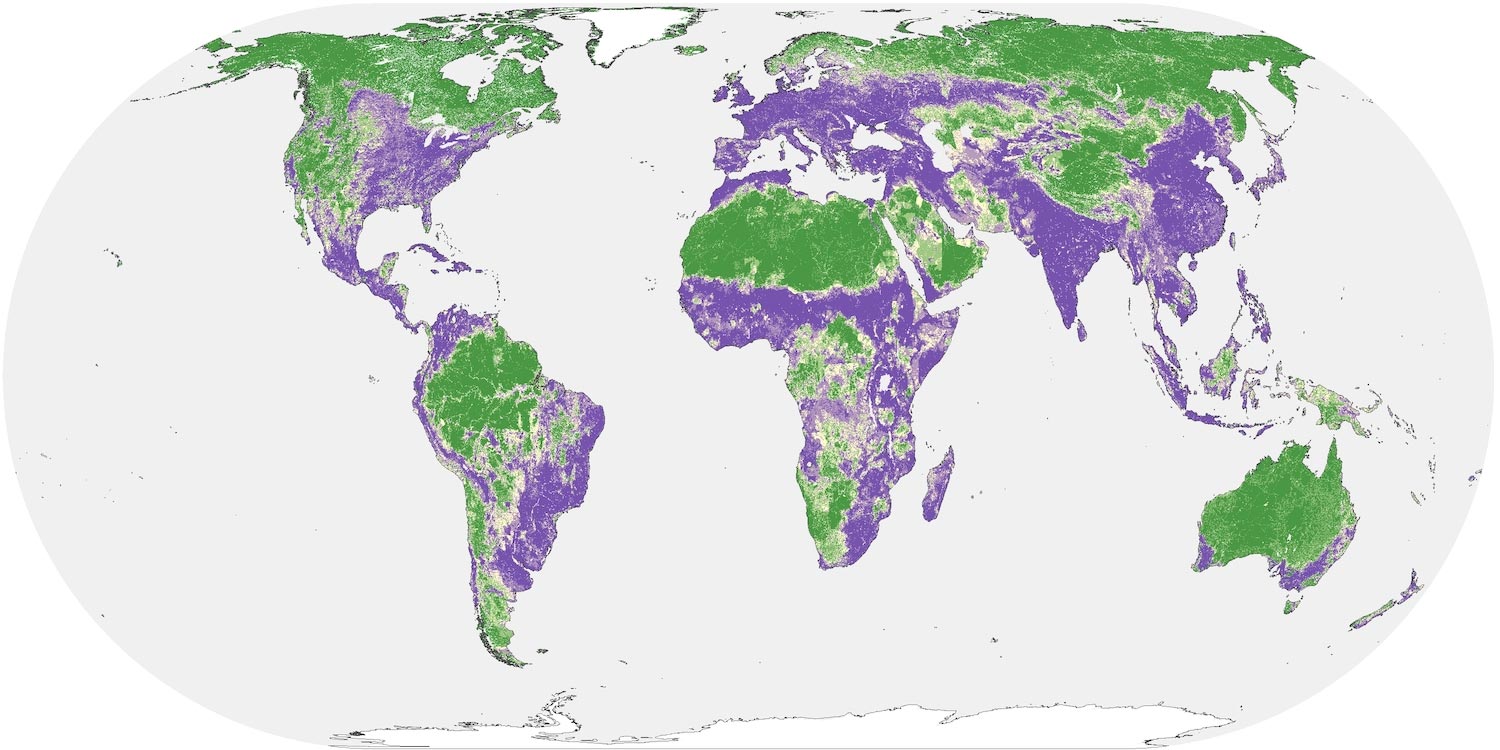
Approximately 15 percent of the Earth’s land surface and 10 percent of the oceans are currently protected in some form. However, led by organizations including Nature Needs Half and the Half-Earth Project, there have been bold global calls for governments to commit to protecting 30 percent of the land and water by 2030 and 50 percent by 2050.
Intact natural lands across the globe can help purify air and water, recycle nutrients, enhance soil fertility and retention, pollinate plants, and break down waste products. The value of maintaining these vital ecosystem services to the human economy has been placed in the trillions of U.S. dollars annually.
Conservation and COVID-19
The coronavirus pandemic now shaking the globe illustrates the importance of maintaining natural lands to separate animal and human activity. The leading scientific evidence points to the likelihood that SARS-CoV2, the virus that causes the disease COVID-19, is a zoonotic virus that jumped from animals to humans. Ebola, bird flu, and SARS are other diseases known to have spilled over into the human population from nonhuman animals.
“Human risk to diseases like COVID-19 could be reduced by halting the trade and sale of wildlife, and minimizing human intrusion into wild areas,” said senior author Andrew Jacobson, professor of GIS and conservation at Catawba College in North Carolina.
Jacobson said that regional and national land-use planning that identify and appropriately zone locations best suited to urban growth and agriculture could help control the spread of human development. Establishing protections for other landscapes, particularly those currently experiencing low human impacts, would also be beneficial.
From the tundra to the desert
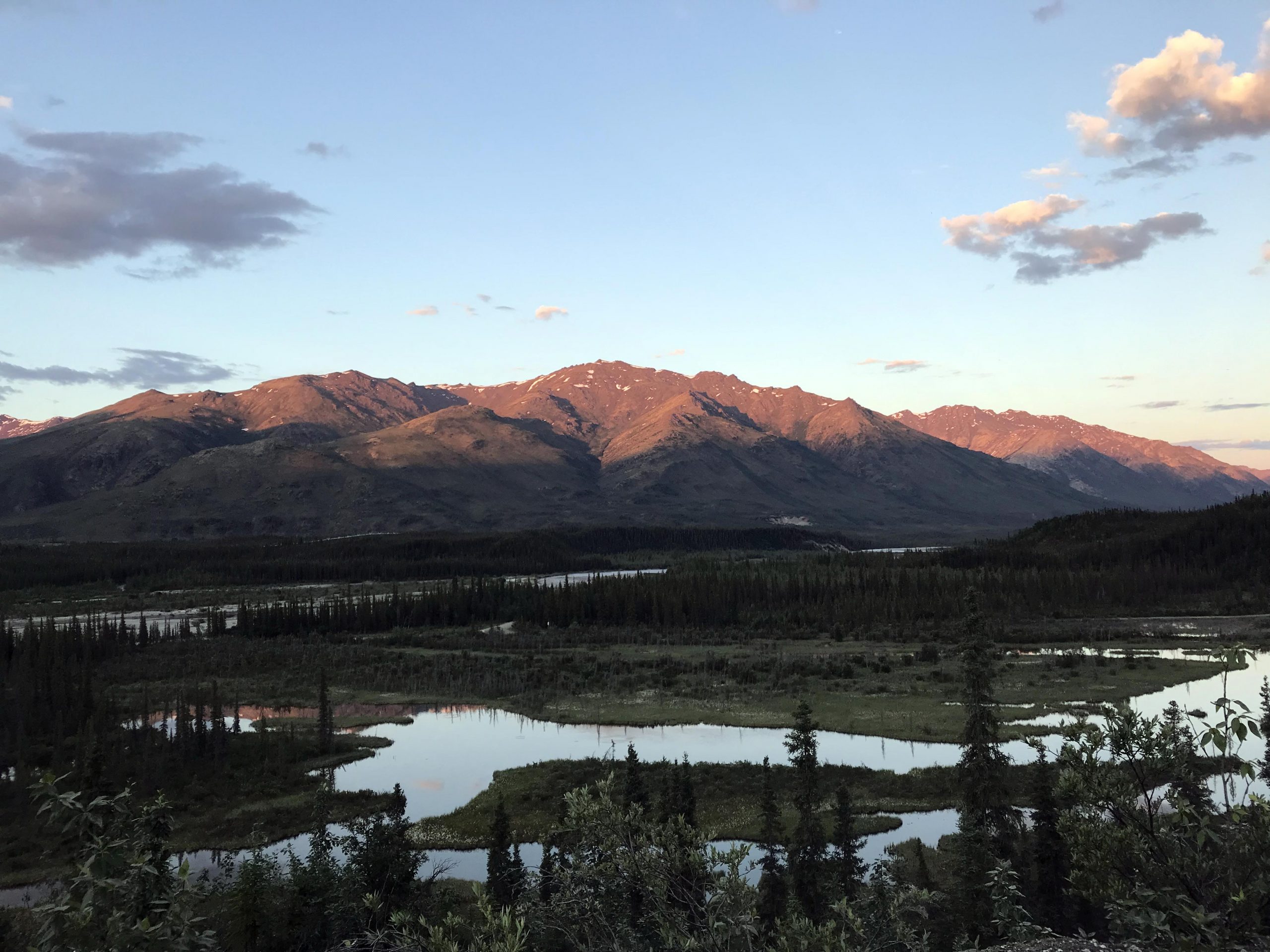
Among the largest low-impact areas are broad stretches of boreal forests and tundra across northern Asia and North America and vast deserts like the Sahara in Africa and the Australian Outback. These areas tend to be colder and/or drier and less fit for agriculture.
“Though human land uses are increasingly threatening Earth’s remaining natural habitats, especially in warmer and more hospitable areas, nearly half of Earth still remains in areas without large-scale intensive use,” said co-author Erle Ellis, professor of geography at the University of Maryland-Baltimore County.
Areas having low human influence do not necessarily exclude people, livestock or sustainable management of resources. A balanced conservation response that addresses land sovereignty and weighs agriculture, settlement or other resource needs with the protection of ecosystem services and biodiversity is essential, the authors note.
“Achieving this balance will be necessary if we hope to meet ambitious conservation targets,” said Riggio. “But our study optimistically shows that these targets are still within reach.”
The project was the result of the National Geographic Society and Leonardo DiCaprio Foundation Mapping Intactness Workshop held in May 2018.
Reference: “Global human influence maps reveal clear opportunities in conserving Earth’s remaining intact terrestrial ecosystems” by Jason Riggio, Jonathan E. M. Baillie, Steven Brumby, Erle Ellis, Christina M. Kennedy, James R. Oakleaf, Alex Tait, Therese Tepe, David M. Theobald, Oscar Venter, James E. M. Watson and Andrew P. Jacobson, 5 June 2020, Global Change Biology.
DOI: 10.1111/gcb.15109
Never miss a breakthrough: Join the SciTechDaily newsletter.
Follow us on Google and Google News.
4 Comments
It sounds very optimistic that half of the Earth is unharmed. You have touched upon a really important topic, and this topic has no geographical limitations. The environmental problem is the problem of our entire planet today. The coronavirus pandemic has a positive side in that it brought a positive impact on the environment.
In this crisis a news like this one really lifts my spirits. We must return mother earth what was rightfully hers. Nature gave everything for our survival and now it’s our time to return the favour. 50% of the earth must be conserved for animals and plants.
So this is a very positive finding…and makes me feel much better about the world…but imagine if we ALSO now make a dedicated effort to control the human population ….we do not need this many humans to sustain ourselves, and the plight of the poor is pretty disgusting to see….wouldn’t it be nice if we culled ourselves & made a real attempt to give every living human a really decent life ? I’m already 80, likely to be gone within the next decade or so, and I have enjoyed most of my life, never been hungry or really cold, always had just a little more money than needed for survival, and I now feel so bad for those I cannot help…I give lots of donations all over the place, but why did I have such a great life when so many are suffering horribly, it’s not good enough !!! Decide to keep the population at a much smaller level via voluntary euthanasia & free birth control (Ask females what they want – males just want sex, that results in multiple unwanted babies !) & rework the finances to share things more fairly….it’s high time, this could be such a beautiful planet !!!
My Grandfather was born in 1886 and raised his granddaughter born in 1960. When he was born, people still used horse and buggy. By the time he was 20 everyone was in cars and trucks. He relayed so much of the transportation systems’ horrible destruction. I have cared for men who were the first truck drivers and they loathed their lives. I have read books written in the 1920’s and 30’s and saw qoutes that spoke oh the horror over the world spillage of the automobile. I saw the letter Henry Ford set the Corporation his disapproval of the “four wheels on asphalt design. Until the transportation systems’are addressed for the monsters that they are, then, I will continue to wait for wisdom.