
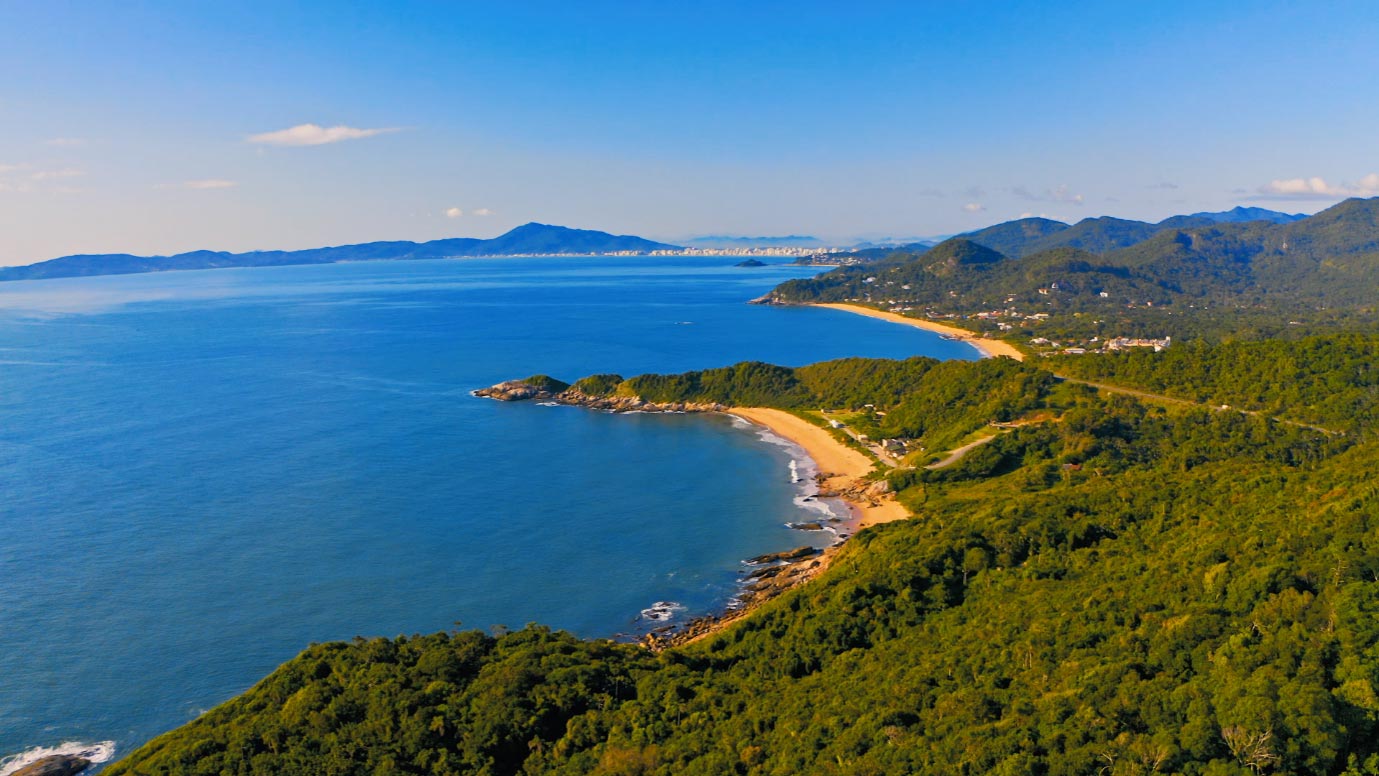
Only 15 percent of global coastal areas remain intact, according to a University of Queensland-led study, which calls for urgent conservation and restoration efforts.
New research has revealed that only 15 percent of coastal areas around the world remain intact, exposing the need for urgent coastal rehabilitation and conservation on a global scale.
The University of Queensland-led international study mapped the impact of human-caused pressures on coastal regions to identify those that are already highly degraded, and those that remain intact.
Brooke Williams, from UQ’s School of Earth and Environmental Sciences, said the findings, which have been compiled into a free and useable dataset, provide valuable insights into humanity’s widespread impacts on Earth’s precious coastal ecosystems.
“Coastal regions contain high levels of biodiversity and are relied upon by millions of people for ecosystem services such as food and storm protection,” Ms. Williams said.
Urgent Need for Coastal Conservation and Rehabilitation
“Our results show that we need to act quickly and decisively if we hope to conserve those coastal regions that remain intact, and restore those that are heavily degraded, especially if we’re going to mitigate the effects of climate change.
“The rate at which these regions are degrading poses massive threats to not only coastal species and habitats, but also to the health, safety and economic security of countless people who live or rely on coastal regions around the world.”
The research team discovered that, of the 15.5 percent of coastal areas that remain intact as of 2013, Canada was responsible for the largest expanse of coastal region that stood intact.
“Other large expanses are located in Russia, Greenland, Chile, Australia, and the United States,” Ms. Williams said.
“Coastal regions containing seagrasses, savannah, and coral reefs had the highest levels of human pressure compared to other coastal ecosystems.”
The Importance of Protecting Coastal Biodiversity
UQ’s Dr. Amelia Wenger, a collaborator of the research, said the collaborative research approach, which involved looking at two datasets – one, which focused on human impacts on land, and the other which observed human impacts from a marine perspective – offered a clear vision about what the next steps should be.
“While we already knew how important it is to protect biodiversity and ecosystem services in these coastal regions, being able to clearly see how rapidly and how far this degradation has spread, is truly eye-opening,” Dr. Wenger said.
“Understanding why coastal ecosystems are under pressure can help us design and implement more targeted management strategies, and hopefully slow this degradation down and even turn it around.
“We’re urging governments and custodians of these environments to proactively conserve the valuable remaining intact coastal regions that they are responsible for, while restoring those that are degraded.
“We think our dataset will be a vital tool in achieving that ambition, which is why we’re making it publicly available and free to use.”
You can access the dataset online.
Reference: “Global rarity of intact coastal regions” by Brooke A. Williams, James E.M. Watson, Hawthorne L. Beyer, Carissa J. Klein, Jamie Montgomery, Rebecca K. Runting, Leslie A. Roberson, Benjamin S. Halpern, Hedley S. Grantham, Caitlin D. Kuempel, Melanie Frazier, Oscar Venter and Amelia Wenger, 14 December 2021, Conservation Biology.
DOI: 10.1111/cobi.13874
Never miss a breakthrough: Join the SciTechDaily newsletter.
Follow us on Google and Google News.