

Harvard researchers have developed an advanced silicon chip with microhole electrodes, allowing for the mapping of over 70,000 synaptic connections among rat neurons.
This breakthrough, surpassing previous methods in both accuracy and scale, brings scientists closer to understanding how neurons connect and communicate.
Mapping Thousands of Synaptic Connections
Harvard researchers have successfully mapped and cataloged over 70,000 synaptic connections from approximately 2,000 rat neurons. They achieved this using a silicon chip capable of detecting small but significant synaptic signals from a large number of neurons simultaneously.
Published in Nature Biomedical Engineering, this research marks a major advancement in neuronal recording. It could bring scientists closer to creating a detailed map of synaptic connections, offering deeper insights into how neurons communicate.
Higher-order brain functions rely on the way neurons connect and interact. These connections occur at junctions called synapses. Scientists aim to create synaptic maps that not only show which neurons are linked but also reveal the strength of these connections. While electron microscopy has been highly effective for visualizing synaptic structures, it cannot measure connection strength, limiting its ability to fully explain how neuronal networks function.
Challenges in Recording Synaptic Strengths
A more precise method, known as patch-clamp recording, is considered the gold standard for studying synaptic activity. This technique can penetrate individual neurons to capture weak synaptic signals with high sensitivity, helping researchers identify and measure connection strength. However, applying this method to large networks of neurons simultaneously has been a persistent challenge. So far, scientists have struggled to record intracellular signals from more than a few neurons at a time, limiting their ability to construct large-scale, functionally annotated neural maps.

Breakthrough Microhole Electrode Technology
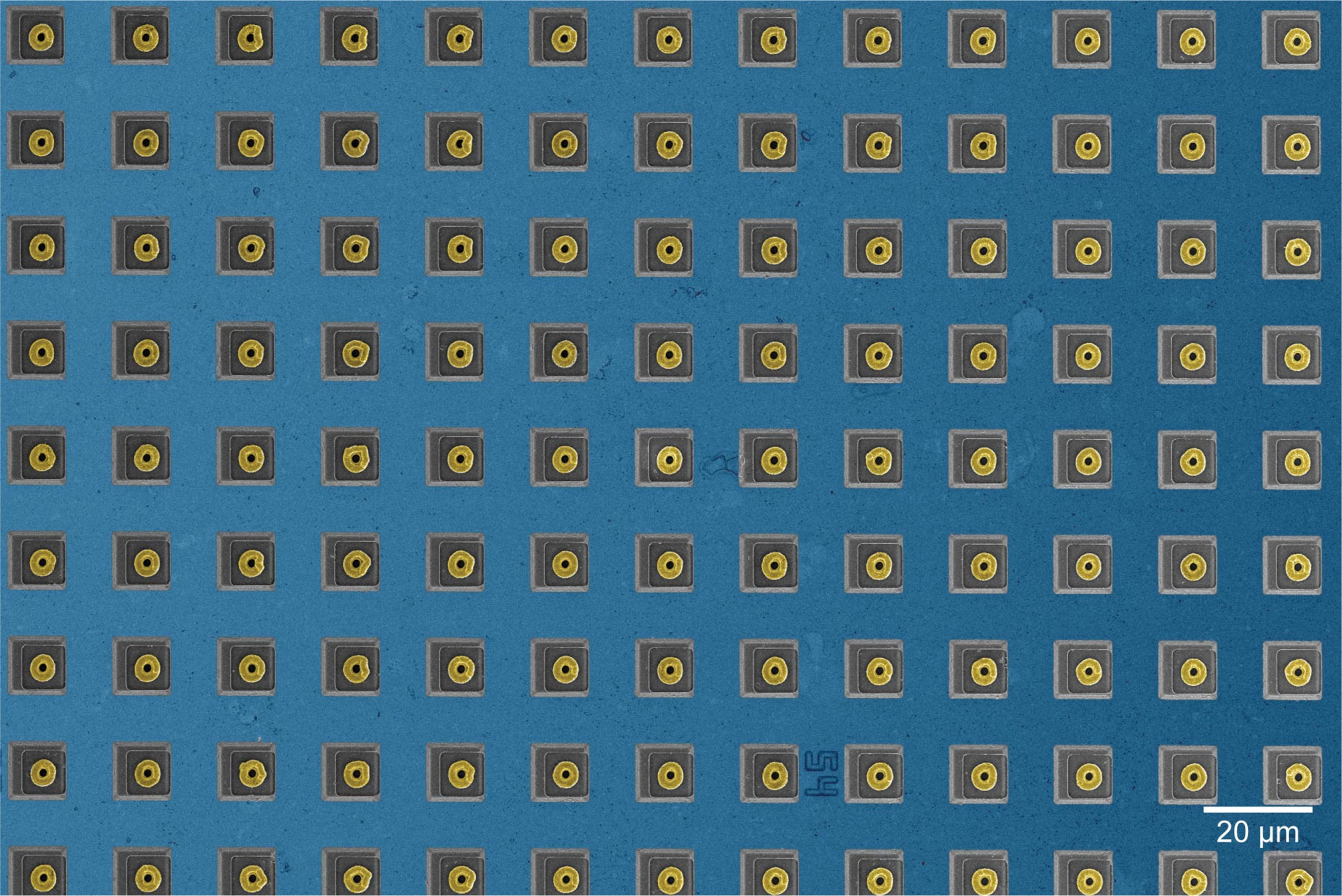
The researchers, led by Donhee Ham, the John A. and Elizabeth S. Armstrong Professor of Engineering and Applied Sciences at the Harvard John A. Paulson School of Engineering and Applied Sciences (SEAS), developed an array of 4,096 microhole electrodes on a silicon chip, which performed massively parallel intracellular recording of rat neurons cultured on the chip. From these unprecedented recording data that abounded with synaptic signals, they extracted over 70,000 synaptic connections from about 2,000 neurons.
The work builds on the team’s 2020 breakthrough device – an array of 4,096 vertical nanoneedle electrodes sticking out of a silicon chip of the same integrated circuit design. On this previous device, a neuron could wrap around a needle to allow intracellular recording, which was parallelized through the large number of electrodes. In the best case, they could extract about 300 synaptic connections from the recording data – still blowing well past what patch-clamp recording can reach.
With the basic premise in hand, the team suspected they could do better. Co-lead authors Jun Wang and Woo-Bin Jung from the Ham group at SEAS led the design and fabrication of the microhole electrode array on the silicon chip, the electrophysiological recording, and the data analysis.
A Game-Changer in Accessibility
They operated the chip to gently open up cells with small current injections through the electrodes in order to parallelize their intracellular recording. Postdoctoral researcher Wang said the microhole design is similar to the patch-clamp electrode, which is essentially an electrode-housing glass pipette with a hole at the end.
“Not only do microhole electrodes better couple to the interiors of neurons than the vertical nanoneedle electrodes, but they are also much easier to fabricate. This accessibility is another important feature of our work,” Wang said.
Exceeding Expectations in Synaptic Mapping
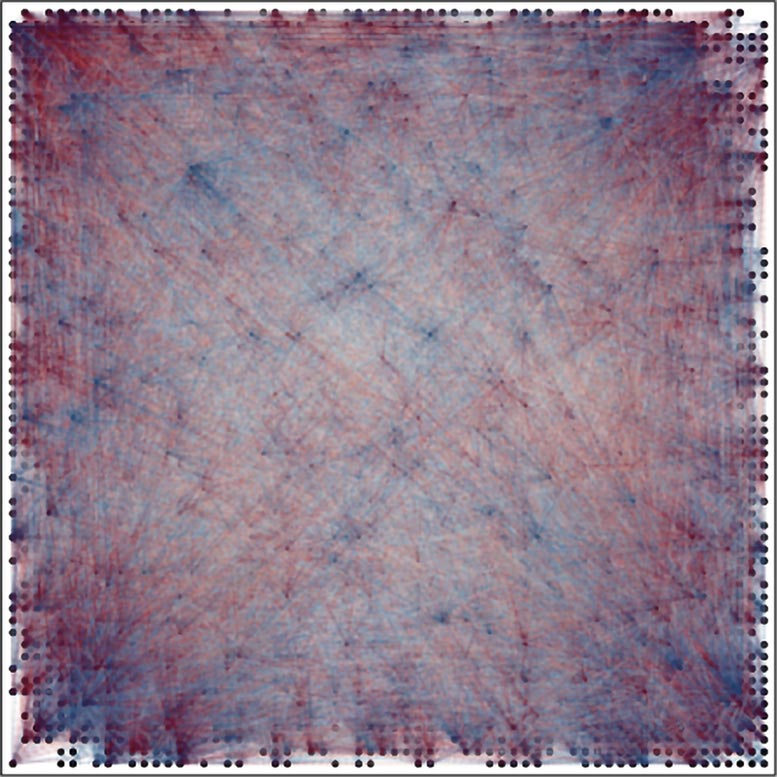
The new design exceeded the team’s expectations. On average, more than 3,600 microhole electrodes out of the total 4,096 – that is, 90 percent – were intracellularly coupled to neurons on top. The number of synaptic connections the team extracted from such unprecedented network-wide intracellular recording data bloomed to 70,000 plausible synaptic connections, compared with about 300 with their previous nanoneedle electrode array. The quality of the recording data was also better, which allowed the team to categorize each synaptic connection based on its characteristics and strengths.
“The integrated electronics in the silicon chip plays as equally an important role as the microhole electrode, providing gentle currents in an elaborate way to obtain intracellular access, and recording at the same time the intracellular signals,” said Jung, a former postdoctoral researcher and now a faculty member at Pohang University of Science and Technology in South Korea.
Next Steps: From Lab to Live Brain
“One of the biggest challenges, after we succeeded in the massively parallel intracellular recording, was how to analyze the overwhelming amount of data,” Ham said. “We have since come a long way to gain insight into synaptic connections from them. We are now working toward a newer design that can be deployed in a live brain.”
Reference: “Synaptic connectivity mapping among thousands of neurons via parallelized intracellular recording with a microhole electrode array” by Jun Wang, Woo-Bin Jung, Rona S. Gertner, Hongkun Park and Donhee Ham, 11 February 2025, Nature Biomedical Engineering.
DOI: 10.1038/s41551-025-01352-5
Paper co-authors include Rona S. Gertner of the Department of Chemistry and Chemical Biology, and Hongkun Park, the Mark Hyman, Jr. Professor of Chemistry and Professor of Physics.
The research was supported by the Samsung Advanced Institute of Technology of Samsung Electronics.
Never miss a breakthrough: Join the SciTechDaily newsletter.
Follow us on Google and Google News.