
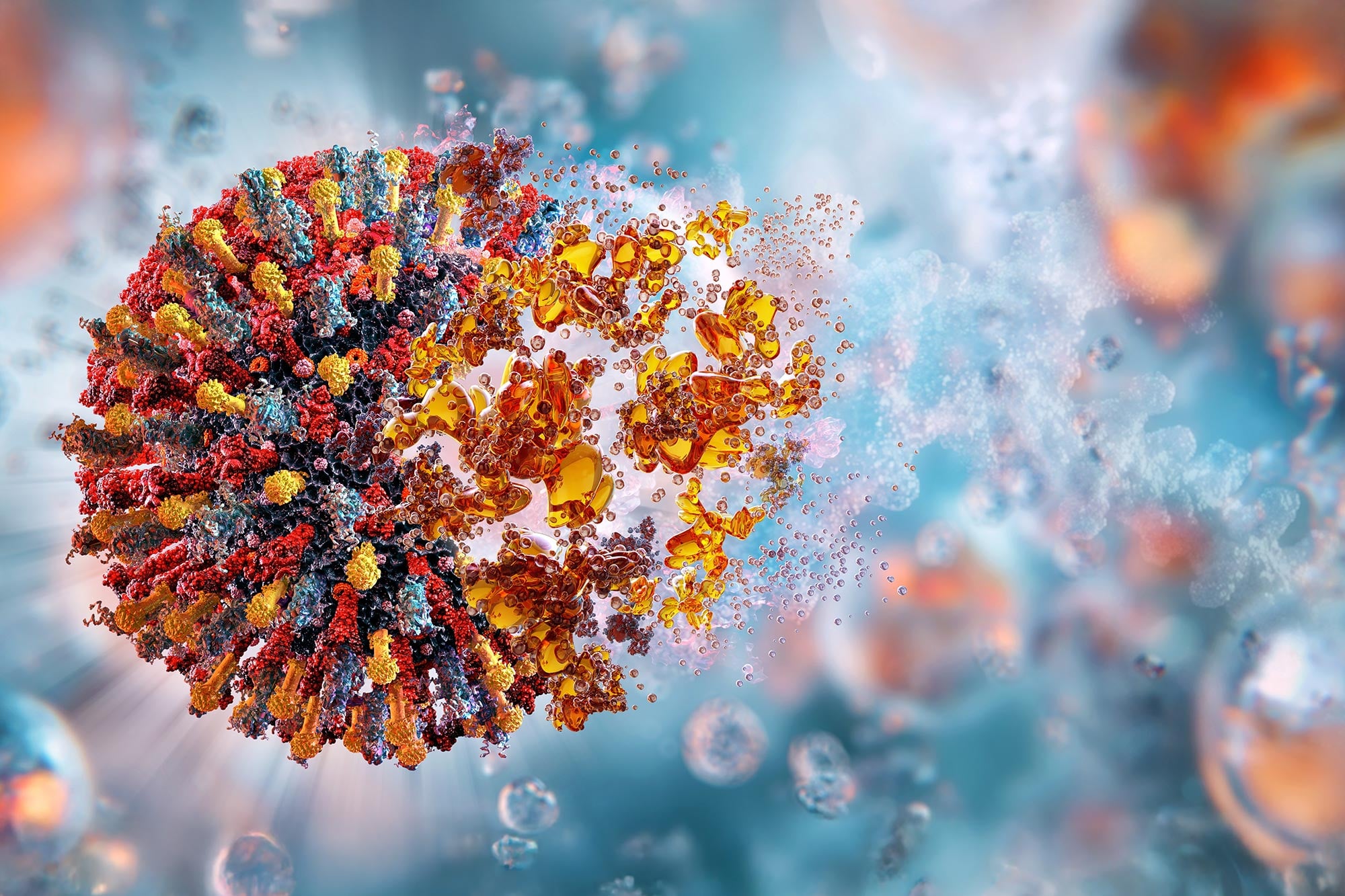
For millions of people living with long COVID, symptoms like shortness of breath, mental fog, and deep fatigue continue long after infection, with no clear explanation. Now, a group of leading microbiologists believes they may have identified an overlooked factor that could help explain why recovery stalls for so many.
Rather than blaming lingering symptoms on SARS-CoV-2 alone, the researchers suggest that other infections present in the body may play a critical role in some long COVID cases.
A review published in eLife by 17 scientists, including experts from Rutgers Health, argues that infections acquired before or during COVID could contribute to symptoms that persist for months or even years.
“This is an aspect of long COVID that is not talked about a lot,” said Maria Laura Gennaro, a microbiologist at the Rutgers New Jersey Medical School who chaired the Microbiology Task Force for the National Institutes of Health’s Researching COVID to Enhance Recovery initiative, a large-scale study of long COVID.
Why Long COVID Remains So Hard to Treat
Long COVID has affected as many as 400 million people worldwide. Symptoms range from relatively mild disruptions to severe and disabling conditions that affect the brain, heart, lungs, and digestive system. Despite the scale of the problem, doctors still lack proven treatments because the biological drivers behind long COVID remain uncertain.
The new review pulls together existing studies and expert analysis to highlight a possibility that has received little focus so far. Infections other than the coronavirus itself may be essential contributors to ongoing symptoms.
Epstein-Barr Virus as a Key Suspect
Among the strongest pieces of evidence involves Epstein-Barr virus (EBV), which causes mononucleosis. Nearly 95 percent of adults carry EBV in a dormant state, often without symptoms, until an event such as COVID disrupts the immune system and allows the virus to reactivate.
In one early study, researchers found that about two-thirds of people with long COVID showed signs of recent EBV activity. Those experiencing a greater number of symptoms also had higher levels of antibodies. Follow-up research later connected EBV reactivation to common long COVID features, including persistent fatigue and problems with thinking and memory.
Tuberculosis and Immune System Weakening
Tuberculosis (TB) has also emerged as a possible contributor. Roughly one-quarter of the global population carries latent TB. Evidence suggests that COVID can reduce the immune cells responsible for keeping TB under control, which may allow the infection to resurface. The connection appears to work in both directions, since TB infection may also lead to worse outcomes during COVID illness.
The researchers emphasize that when co-infections occur may be just as important as which infections are involved. Infections that happen before COVID could weaken immune defenses. Infections during the acute phase of COVID may increase tissue damage. Infections that appear afterward could take advantage of lingering immune dysfunction.
Rising Infections and the Idea of Immunity Theft
The authors point out that 44 countries have reported tenfold increases in at least 13 infectious diseases compared with levels seen before the pandemic. One possible explanation they describe is known as “immunity theft,” a concept that suggests people may become more vulnerable to other infections following an episode of acute COVID.
If co-infections do play a role in long COVID, existing medications could offer potential benefits. Antibiotics and antivirals might be repurposed to target underlying infections, and clinical trials could determine whether treating these infections leads to symptom improvement.
What the Evidence Does and Does Not Show
The researchers stress that their conclusions come with important limits. While the links they describe are biologically plausible, they remain unproven. No study has yet demonstrated a direct cause-and-effect relationship between any specific co-infection and long COVID.
“Everyone has heard it a million times, but it bears repeating: Correlation doesn’t equal causation,” Gennaro said.
She added that confirming the hypothesis would require large population studies and animal experiments. Progress is slowed by the lack of reliable animal models that accurately reflect long COVID.
Expanding the Search for Long COVID Answers
The team hopes their work encourages new avenues of research into the causes of long COVID. While the review does not offer immediate solutions for those currently affected, it suggests that effective treatment may require looking beyond COVID itself and considering how other infections interact with the immune system long after the initial illness.
Reference: “The role of co-infection in the pathogenesis of acute SARS-CoV-2 infection and development of post-acute sequelae: A perspective” by Timothy J Henrich, Christopher P Montgomery, Joerg Graf, Nahed Ismail, Sindhu Mohandas, Mehul S Suthar, Hassan Brim, John M Coffin, Aayush Pagaria, Jeisac Guzmán Rivera, Urmila Vudali, Paul Keim, Guangming Zhong, Rebecca McGrath, Belinda Edwards, Adolfo García-Sastre and Maria Laura Gennaro, 17 November 2025, eLife.
DOI: 10.7554/eLife.106308
Never miss a breakthrough: Join the SciTechDaily newsletter.
Follow us on Google and Google News.
4 Comments
The researchers would be more relevant if they found at least some. secondary infection.
The researchers should also be gathering the number of “long COVID” patients with COVID vaccination status.
Is there a correlation with having “long COVID” and vaccination? Does the number of boosters have any correlation?
Things they should be looking at.
I am one current on vaccinations, but still got Covid….& now after 9 months, continue to endure long COVID symptoms.
I have a milder form of hemophilia- Von Willabrand PT and I had noticed a decrease in brusing.
In my quest for recovery, I had started taking intermittent beneficial oils that decrease clotting. However, after reading this I will be increasing my intake. I just have to wonder if this might yield benefits for other more problematic types of hemophilia.