
Close Menu
    Facebook X (Twitter) Instagram
    SciTechDaily
    • Biology
    • Chemistry
    • Earth
    • Health
    • Physics
    • Science
    • Space
    • Technology
    Facebook X (Twitter) Pinterest YouTube RSS
    SciTechDaily
    Home»Health»Hidden Viruses in Our DNA May Help Fight Kidney Cancer
    Health

    Hidden Viruses in Our DNA May Help Fight Kidney Cancer

    By Dana-Farber Cancer InstituteApril 6, 2025No Comments4 Mins Read
    Facebook Twitter Pinterest Telegram LinkedIn WhatsApp Email Reddit
    Share
    Facebook Twitter LinkedIn Pinterest Telegram Email Reddit
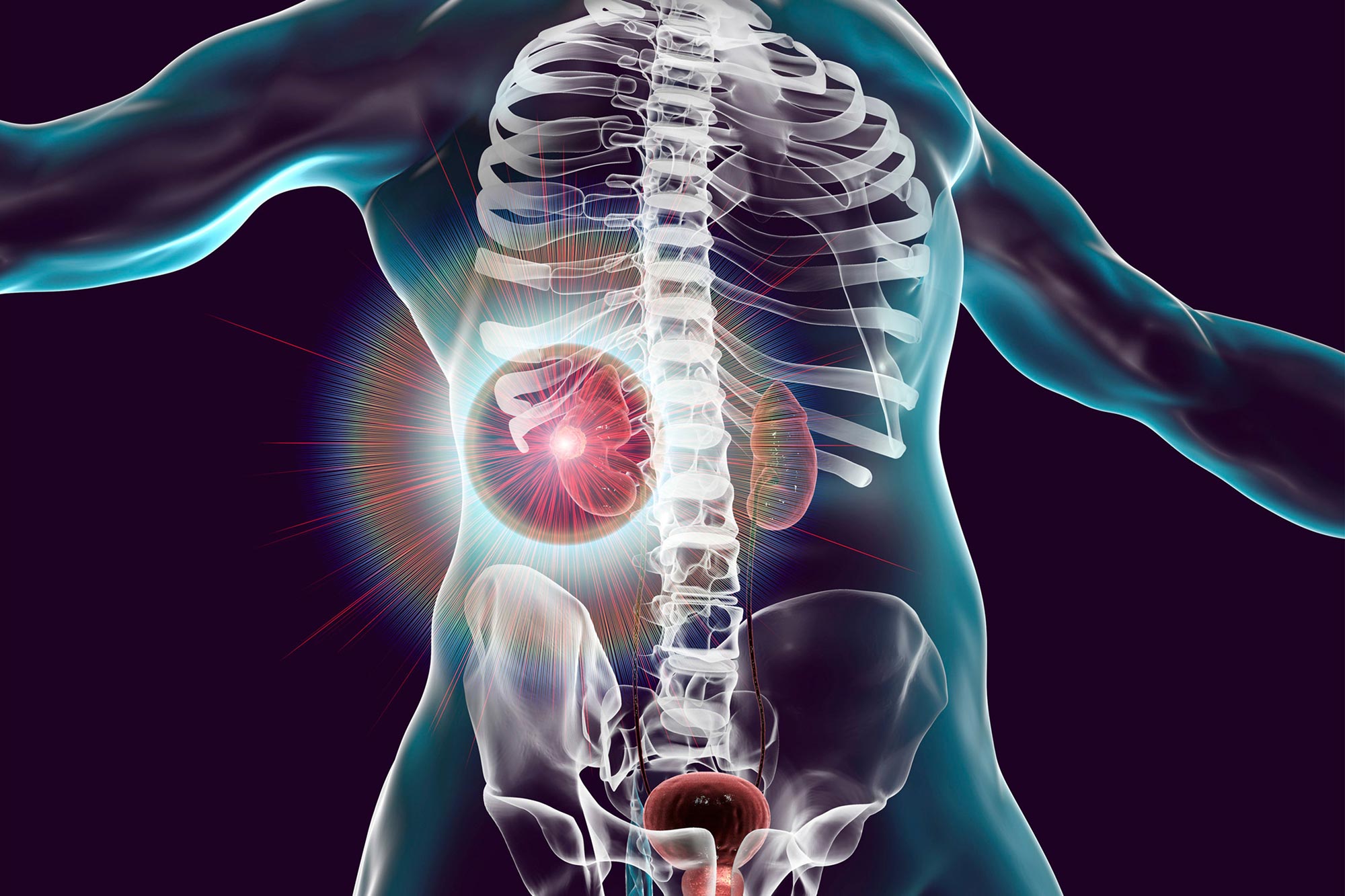
    Kidney Cancer Treatment Concept
    Researchers at Dana-Farber found that in clear cell renal cell carcinoma, a common form of kidney cancer, dormant viral genes embedded in human DNA can be reactivated due to mutations, triggering an immune response. These viral proteins, presented on the cancer cell surface, may help the immune system recognize and attack the cancer, opening new paths for immunotherapy.

    Scientists found that dormant viral genes can be reactivated in kidney cancer, prompting an immune response, offering new potential for immunotherapy.

    Dana-Farber researchers have discovered that in clear cell renal cell carcinoma, the most common type of kidney cancer, dormant viral genes embedded in the human genome can become reactivated. Once activated, these genes produce viral proteins that can trigger the immune system to recognize and attack the cancer.

    These viral genes are remnants of ancient viral infections that became part of human DNA over evolutionary time. Although most remain inactive, some can be reawakened under specific conditions, leading to the production of viral-like proteins.

    Catherine Wu
    Catherine Wu, MD, chief of the Division of Stem Cell Transplantation and Cellular Therapies at Dana-Farber and an author of the study. Credit: Dana-Farber Cancer Institute

    This study showed that when the tumor suppressor gene VHL is inactivated by a mutation – a hallmark of clear cell renal cell cancer cells – these viruses in our genome (called endogenous retroviruses) are more likely to produce their proteins and that this process is driven by a human protein called HIF2, which is overabundant when VHL is crippled.

    Stimulating an Immune Attack

    The team also found that the cancer cells break these viral proteins into fragments and present them on the cell surface as flags that have the potential to stimulate an immune response. Additional tests in human samples and in mice suggest that these flags can be detected by the immune cells called T cells and do stimulate an immune response against the cancer.

    Evidence suggests that kidney cancer, unlike most other forms of cancer, is sometimes eradicated by the immune system. Exactly how is not well understood. This study suggests that the immune system can mount an attack on cancer cells that, due to the presence of cancer-driving mutations, present fragments of endogenous retroviral proteins on their surface.

    The discovery points to the potential for investigating new ways to leverage endogenous retroviruses in the development of novel immunotherapies.

    Reference: “HIF regulates multiple translated endogenous retroviruses: Implications for cancer immunotherapy” by Qinqin Jiang, David A. Braun, Karl R. Clauser, Vijyendra Ramesh, Nitin H. Shirole, Joseph E. Duke-Cohan, Nancy Nabilsi, Nicholas J. Kramer, Cleo Forman, Isabelle E. Lippincott, Susan Klaeger, Kshiti M. Phulphagar, Vipheaviny Chea, Nawoo Kim, Allison P. Vanasse, Eddy Saad, Teagan Parsons, Melissa Carr-Reynolds, Isabel Carulli, Katarina Pinjusic, Yijia Jiang, Rong Li, Sudeepa Syamala, Suzanna Rachimi, Eva K. Verzani, Jonathan D. Stevens, William J. Lane, Sabrina Y. Camp, Kevin Meli, Melissa B. Pappalardi, Zachary T. Herbert, Xintao Qiu, Paloma Cejas, Henry W. Long, Sachet A. Shukla, Eliezer M. Van Allen, Toni K. Choueiri, L. Stirling Churchman, Jennifer G. Abelin, Cagan Gurer, Gavin MacBeath, Richard W. Childs, Steven A. Carr, Derin B. Keskin, Catherine J. Wu and William G. Kaelin, 28 February 2025, Cell.
    DOI: 10.1016/j.cell.2025.01.046

    Funding: The U.S. Department of Defense, the National Institutes of Health, Howard Hughes Medical Institute, Breast Cancer Research Foundation, Louis Goodman and Alfred Gilman, the Yale Cancer Center, Swiss National Science Foundation, the Kohlberg Chair at Harvard Medical School, the Trust Family, Michael Brigham, Pan-Mass Challenge, Hinda and Arthur Marcus Fund, the Loker Pinard Funds for Kidney Cancer Research at Dana-Farber Cancer Institute, the Dr. Miriam and Sheldon G. Adelson Medical Research Foundation, and the Breast Cancer Research Foundation

    Never miss a breakthrough: Join the SciTechDaily newsletter.
    Follow us on Google and Google News.

    Cancer Dana-Farber Cancer Institute DNA Genetics Immunology Kidney
    Share. Facebook Twitter Pinterest LinkedIn Email Reddit

    Related Articles

    Weird DNA Structures May Drive Cancer Development

    Most “Pathogenic” Genetic Variants Have a Low Risk of Actually Causing Disease

    Many People Want Secondary Genomic Findings After Initially Refusing

    DNA Evidence From Mass Grave Suggests Bubonic Plague Had Long-Term Effect on Human Immunity Genes

    New Genetic Test Effectively Screens for Hereditary Cancers

    Scientists Discover a Way to Control the Immune System’s “Natural Killer” Cells With “Invisible” Stem Cells

    Neural Vulnerability in Huntington’s Disease Tied to Immune Response to Genetic Material

    Mysterious Circular DNA Causes Cancer in Children – Surprising New Insights Into Cancer Genetics

    Researchers Develop New Method for Making “Blood Biopsies”

    Leave A Reply Cancel Reply

    • Facebook
    • Twitter
    • Pinterest
    • YouTube

    Don't Miss a Discovery

    Subscribe for the Latest in Science & Tech!

    Trending News

    New Pill Lowers Stubborn Blood Pressure and Protects the Kidneys

    Humans May Have Hidden Regenerative Powers, New Study Suggests

    Scientists Just Solved the Mystery of Why Crabs Walk Sideways

    Doctors Are Surprised by What This Vaccine Is Doing to the Heart

    This Popular Supplement May Boost Your Brain, Not Just Your Muscles

    Scientists Say This Simple Supplement May Actually Reverse Heart Disease

    Warming Oceans Could Trigger a Dangerous Methane Surge

    This Simple Movement Could Be Secretly Cleaning Your Brain

    Follow SciTechDaily
    • Facebook
    • Twitter
    • YouTube
    • Pinterest
    • Newsletter
    • RSS
    SciTech News
    • Biology News
    • Chemistry News
    • Earth News
    • Health News
    • Physics News
    • Science News
    • Space News
    • Technology News
    Recent Posts
    • Researchers Discover Efficient New Way To Split Hydrogen From Water for Energy
    • This Korean Skincare Ingredient Could Help Fight Deadly Superbugs
    • Giant Squid Detected off Western Australia in Stunning Deep-Sea Discovery
    • Popular Sugar-Free Sweetener Linked to Liver Disease, Study Warns
    • Why Weight Loss Isn’t Enough for Everyone at Risk of Diabetes
    Copyright © 1998 - 2026 SciTechDaily. All Rights Reserved.
    • Science News
    • About
    • Contact
    • Editorial Board
    • Privacy Policy
    • Terms of Use

    Type above and press Enter to search. Press Esc to cancel.