
Close Menu
    Facebook X (Twitter) Instagram
    SciTechDaily
    • Biology
    • Chemistry
    • Earth
    • Health
    • Physics
    • Science
    • Space
    • Technology
    Facebook X (Twitter) Pinterest YouTube RSS
    SciTechDaily
    Home»Biology»HIV Vaccine Trial Identifies Target That Could Improve Effectiveness
    Biology

    HIV Vaccine Trial Identifies Target That Could Improve Effectiveness

    By SciTechDailySeptember 11, 2012No Comments3 Mins Read
    Facebook Twitter Pinterest Telegram LinkedIn WhatsApp Email Reddit
    Share
    Facebook Twitter LinkedIn Pinterest Telegram Email Reddit

    rv-144-vaccine

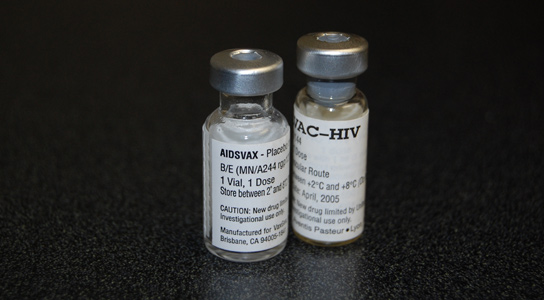
    A new vaccine trial has revealed a weak spot in HIV, which could lead to an effective vaccine against AIDS. The vaccine turns the immune system against the virus, and offers more protection from infections.

    The scientists published their findings in the journal Nature. The results were also presented at the AIDS Vaccine 2012 Conference in Boston, Massachusetts earlier this week. Three years ago, the RV144 trial was somewhat successful in dealing with AIDS. It scored a success and saw a reduction in HIV infections. However, scientists were puzzled by the vaccine’s low response rate of 31%.
    HIV-cell

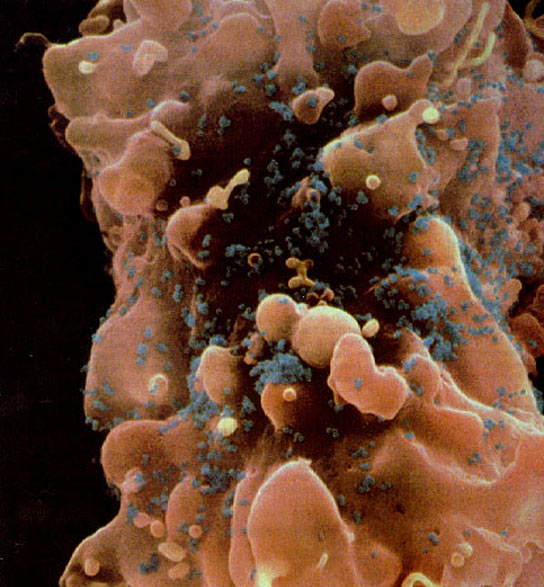
    Last year, it was revealed that the patients who responded to the vaccine and fended off HIV produced antibodies against a specific part of the virus’ protein shell, which is called the V1/V2 loop. This study shows that the people who were vaccinated and still contracted HIV had been infected by viruses that had mutations in the V2 portion.

    The team was led by Morgane Rolland and Jerome Kim at the US Military HIV Research Program in Silver Spring, Maryland. They examined 936 HIV sequences collected from 44 trial participants who received the RV144 trial and were infected. The trial was randomized, so any systematic differences in the viral DNA sequences between the two groups were due to the selective pressure by the vaccine in favor of the viruses that do not match the vaccine.

    There were two mutations that seemed to be linked to the success of the vaccination, which were located in the V2 region of the V1/V2 loop. People who received the vaccine were 80% less likely to be infected by viruses with these mutations, compared to people who got a placebo. This implies that the vaccine created an immune response that prevented certain viruses from infecting them. Only viruses with different sequences at those two sites had a chance at infection.

    Now, vaccine developers have to improve the response against V2. It is hoped that a booster will be produced and will lead to a stronger, long-lasting response against HIV and its V2 region.

    Reference: “Increased HIV-1 vaccine efficacy against viruses with genetic signatures in Env V2” by Morgane Rolland, Paul T. Edlefsen, Brendan B. Larsen, Sodsai Tovanabutra, Eric Sanders-Buell, Tomer Hertz, Allan C. deCamp, Chris Carrico, Sergey Menis, Craig A. Magaret, Hasan Ahmed, Michal Juraska, Lennie Chen, Philip Konopa, Snehal Nariya, Julia N. Stoddard, Kim Wong, Hong Zhao, Wenjie Deng, Brandon S. Maust, Meera Bose, Shana Howell, Adam Bates, Michelle Lazzaro, Annemarie O’Sullivan, Esther Lei, Andrea Bradfield, Grace Ibitamuno, Vatcharain Assawadarachai, Robert J. O’Connell, Mark S. deSouza, Sorachai Nitayaphan, Supachai Rerks-Ngarm, Merlin L. Robb, Jason S. McLellan, Ivelin Georgiev, Peter D. Kwong, Jonathan M. Carlson, Nelson L. Michael, William R. Schief, Peter B. Gilbert, James I. Mullins and Jerome H. Kim, 10 September 2012, Nature.
    DOI: 10.1038/nature11519

    Never miss a breakthrough: Join the SciTechDaily newsletter.
    Follow us on Google and Google News.

    Disease Epidemiology HIV STD Vaccine
    Share. Facebook Twitter Pinterest LinkedIn Email Reddit

    Related Articles

    New Findings Provide a Design for an HIV Vaccine Germline-Targeting Immunogen

    Synthetic Molecules Capable of Blocking HIV and Its Replication

    Study Shows that Vorinostat can Dislodge the Dormant HIV Virus in Patients

    Mutated Protein Allows Flu’s Lethality in Some Patients

    VPM1002 Tuberculosis Vaccine in Phase II Trial

    Acorn, White-Footed Mice and Tick Cycle Augment Risks of Lyme Disease in 2012

    Highest Recorded Rates of Drug Resistant Tuberculosis

    “Loaded” Dendritic Cells Tested on HIV Volunteers

    HIV Vaccine Approved for Human Clinical Trials

    Leave A Reply Cancel Reply

    • Facebook
    • Twitter
    • Pinterest
    • YouTube

    Don't Miss a Discovery

    Subscribe for the Latest in Science & Tech!

    Trending News

    Your Blood Pressure Reading Could Be Wrong Because of One Simple Mistake

    Astronomers Stunned by Ancient Galaxy With No Spin

    Physicists May Be on the Verge of Discovering “New Physics” at CERN

    Scientists Solve 320-Million-Year Mystery of Reptile Skin Armor

    Scientists Say This Daily Walking Habit May Be the Secret to Keeping Weight Off After Dieting

    New Therapy Rewires the Brain To Restore Joy in Depression Patients

    Giant Squid Detected off Western Australia in Stunning Deep-Sea Discovery

    Popular Sugar-Free Sweetener Linked to Liver Disease, Study Warns

    Follow SciTechDaily
    • Facebook
    • Twitter
    • YouTube
    • Pinterest
    • Newsletter
    • RSS
    SciTech News
    • Biology News
    • Chemistry News
    • Earth News
    • Health News
    • Physics News
    • Science News
    • Space News
    • Technology News
    Recent Posts
    • Scientists Say a 40-Year-Old Childhood Obesity Warning May Be Completely Wrong
    • Marijuana Use May Raise Lung Cancer Risk, Researchers Warn
    • This Common Type of Food May Be Raising Your Risk of Heart Disease
    • Fur Seals’ Hearts Suddenly Spike Hours After Returning to Land
    • Scientists Say Cognitive Decline Isn’t Inevitable — Your Brain Can Improve at Any Age
    Copyright © 1998 - 2026 SciTechDaily. All Rights Reserved.
    • Science News
    • About
    • Contact
    • Editorial Board
    • Privacy Policy
    • Terms of Use

    Type above and press Enter to search. Press Esc to cancel.