
Close Menu
    Facebook X (Twitter) Instagram
    SciTechDaily
    • Biology
    • Chemistry
    • Earth
    • Health
    • Physics
    • Science
    • Space
    • Technology
    Facebook X (Twitter) Pinterest YouTube RSS
    SciTechDaily
    Home»Science»Honeybees Have a Bite That Stuns
    Science

    Honeybees Have a Bite That Stuns

    By SciTechDailyOctober 30, 2012No Comments2 Mins Read
    Facebook Twitter Pinterest Telegram LinkedIn WhatsApp Email Reddit
    Share
    Facebook Twitter LinkedIn Pinterest Telegram Email Reddit
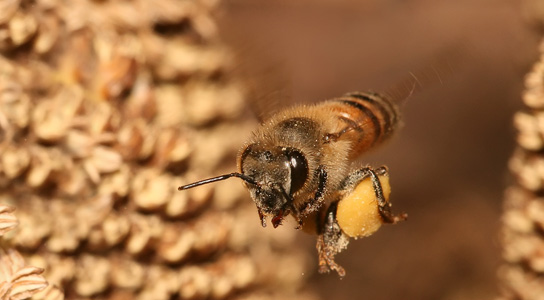
    apis-mellifera-flying
    Apis mellifera. Credit: Muhammad Mahdi Karim via Wikipedia Commons

    Honeybees are well known for their sting, but scientists have discovered that they also have a bite that stuns. Bees resort to biting when faced with pests, such as parasitic mites, that are too small to sting.

    The scientists published their findings in the journal PLoS ONE. A close study of the biting behavior has revealed that they secrete a chemical in their bite that stuns pests so that they can be ejected more readily from a hive.
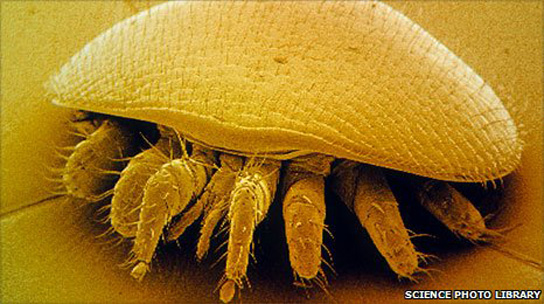
    varroa-mite
    The honeybee varroa mite. Credit: Science Photo Library

    Chemical tests show that this venom could be used as a local anesthetic in humans. Bees were thought to use their mandibles to groom rather than bite. Honeybees bite varroa mites as well as wax moth larvae. Varroa mites are endemic throughout feral and cultivated honey bee colonies. If the population of mites is left unchecked, it can sap the strength of the worker bees, making them more susceptible to viruses, disease or other debilitating conditions.

    Wax moth larvae burrow through the comb in hives, which eventually destroys the cells where broods are raised and honey is stored. The venom is known as 2-heptanone. Soon after pests are ejected from the hive, they start wriggling again.

    2-heptanone is so volatile that it quickly loses its potency. It could be used as an alternative to treatments like lidocaine, which can provoke allergic reactions in some patients. Humans cannot be bitten by bees. Their mandibles are too small, so they can only be used on smaller organisms.

    Reference: “The Bite of the Honeybee: 2-Heptanone Secreted from Honeybee Mandibles during a Bite Acts as a Local Anaesthetic in Insects and Mammals” by Alexandros Papachristoforou, Alexia Kagiava, Chrisovalantis Papaefthimiou, Aikaterini Termentzi, Nikolas Fokialakis, Alexios-Leandros Skaltsounis, Max Watkins, Gérard Arnold and George Theophilidis, 16 October 2012, PLoS ONE.
    DOI: 10.1371/journal.pone.0047432

    Never miss a breakthrough: Join the SciTechDaily newsletter.
    Follow us on Google and Google News.

    Bees Venom
    Share. Facebook Twitter Pinterest LinkedIn Email Reddit

    Related Articles

    Bioeconomic Potential: Scientists Just Found 140 Reasons to Love Spider Venom

    Silent Spring Revisited: Revamping Pest Control to Save Our Bees

    Toxic Insights: Snake Venom Research Breakthrough Using 3D Model of Imitation Blood Vessels

    Bumblebees on the Brink: Overheating Nests Threaten Pollinator Populations

    “Mummified” Bees From the Time of the Pharaohs Discovered in Portugal

    Beekeeping Theories Debunked: The Real Buzz on Honeybee Insulation

    Global Bee Data Gets a Boost: BeeBCD Launches to Fill Scientific Gaps

    Scientists “Stunned” by Bumblebees’ Ability To Fight Off Invasive Asian Hornets

    Angry Bees Produce Better Venom – Effective Treatment for Degenerative and Infectious Diseases

    Leave A Reply Cancel Reply

    • Facebook
    • Twitter
    • Pinterest
    • YouTube

    Don't Miss a Discovery

    Subscribe for the Latest in Science & Tech!

    Trending News

    Scientists Uncover Potential Brain Risks of Popular Fish Oil Supplements

    Scientists Discover a Surprising Way To Make Bread Healthier and More Nutritious

    After 60 Years, Scientists Uncover Unexpected Brain Effects of Popular Diabetes Drug Metformin

    New Research Uncovers Hidden Side Effects of Popular Weight-Loss Drugs

    Scientists Rethink Extreme Warming After Surprising Ocean Discovery

    Landmark Study Links Never Marrying to Significantly Higher Cancer Risk

    Researchers Discover Unknown Beetle Species Just Steps From Their Lab

    Largest-Ever Study Finds Medicinal Cannabis Ineffective for Anxiety, Depression, PTSD

    Follow SciTechDaily
    • Facebook
    • Twitter
    • YouTube
    • Pinterest
    • Newsletter
    • RSS
    SciTech News
    • Biology News
    • Chemistry News
    • Earth News
    • Health News
    • Physics News
    • Science News
    • Space News
    • Technology News
    Recent Posts
    • Scientists Discover Hidden Pathway Inside Catalysts That Defies Decades of Assumptions
    • Scientists Finally Crack Decades-Old Mystery of “Breathing” Lasers
    • “Like Liquid Metal”: Scientists Create Strange Shape-Shifting Material
    • Early Warning Signals of Esophageal Cancer May Be Hiding in Plain Sight
    • Researchers Have Discovered a THC-Free Cannabis Compound That May Replace Opioids
    Copyright © 1998 - 2026 SciTechDaily. All Rights Reserved.
    • Science News
    • About
    • Contact
    • Editorial Board
    • Privacy Policy
    • Terms of Use

    Type above and press Enter to search. Press Esc to cancel.