
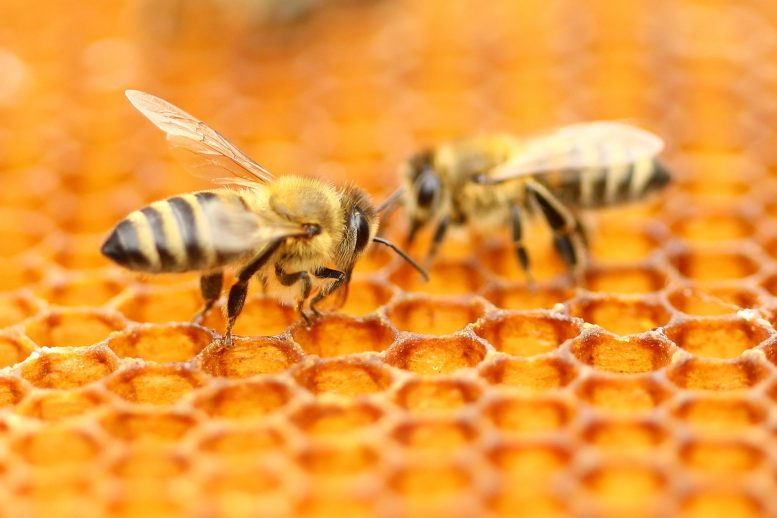
Selective breeding sustainably protects honey bees from Varroa mite.
A new breed of honey bees provides a major advance in the global fight against the parasitic Varroa mite, new research shows.
The invasive mite, which has spread to all continents except Australia and Antarctica, has been the prime threat to honey bees since its initial expansion 50 years ago.
In the study – by the universities of Louisiana and Exeter, and the Agricultural Research Service of the US Department of Agriculture (USDA) – “Pol-line” bees, bred for resistance to the mite in a rigorous 20-year breeding program, were trialed alongside a standard variety in a large-scale pollination operation.
The mite-resistant bees were more than twice as likely to survive the winter (60% survival compared to 26% in standard honey bees). While the standard honey bees experienced high losses unless extensive chemical miticide treatments were used.

“The Varroa mite is the greatest threat to managed honey bee colonies globally,” said Dr. Thomas O’Shea-Wheller, of the Environment and Sustainability Institute at Exeter’s Penryn Campus in Cornwall.
“So far, new methods to control the mites – and the diseases that they carry – have had limited success, and the mites are becoming increasingly resistant to chemical treatments. It’s a ticking time-bomb.
“By selectively breeding bees that identify and remove mites from their colonies, our study found a significant reduction in mite numbers, and crucially, a two-fold increase in colony survival.
“While this is the first large-scale trial, continued breeding and use of these bees has shown consistently promising results.
“This kind of resistance provides a natural and sustainable solution to the threat posed by Varroa mites, and does not rely on chemicals or human intervention.”
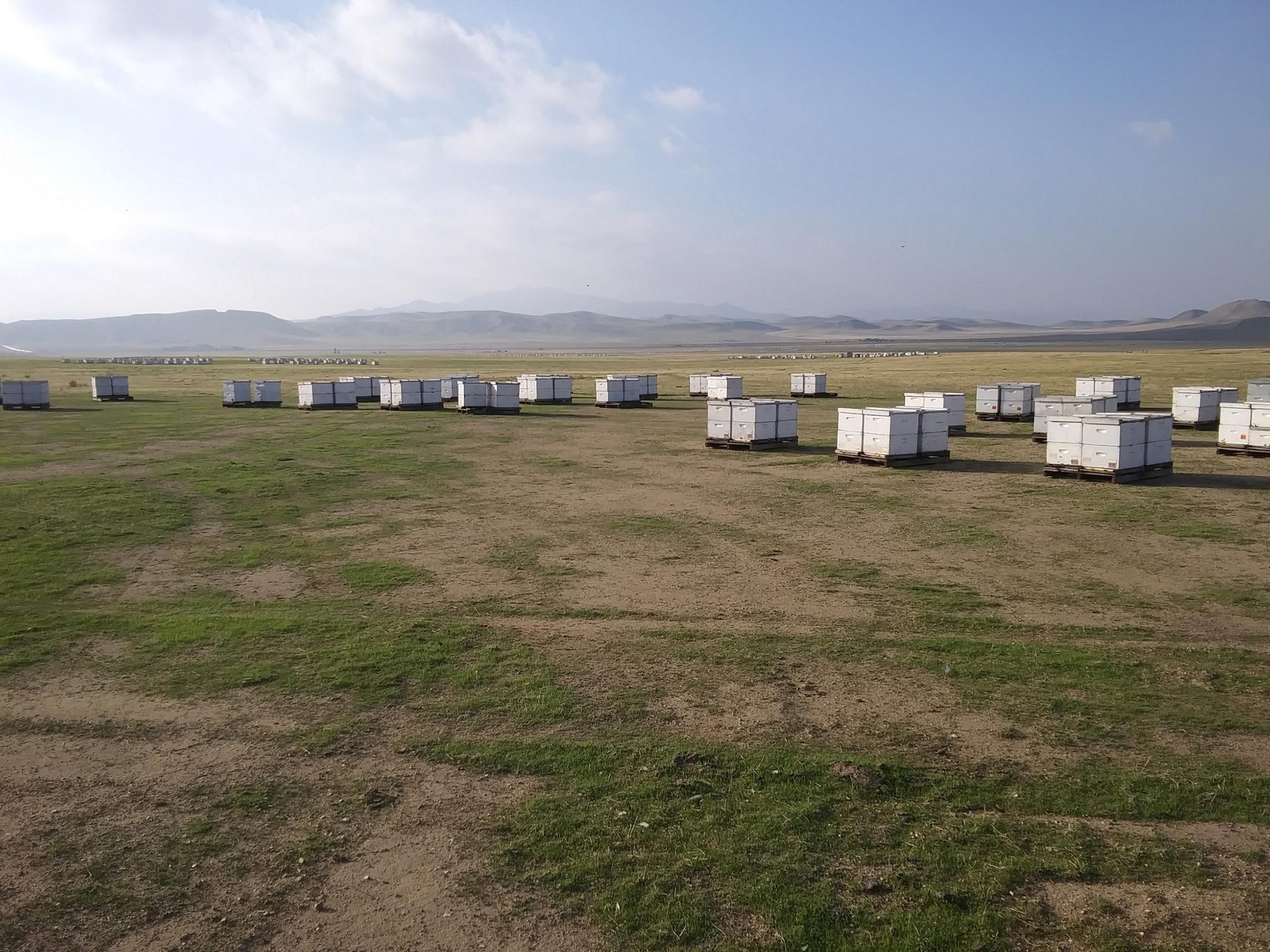
The study took place across three US states (Mississippi, California, and North Dakota), where commercial beekeepers move tens of thousands of colonies annually to provide pollination for large-scale agriculture.
Varroa mites originated in Asia, so European honey bees (the most common species kept for pollination) have not evolved alongside them, and therefore lack effective resistance.
Like humans, managed bees are largely “decoupled” from natural selection, Dr. O’Shea-Wheller said, so they cannot develop resistance like they might in the wild.
Varroa-Sensitive Hygiene (VSH)
However, managed bees sometimes respond to mites (which reproduce in the cells of bee larvae) by expelling infested larvae – killing both the larvae and the mites, in a behavior known as Varroa-sensitive hygiene (VSH).
By selectively breeding for this trait, colonies can be produced that automatically protect themselves from infestation, while maintaining large colony sizes and ample honey production.
“The great thing about this particular trait is that we’ve learned honey bees of all types express it at some level, so we know that with the right tools, it can be promoted and selected for in everyone’s bees,” said research molecular biologist Dr. Michael Simone-Finstrom, of the USDA Agricultural Research Service.
Colony survival over the winter is particularly important for beekeepers, because honey bees are in high demand in the early spring – a key time for pollinating high-value crops such as almonds.
Importance of Colony Survival and Virus Control
The study also examined levels of viruses associated with Varroa mites in bee colonies.
The colonies bred for Varroa resistance showed lower levels of three major viruses (DWV-A, DWV-B, and CBPV).
Interestingly however, when examined separately from levels of mite infestation, these viruses were not strong predictors of colony losses.
“A lot of research is focussed on the viruses, with perhaps not enough focus on the mites themselves,” Dr. O’Shea-Wheller said.
“The viruses are clearly important, but we need to take a step back and be rigorous in delivering the best practical outcomes, because if you control the mites, you automatically control for the viruses that they transmit.”
Dr. O’Shea-Wheller said bee breeding and testing is expensive and takes time, but that breeding mite-resistant bees is cost-effective in the long term, and is likely to be the only sustainable solution to deal with the Varroa pandemic.
Reference: “A derived honey bee stock confers resistance to Varroa destructor and associated viral transmission” by Thomas A. O’Shea-Wheller, Frank D. Rinkevich, Robert G. Danka, Michael Simone-Finstrom, Philip G. Tokarz and Kristen B. Healy, 7 April 2022, Scientific Reports.
DOI: 10.1038/s41598-022-08643-w
The study was funded by USDA.
Never miss a breakthrough: Join the SciTechDaily newsletter.
Follow us on Google and Google News.
4 Comments
… There is very interesting info, about Covid thing… It looks like there was an article in a science paper called nature about connecting Covid and some other virus, just fer years before the outbreak… is that like true,…
… worst than X files,…
… reality get you worst than the X files…
… contraband flow…