
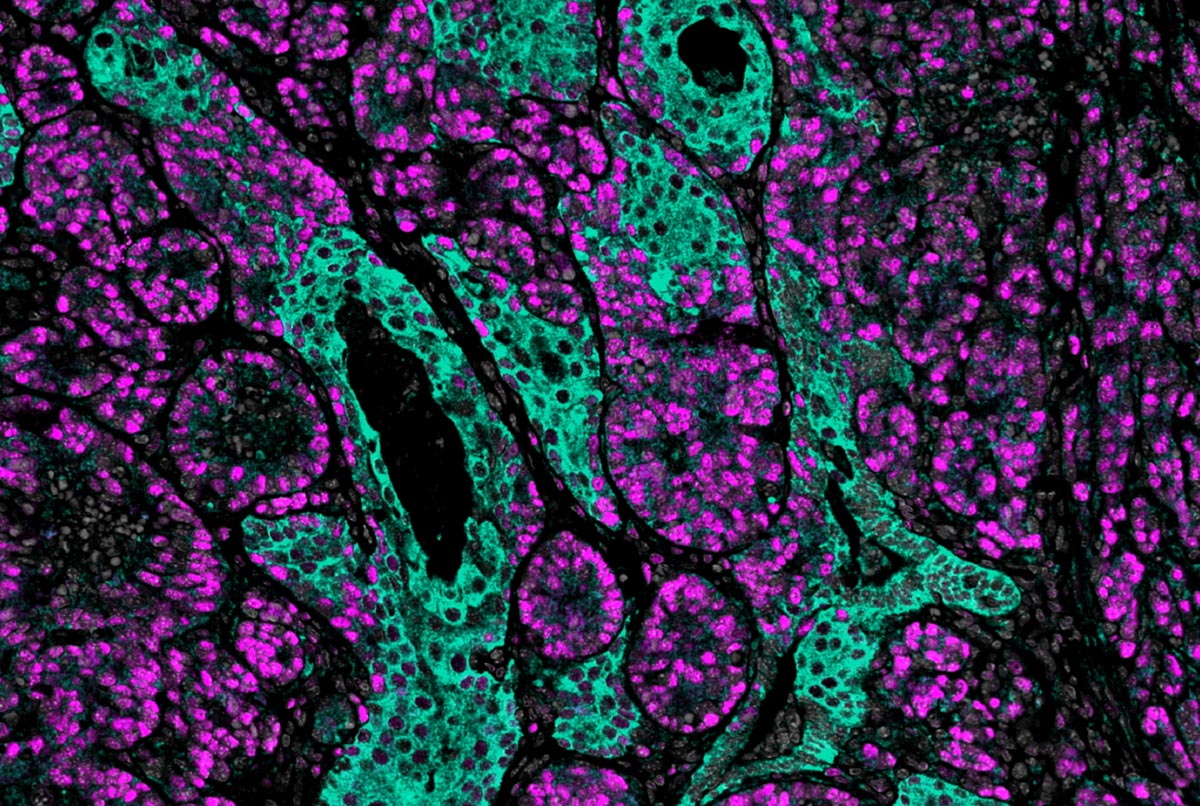
Researchers have identified a new role for the enzyme EZH2 in promoting the progression of aggressive, treatment-resistant prostate cancers.
Their study suggests that targeting EZH2’s alternative functions could restore the effectiveness of androgen receptor inhibitors and enhance the potential of immunotherapies in these cancers, offering new hope for patients facing this tough diagnosis.
New Insights Into Treatment-Resistant Prostate Cancer
Scientists at Weill Cornell Medicine have uncovered a surprising role for the enzyme EZH2 in fueling aggressive tumor growth in treatment-resistant prostate cancers. This discovery could pave the way for new therapies for patients with few options and marks significant progress in understanding how advanced prostate cancer becomes resistant to androgen receptor-targeted treatments.
Prostate cancer is one of the leading causes of cancer-related deaths in men, claiming over 30,000 lives each year in the United States. While most cases initially respond to therapies that block androgen receptors, some tumors adapt and transform into a highly aggressive, treatment-resistant form called neuroendocrine prostate cancer. This variant no longer depends on androgen signaling, making it particularly challenging to treat. Understanding how and why this transition occurs is now a top priority for researchers and clinicians.
Unveiling a Mechanism of Resistance
The new study, led by Drs. Maria Diaz-Meco and Jorge Moscat, both Homer T. Hirst III Professors of Oncology in Pathology and members of the Sandra and Edward Meyer Cancer Center at Weill Cornell Medicine, and published today (November 20) in Nature Communications, found that the absence of a protein called PKCλ/ι in prostate cancer cells enables EZH2 to drive aggressive growth, even with androgen receptor inhibitors present. Normally, PKCλ/ι limits EZH2’s activity.
However, in PKCλ/ι-deficient cells treated with androgen receptor inhibitors, an alternative form of EZH2 is produced that has a different function. Instead of repressing tumor-suppressor genes, this form of EZH2 drives rapid protein production and activates growth factors like TGF-β, fostering an environment around the tumor that promotes cancer progression despite androgen receptor inhibition.
Potential for New Therapies in Prostate Cancer
“This study reveals a critical mechanism behind treatment resistance in prostate cancer, suggesting new therapeutic approaches,” said Dr. Diaz-Meco. “By understanding EZH2’s role in this context, we may be able to re-sensitize tumors to androgen receptor inhibitors or make the cancer newly vulnerable to targeted treatments, such as immunotherapies.”
In preclinical studies, the team targeted EZH2’s alternative activities to assess potential treatment solutions. They found that inhibiting either protein synthesis or the TGF-β pathway effectively reversed resistance in PKCλ/ι-deficient cancer cells. Blocking EZH2’s alternative function restored sensitivity to androgen receptor therapies like enzalutamide. Furthermore, since TGF-β is associated with immune suppression in tumors, inhibiting this pathway could enhance immunotherapy effectiveness, a treatment with limited success against prostate cancer alone.
The researchers noted that the absence of PKCλ/ι creates a unique vulnerability in cancer cells, suggesting that combining EZH2 inhibitors with AR-targeted therapies could significantly inhibit tumor growth. However, they caution that the inhibition of EZH2 in tumors with high levels of PKCl/i can sometimes counteract therapeutic effects, underscoring the need for precisely tailored treatments for patients with reduced PKCl/i levels. Given the complexity of the EZH2 pathway, achieving a careful balance is essential to avoid reversing treatment benefits.
Implications for Clinical Trials
This research lays the groundwork for clinical trials combining androgen receptor inhibitors with EZH2 or TGF-β inhibitors for patients with therapy-resistant prostate cancer characterized by PKCλ/ι deficiency. Targeting these pathways offers hope not only to overcome AR resistance but also to broaden treatment options for this challenging form of cancer.
Dr. Moscat emphasized the collaborative efforts behind this study, building on previous findings about PKCλ/ι’s role in cancer progression. The study’s co-first authors are postdoctoral researcher Dr. Shankha Chatterjee, instructor Dr. Juan Linares, postdoctoral researcher Dr. Tania Cid-Diaz, and assistant professor of research in pathology and laboratory medicine Dr. Angeles Duran, all members of the Moscat and Diaz-Meco laboratories.
Reference: “Increased translation driven by non-canonical EZH2 creates a synthetic vulnerability in enzalutamide-resistant prostate cancer” by Shankha S. Chatterjee, Juan F. Linares, Tania Cid-Diaz, Angeles Duran, Mohd. Imran K. Khan, Marta Osrodek, Nicholas J. Brady, Miguel Reina-Campos, Antonio Marzio, Varadha Balaji Venkadakrishnan, Martin K. Bakht, Francesca Khani, Juan Miguel Mosquera, Brian D. Robinson, Jenna Moyer, Olivier Elemento, Andrew C. Hsieh, David W. Goodrich, David S. Rickman, Himisha Beltran, Jorge Moscat and Maria T. Diaz-Meco, 20 November 2024, Nature Communications.
DOI: 10.1038/s41467-024-53874-2
The research reported in this story was supported by grants from the National Cancer Institute and the National Institute of General Medical Sciences, both part of the National Institutes of Health, under award numbers R01CA246765, R01CA277857, R01CA265892, R01CA250025, R01CA275846, R50CA283476, R50CA265332, R01CA230913, P50CA211024, R37CA230617, R01CA276308, R01GM135362.
Never miss a breakthrough: Join the SciTechDaily newsletter.
Follow us on Google and Google News.
1 Comment
Foreigners often come to the US for advanced medical treatment for Alzheimer’s disease. Given the large volume of inquiries for medical translations that Apoling Solutions has handled over the past few years, our team is well-equipped to assist with translating medical documents, ensuring clear communication and support for international patients seeking care.