

Avocado remains from El Gigante illustrate how ancient farmers domesticated crops to adapt to changing environments.
The global avocado industry, now worth billions of dollars, is heavily dependent on a single variety: the Hass avocado. This reliance on a monoculture system introduces major vulnerabilities, as genetically uniform crops are less resistant to diseases and shifting environmental conditions.
Dr. Heather B. Thakar, an assistant professor in the Department of Anthropology at Texas A&M University, is conducting pioneering research at El Gigante Rockshelter in Honduras to explore the long-term history of avocado domestication. Her findings, recently detailed in a paper published in the Proceedings of the National Academy of Sciences, offer important evidence of how human practices have influenced the development of one of the world’s most valuable agricultural products.
“Our work with El Gigante’s avocado remains offers valuable information about resilience and adaptation in the face of climate change,” Thakar said. “Much of the genetic diversity of ancient avocados still exists in wild populations in Mexico and Central America. By developing new avocado varieties through seed selection from both modern domesticated plants and wild populations, we may have a better chance of adapting to these changing conditions than relying on cloning alone.”
A Rare Archaeological Opportunity
El Gigante Rockshelter, situated in the mountainous region of western Honduras, has produced exceptionally well-preserved plant remains—an uncommon find in tropical environments where organic material usually deteriorates quickly.
“It’s a truly incredible preservation of plant fossils and abundance of avocado remains in a tropical region where plants generally do not preserve well,” Thakar said.
Preserved avocado remains at the site span more than 11,000 years, offering researchers a rare opportunity to study how human activity shaped the fruit’s evolution over thousands of years.
“Avocados are an amazing food source for humans, rich in healthy fats and nutrients that are essential to us,” Thakar said. “But they originally evolved as a food source for ancient megafauna like giant sloths (gomphotheres) and mammoths that lived in the Americas during the last ice age.”
After these large animals went extinct, humans began to take over their role in the avocado’s life cycle, managing and selectively cultivating the trees to improve their usefulness as a nutritional resource.
“Through traditional forest management practices, people were selecting bigger and thicker-skinned avocados,” Thakar said. “And by 7,500 years ago, indigenous farmers were able to produce nutritious fruits that were more productive and easier to transport.”
Evidence Of Early Avocado Farming
To build a detailed chronology of human activity and avocado cultivation at El Gigante, the research team used hundreds of radiocarbon dates, many obtained directly from avocado pits and rinds. Analysis of these remains showed that ancient Hondurans gradually selected for avocados with larger seeds and thicker rinds, a process that led to fully domesticated varieties by approximately 2,000 years ago. This discovery is especially noteworthy because it indicates that avocados were being cultivated in Honduras before staple crops like maize, beans, or squash became common in the region.
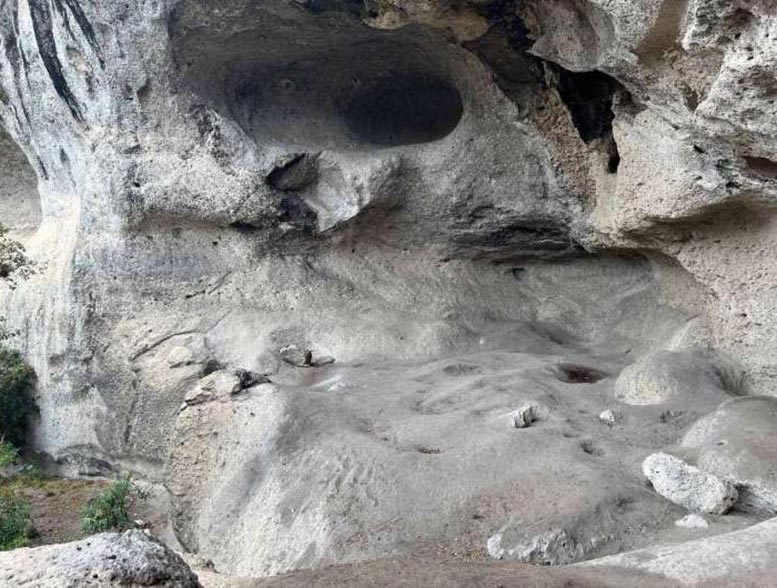
In addition to avocados, El Gigante’s exceptionally preserved plant remains have offered valuable information about the early domestication of other important crops, including squash and maize.
“I am actively working on a publication that details the arrival of maize and the 4,500 years of diversification and improvement of this globally important crop,” Thakar said.
A Globally Significant Archaeological Site
Recognized as one of the most important archaeological sites discovered in Central America in the last 40 years, El Gigante is on the tentative list for UNESCO World Heritage status. Thakar and her team are collaborating with the Honduran government to document and protect this unique site.
“All of the research that we have undertaken is used in support of El Gigante’s recent nomination as a UNESCO World Heritage site; we continue to provide research support, documentation, and expert commentary throughout this process,” she said.
Although El Gigante has been spared from looting due to its difficult-to-access entrance—requiring a three- to four-meter climb—there have been modern disturbances including occasional overnight stays by hunters and adventurous visitors. Nevertheless, archaeologists have been able to preserve its deepest stratigraphic layers, ensuring that invaluable historical evidence remains intact.
The Excitement Of Discovery
For Thakar, the thrill of discovery is what drives her work.
“We have the opportunity to learn so much about the many ways that humans have dealt with change in the past,” she said. “When there are no written records, archaeology steps in, contributing to the cumulative knowledge about the past that can be deployed to inform modern crises.”
An anthropological archaeologist, Thakar’s research bridges the humanities and sciences, integrating innovative methodologies such as radiocarbon dating, stable isotope analysis, and morphometrics to analyze ancient plant remains. Her work is not limited to Honduras—she is also a principal investigator on projects exploring plant domestication and cultural knowledge transmission in southern Mexico, Belize, and Nicaragua.
Understanding The Deep History Of Agriculture
Thakar hopes that her research will help people appreciate the long and complex process of plant domestication.
“The vast majority of food consumed today is a product of domestication,” she said. “But domestication was not an event. It was a lengthy process that produced an incredible diversity of plants that are extraordinarily adapted to local environments. By studying domestication, we can recover ancient varieties and cultural knowledge that has helped humans become the incredibly successful species that we are… information that can be used to improve our crops today and ensure our continued survival into the future.”
Reference: “Early evidence of avocado domestication from El Gigante Rockshelter, Honduras” by Amber M. VanDerwarker, Heather B. Thakar, Kenneth Hirth, Alejandra I. Domic, Thomas K. Harper, Richard J. George, Emily S. Johnson, Victoria Newhall, Timothy E. Scheffler, Weston C. McCool, Kevin Wann, Brandon S. Gaut, Logan Kistler and Douglas J. Kennett, 3 March 2025, Proceedings of the National Academy of Sciences.
DOI: 10.1073/pnas.2417072122
Never miss a breakthrough: Join the SciTechDaily newsletter.
Follow us on Google and Google News.
1 Comment
Good morning. You have the privilege and opportunity to teach. For more than sixty years I’ve interviews Maya Elders. The correct term is Maya, not Mayan. This distinction is important because it reflects the cultural and linguistic identity of the Maya people. In fact, the term changed from Maya to Mayan in the 1970s and was not well-received by the Maya community, as it altered the vibration, color, and meaning of their name.
“For the Maya, names are very important. The name of a person, animal, or thing has a meaning. The Maya Spiritual Guide Ājq’ij is in charge of choosing names. The Ājq’ijab learn divination, the weight, vibration, color, and music, that words, dates and numbers have, and their effect over people, Mother Earth, and everything that surrounds us. This is one of the reasons that we should say Maya. Maya and not ‘Mayan’. María, If you change the meaning and vibration of the name with the extra letter you affect the person, object or place.” Maya Elder—Interviews MOB