
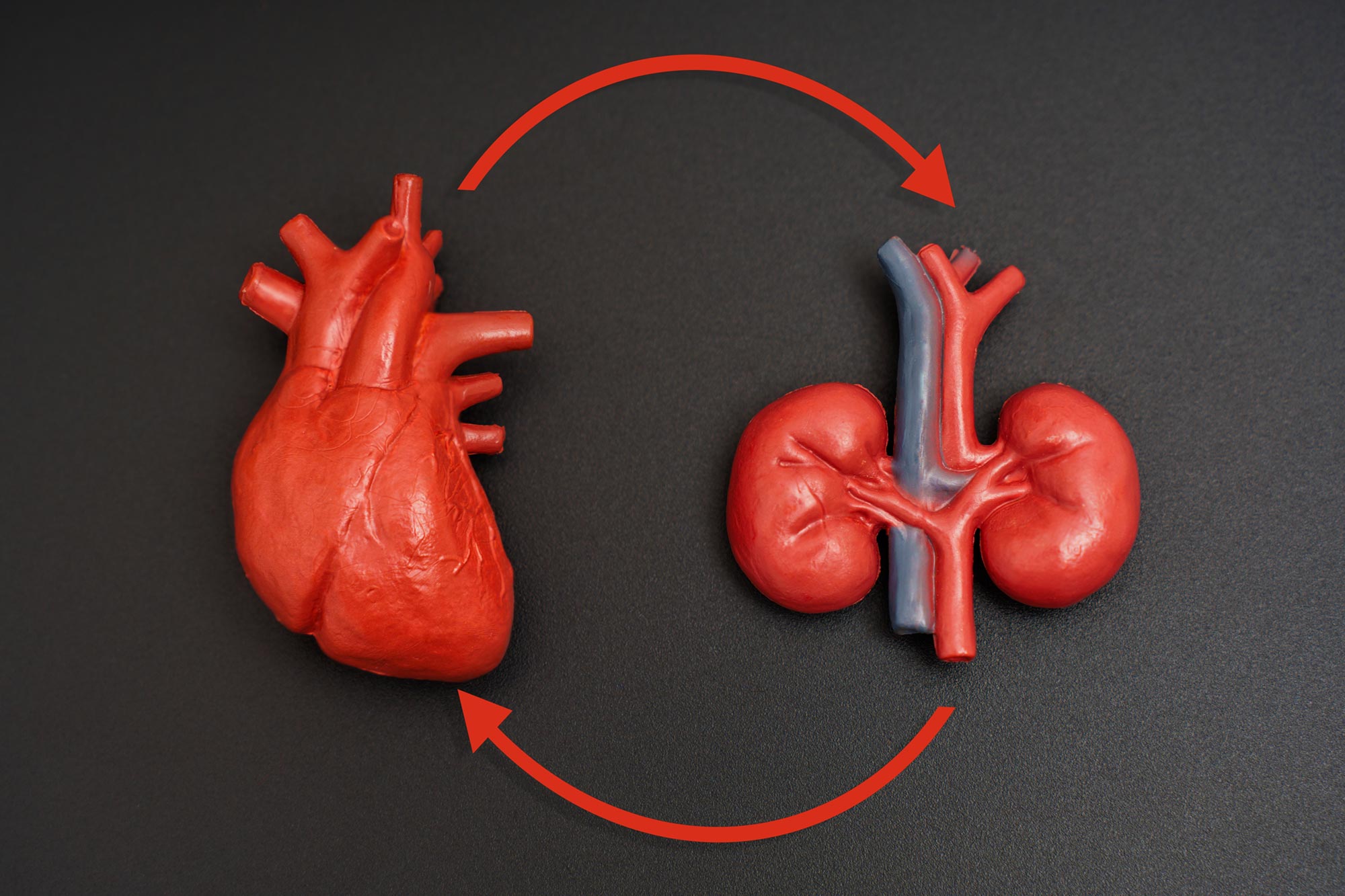
Failing kidneys may be quietly sending toxic signals that damage the heart.
Scientists have identified a key reason why more than half of people with chronic kidney disease eventually die from heart-related conditions. New evidence shows that damaged kidneys release a substance into the bloodstream that directly harms the heart.
The research, conducted by teams at UVA Health and Mount Sinai, could help doctors recognize patients at risk much earlier. It may also lead to new ways to prevent and treat heart failure in people living with kidney disease.
“Kidney and heart disease can develop silently, so they are often discovered only after damage has already been done,” said researcher Uta Erdbrügger, MD, an internal medicine physician-scientist with the University of Virginia School of Medicine’s Division of Nephrology. “Our findings can help to identify patients at risk for heart failure earlier, enabling earlier treatment and improved outcomes.”
Heart Failure Risk in Chronic Kidney Disease
Chronic kidney disease affects more than 1 in 7 Americans, or about 35 million people in the United States, according to the National Institutes of Health. The condition is especially common among people with other chronic illnesses. About 1 in 3 patients with diabetes and around 1 in 5 people with hypertension (high blood pressure) also have kidney disease, the agency reports.
Doctors have long observed a strong connection between chronic kidney disease (CKD) and cardiovascular disease. As kidney function worsens, the risk and severity of heart problems increase. However, understanding the cause of this link has been difficult. Shared risk factors such as obesity and high blood pressure have made it challenging to determine whether kidney disease itself directly harms the heart.
Toxic Kidney Signals Identified
Until now, researchers had not identified a kidney-specific factor that could explain how kidney disease damages the heart. The new study led by Erdbrügger and her colleagues points to a specific cause. Diseased kidneys release particles known as “circulating extracellular vesicles” into the bloodstream.
Extracellular vesicles are produced by nearly all cells and normally help cells communicate by transporting proteins and other materials. The researchers found that vesicles produced by kidneys affected by CKD carry small, non-coding RNA called miRNA that is toxic to heart tissue.
Evidence From Lab Studies and Patients
In laboratory mice, blocking these extracellular vesicles from circulating led to significant improvements in heart function and reduced signs of heart failure. The research team also examined blood plasma samples from people with chronic kidney disease and from healthy individuals. Harmful extracellular vesicles were found in patients with CKD but not in those without the disease.
“Doctors always wondered how organs such as the kidney and heart communicate with each other. We show that EVs from the kidney can travel to the heart and be toxic,” Erdbrügger said. “We are just at the beginning to understand this communication.”
Toward Early Detection and New Treatments
The findings suggest that scientists may be able to develop a blood test to identify people with chronic kidney disease who face the highest risk of serious heart complications. Researchers may also be able to target circulating extracellular vesicles to reduce or prevent their damaging effects on the heart.
“Our hope is to develop novel biomarkers and treatment options for our kidney patients at risk for heart disease,” Erdbrügger said. “Potentially our work will improve precision medicine for CKD and Heart failure patients, so that each patient gets the exact treatment they need.”
Advancing Kidney and Heart Research
To help move this research forward, Erdbrügger is organizing a hands-on workshop for UVA scientists focused on extracellular vesicle research. The five-day workshop begins Feb. 7.
Solving major medical questions and developing new therapies for complex diseases are central goals of UVA’s new Paul and Diane Manning Institute of Biotechnology. The institute aims to speed the transition from laboratory discoveries to treatments that can improve and save lives.
The scientists published their findings in the scientific journal Circulation. The article is open access, meaning it is free to read.
Reference: “Circulating Extracellular Vesicles in the Pathogenesis of Heart Failure in Patients With Chronic Kidney Disease” by Xisheng Li, Nikhil Raisinghani, Alex Gallinat, Carlos G. Santos-Gallego, Shihong Zhang, Sabrina La Salvia, Seonghun Yoon, Hayrettin Yavuz, Anh Phan, Alan Shao, Michael Harding, David Sachs, Carol J. Levy, Navneet Dogra, Rupangi Vasavada, Nicole C. Dubois, Uta Erdbrügger and Susmita Sahoo, 3 November 2025, Circulation.
DOI: 10.1161/CIRCULATIONAHA.125.075579
The research team included Xisheng Li Nikhil Raisinghani, Alex Gallinat, Carlos G. Santos-Gallego, Shihong Zhang, Sabrina La Salvia, Seonghun Yoon, Hayrettin Yavuz, Anh Phan, Alan Shao, Michael Harding, David Sachs, Carol Levy, Navneet Dogra, Rupangi Vasavada, Nicole Dubois, Erdbrügger and Susmita Sahoo. The scientists reported no financial conflicts of interest.
The study was supported by the National Institute of Health through grants HL140469, HL124187, HL148786, R01DK125856, 1-INO-2025-1704-A-N, R21AG07848, and R01DK133598.
Never miss a breakthrough: Join the SciTechDaily newsletter.
Follow us on Google and Google News.
1 Comment
As only a senior lay American male who has been writing of the underlying causes of epidemic obesity since the FDA (with replies) in October of 2005 (obviously, now, in-vain), I’m not at all qualified to discuss “circulating extracellular vesicles” but I am somewhat qualified to inform researchers that low-grade inflammation caused by nearly subclinical non-IgE-mediated food allergies aggravated (or not) with FDA approved food poisoning (e.g., added MSG, minimally) resulting in a high serum level of uric acid and free radicals are likely concurrent with both CKD and heart disease. So, twenty years since I first wrote the FDA of my early lay findings, why are researchers still ignorant of them?